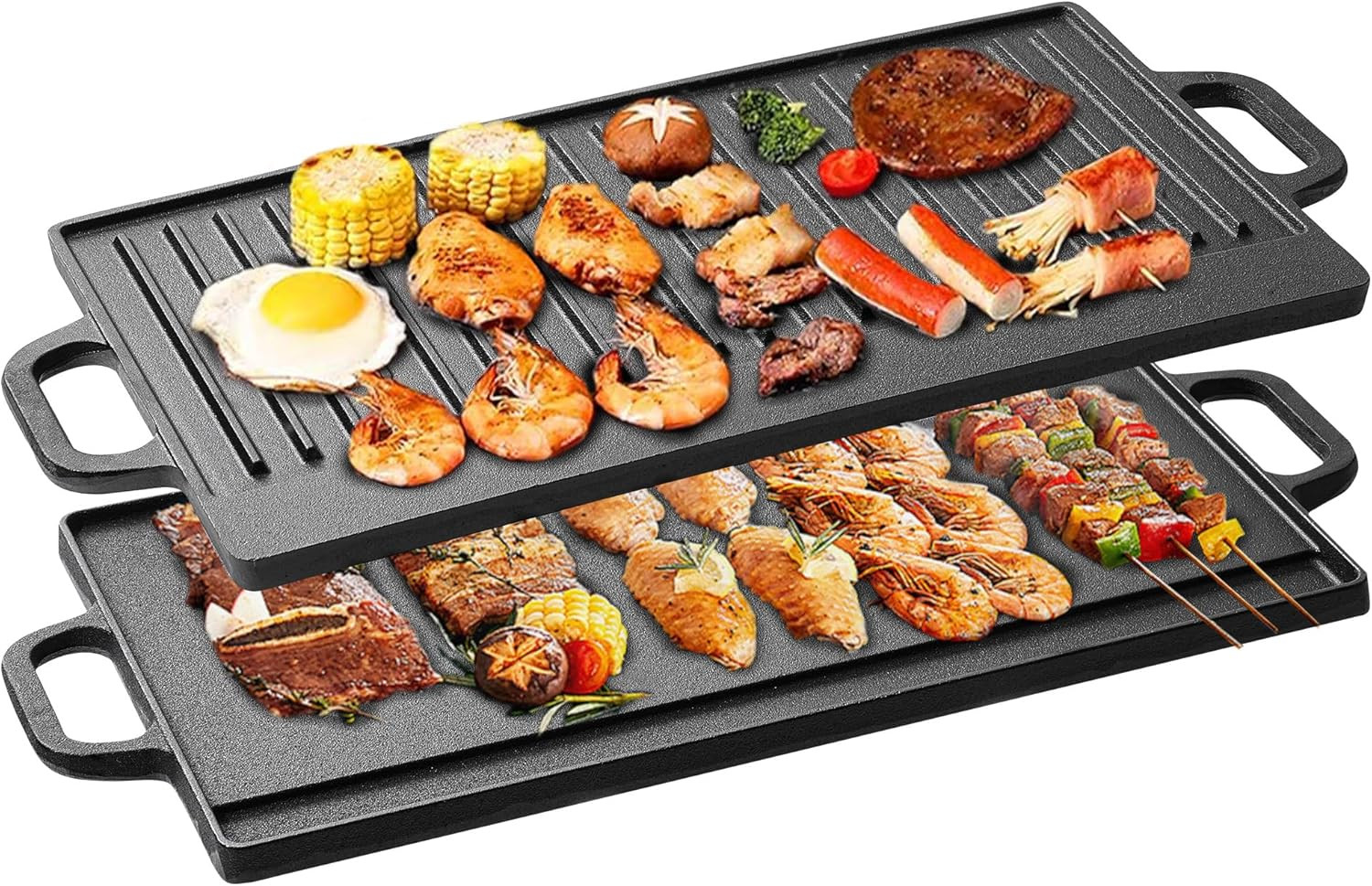

Photos from current listings. Actual item, color, and included accessories may vary.
Cast Iron Griddle Buying Guide
A cast iron griddle is a heavy, pre-seasoned flat or dual-sided cooking plate used on gas grills, stovetops, campfires, and ovens. The core trade-off is thermal mass versus recovery speed: thicker iron (6–10 mm) holds heat for searing but responds slowly, while thin pressed plates heat fast yet warp and scorch. The decision rule is simple: pick at least 5 mm of solid cast iron with a flat-machined surface for gas grill duty, and skip thin stamped or enamel-only plates that cannot take direct flame.
Key takeaways
- Solid cast iron at 5–10 mm thickness resists warping on high-BTU gas grills; pressed steel under 3 mm bows and loses flat contact.
- Reversible two-sided plates add a ridged grill side (for sear marks and fat runoff) and a flat griddle side (for eggs and pancakes).
- Pre-seasoned sand-cast iron ships cookable but improves with 3–5 oil layers; enameled iron skips seasoning but chips under direct flame.
At a glance
- Category
- Cookware & Cutlery
- Last updated
- Nov 28, 2026
Current offers
Highlights
- Solid cast iron at 5–10 mm thickness resists warping on high-BTU gas grills; pressed steel under 3 mm bows and loses flat contact.
- Reversible two-sided plates add a ridged grill side (for sear marks and fat runoff) and a flat griddle side (for eggs and pancakes).
- Pre-seasoned sand-cast iron ships cookable but improves with 3–5 oil layers; enameled iron skips seasoning but chips under direct flame.
- Dual assist handles or a long cast handle are essential at 18–23 inch widths, where a loaded plate exceeds 15 lb.
Best use cases
- Gas grill searing for smash burgers and vegetables: choose a 20x9 or 23x16-inch flat or reversible plate at 6 mm+ with side handles; skip round skillets that waste rectangular grate space.
- Indoor electric or induction stovetop: pick a flat-bottom 17-inch dual-handle plate sized to the burner; skip oversized 23-inch plates that overhang and tip on coil burners.
- Campfire and oven dual use: pick a reversible 18x9 plate with a long cast handle; skip any plate with synthetic or enameled handles that fail above 400°F.
Buying tips
- Match plate length to grate: a 20x9 plate fits most 3-burner gas grills; a 23x16 plate needs a 4-burner or larger footprint.
- Buy 6 mm or thicker cast iron for gas-grill searing; 4–5 mm is acceptable for stovetop eggs and pancakes only.
- Choose reversible (ridged/flat) plates when you want both sear marks and griddle surface in one footprint.
- Confirm the plate is preseasoned with a machined flat cooking surface; rough sand-cast only plates need extra seasoning before non-stick performance.
Specs
| Material Grade | Bare cast iron / enameled cast iron |
|---|---|
| Thickness Range | 4–10 mm (6 mm+ for gas grill) |
| Surface Type | Flat / reversible ridged-flat |
| Heat Source | Gas, induction, oven, campfire |
Related searches
What to check before buying
- Measure your grill or stovetop cooking surface before ordering: 18x9, 20x9, and 23x16-inch plates need matching clearance.
- Check grate bar spacing and material: cast iron sits securely on cast iron or thick steel grates, but can tip on thin wire grates.
- Verify oven and broiler safe temperature rating (most bare cast iron is safe to 500°F+) and that handles are bare or cast iron.
- For induction cooktops, confirm a flat, smooth base at least 7 inches across to trigger the induction sensor.
FAQ
Data sources: eBay / Amazon listings and product attribute feeds. Updated Nov 28, 2026.
Some links on this page are affiliate links. If you buy after clicking one, we may earn a commission at no extra cost to you. This does not change which products appear here or their order. Affiliate disclosure.