
Photos from current listings. Actual item, color, and included accessories may vary.
Cast Iron Skillet With Lid Buying Guide
A cast iron skillet with lid is a two-in-one cooking system: a heavy cast iron pan paired with a matching lid that often doubles as a second skillet or a self-basting cover. The core trade-off is bare cast iron's heat retention and oven/induction/fire compatibility versus enameled cast iron's easier cleanup but lower high-heat tolerance, and buyers must also choose between a dedicated skillet lid and a Dutch oven's dual-purpose skillet lid.
Median $48.49
Key takeaways
- Bare cast iron is fully oven-safe, induction-compatible, and fire/coals-safe; enameled cast iron is oven-safe to roughly 450-500°F and should not be used over open flame or with metal utensils.
- Skillet-with-lid systems come in two architectures: a skillet plus a flat or domed lid, or a Dutch oven whose skillet lid inverts to serve as a shallow pan — the latter adds deep-frying and baking capability.
- Pan thickness and mass drive performance: thicker walls and a heavier base resist thermal shock and hold heat for searing, while thin walls heat faster but develop hot spots.
At a glance
- Category
- Cookware & Cutlery
- Last updated
- Nov 28, 2026
Current offers
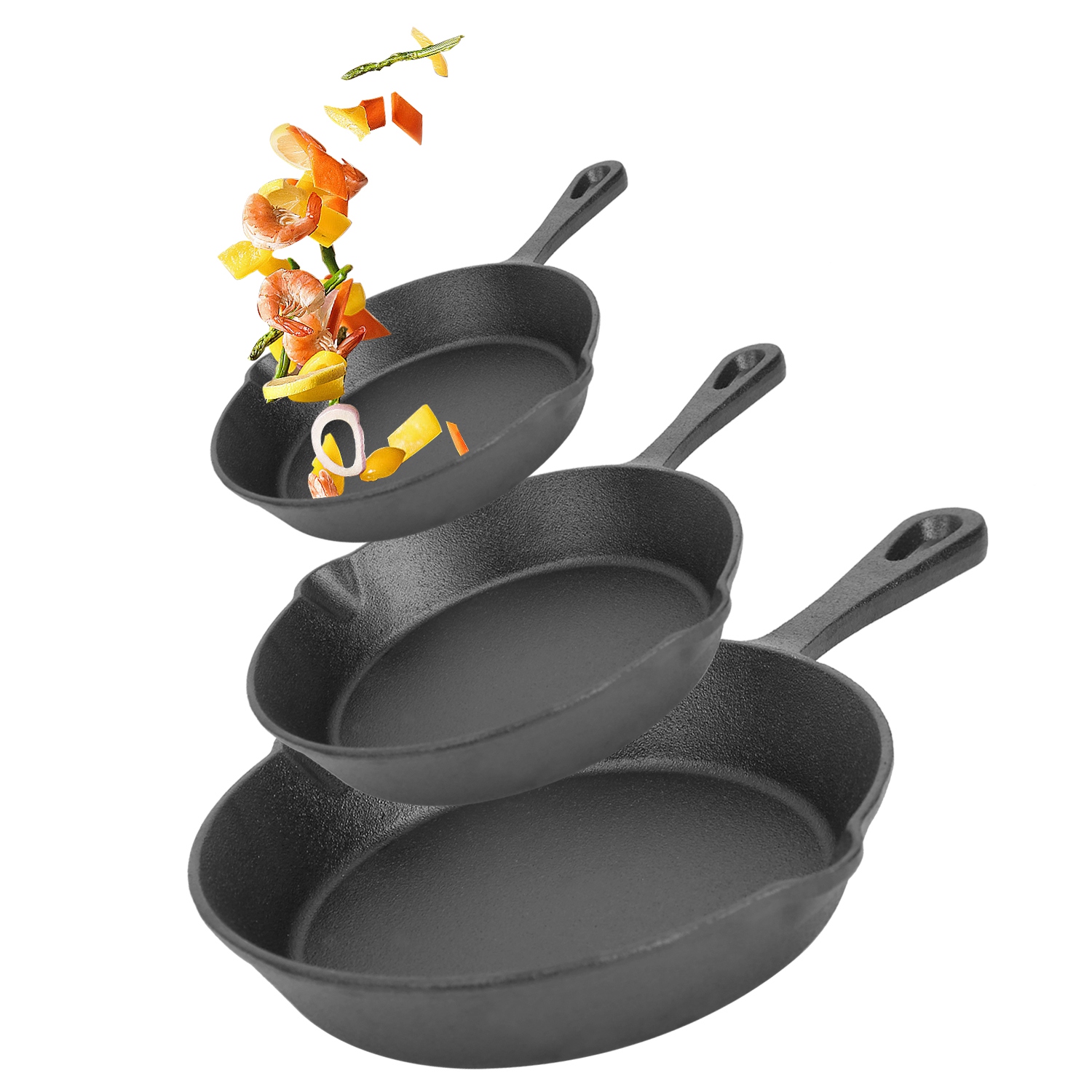 3Pcs Pre-Seasoned Cast Iron Skillet Set For Indoor Outdoor 6in 8in 10in Non-Stick Oven Safe Cookware Heat-Resistant Frying Pan For Cooking Baking$36.99View on Mallflare
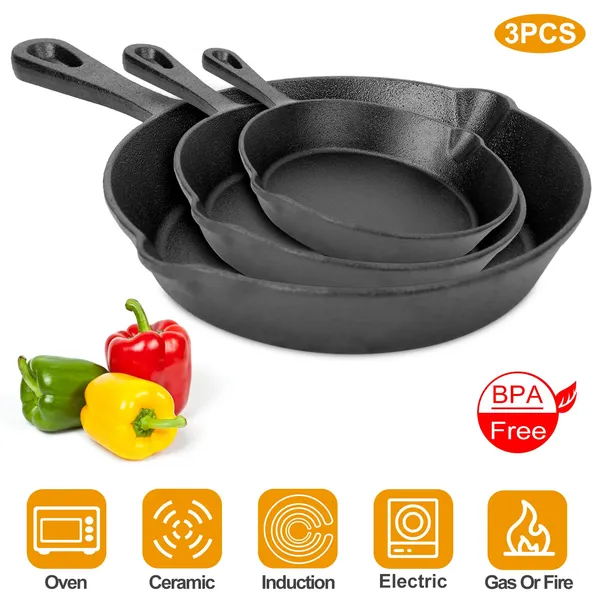 3Pcs Pre-Seasoned Cast Iron Skillet Set 6-8-10in Non-Stick Oven Safe Cookware Heat-Resistant Frying Pan$44.99View on Mallflare
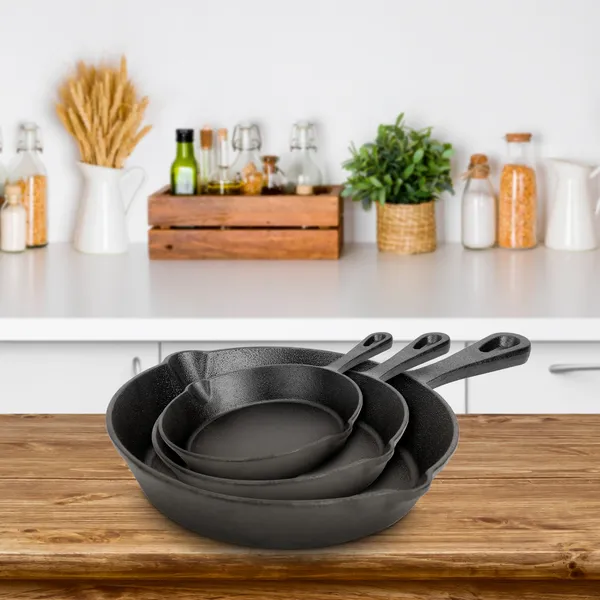 3Pcs Pre-Seasoned Cast Iron Skillet Set 6/8/10in Non-Stick Oven Safe Cookware Heat-Resistant Frying Pan$51.99View on Mallflare
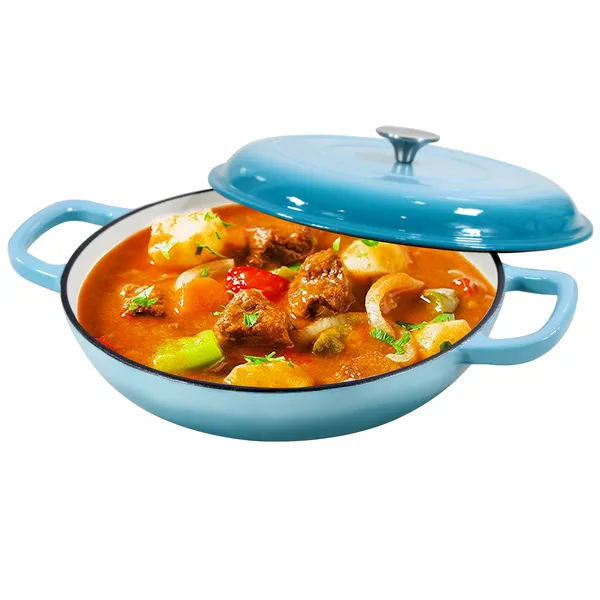 COOKWIN Cast Iron Casserole Braiser 3.8 Quart Heavy Duty Skillet With Lid And Dual Handles Porcelain Enameled Surface Cookware Pot$78.99View on Mallflare
Highlights
- Bare cast iron is fully oven-safe, induction-compatible, and fire/coals-safe; enameled cast iron is oven-safe to roughly 450-500°F and should not be used over open flame or with metal utensils.
- Skillet-with-lid systems come in two architectures: a skillet plus a flat or domed lid, or a Dutch oven whose skillet lid inverts to serve as a shallow pan — the latter adds deep-frying and baking capability.
- Pan thickness and mass drive performance: thicker walls and a heavier base resist thermal shock and hold heat for searing, while thin walls heat faster but develop hot spots.
- Pre-seasoned bare iron is ready to cook but improves with use; enameled surfaces need no seasoning but can chip if dropped or overheated. Dual-handle and assist-handle designs matter above 12 inches because a loaded large skillet is heavy.
Best use cases
- Best fit: a home cook who sears, braises, and bakes in one vessel should pick a Dutch oven with a skillet lid (5-6 qt for 2-4 people, 7-8 qt for larger batches) to get a deep pot and a shallow skillet in one purchase.
- Best fit: a stovetop-to-oven searing setup for steak, cornbread, or deep-dish pizza calls for a 10-12 inch bare cast iron skillet with a matching lid; choose dual assist handles at 12 inches and above for safe lifting.
- Wrong fit: a buyer who wants nonstick convenience, dishwasher cleanup, or lightweight pans should skip bare cast iron entirely and choose enameled cast iron or a different cookware material.
- Wrong fit: an outdoor campfire cook should avoid enameled pieces (coals and open flame can damage the enamel) and pick bare cast iron with a leg base or a flat-bottom skillet for stability.
Buying tips
- Match lid to rim diameter: measure the pan's outer top rim, not the cooking surface; a 10-inch skillet typically needs a 10-inch lid, and a mismatched lid will not seal or self-baste.
- Choose capacity by batch: 5-6 qt Dutch ovens suit 2-4 servings of stew or bread, 7-8 qt suit larger families or batch cooking; a 12-inch skillet covers roughly 2-3 steaks at once.
- For high-heat searing, induction, or open fire, buy bare cast iron; for acidic tomato or wine braises and easier cleaning, buy enameled cast iron and keep heat below its enamel rating.
- Check handle and assist-handle design: dual handles or a helper handle are essential above 12 inches and when moving a full Dutch oven; a bare skillet with a short handle needs a mitt or handle cover.
Specs
| Material Type | Bare cast iron vs enameled cast iron |
|---|---|
| Lid Architecture | Skillet lid vs Dutch oven skillet lid |
| Heat Compatibility | Induction/oven/fire vs oven-only enamel |
| Capacity Range | 5-8 qt Dutch oven / 6-17 in skillet |
Related searches
What to check before buying
- Measure your stovetop burner and oven interior: a 17-inch skillet or 8-quart Dutch oven with lid must fit the oven rack and door clearance, and large pans need a wide burner for even heating.
- Confirm heat source compatibility: bare cast iron works on gas, electric coil, induction, oven, grill, and campfire; enameled cast iron is stovetop and oven only, not open flame.
- Plan for weight and storage: cast iron is heavy, so check that your shelf, hook, or cabinet can hold a large skillet plus lid, and that you can lift a full pot safely.
- For a Dutch oven with skillet lid, verify the lid fits your intended use as a pan or cover and that the pot's leg base (if any) matches your campfire or grate setup.
FAQ
Data sources: eBay / Amazon listings and product attribute feeds. Updated Nov 28, 2026.
Some links on this page are affiliate links. If you buy after clicking one, we may earn a commission at no extra cost to you. This does not change which products appear here or their order. Affiliate disclosure.