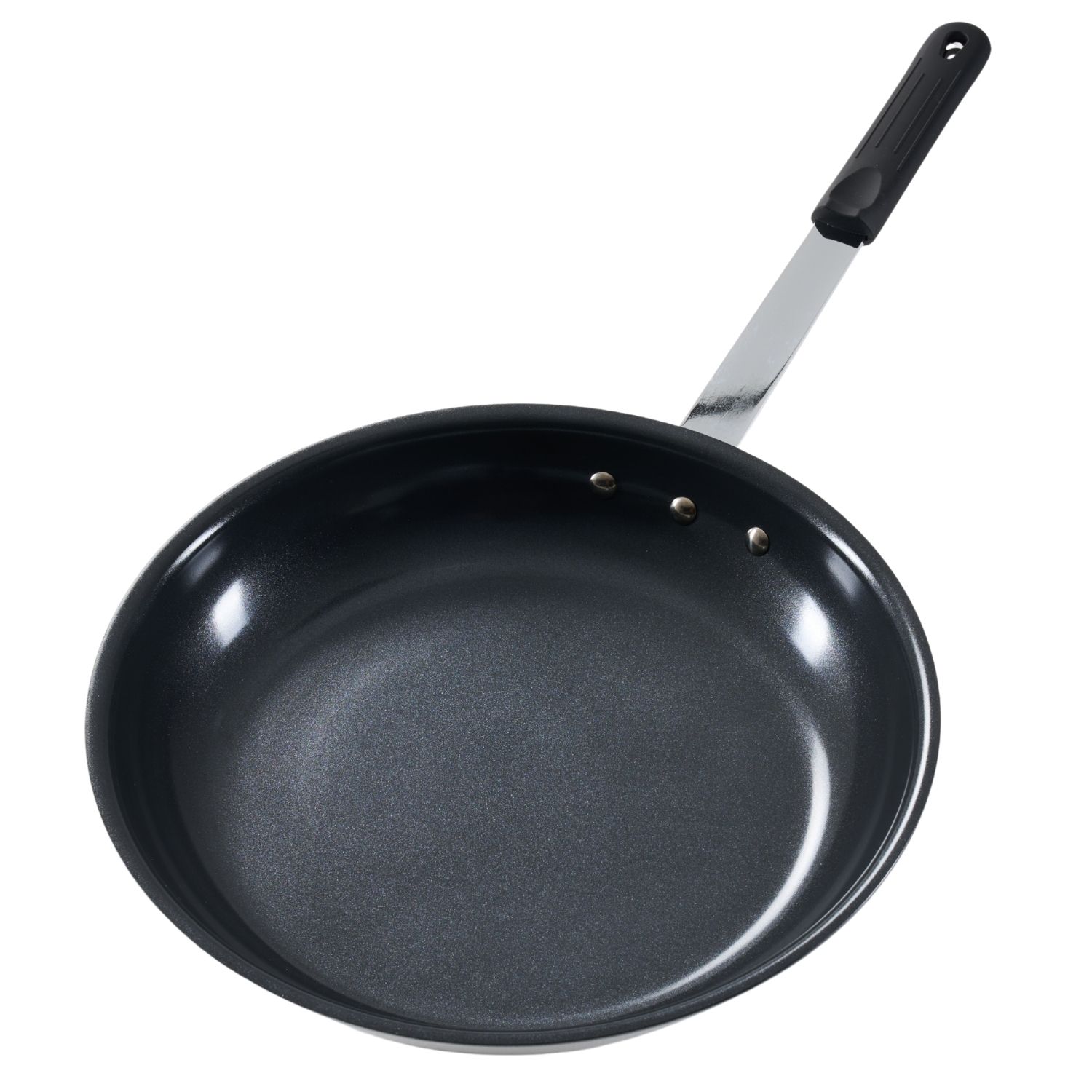

Photos from current listings. Actual item, color, and included accessories may vary.
Ceramic Pan Set Buying Guide
Ceramic pan sets pair a mineral-based (often sol-gel) nonstick coating with aluminum or stainless bases, trading the longer release life of PTFE for higher heat tolerance and PFAS-free cooking. The primary trade-off is coating durability versus base conductivity: thin stamped aluminum heats fast but warps, while clad stainless or forged aluminum with a magnetic base survives induction and oven use. The decision rule is simple—buy sets with a forged or clad base and a reinforced ceramic tier from a brand that specifies coating thickness; skip thin stamped pans with detachable handles or unrated coatings.
Median $85.68
Key takeaways
- Ceramic nonstick is a sol-gel silica coating, not pure ceramic; it is PFAS-free and stable to roughly 450–500°F, but loses release performance faster than PTFE after repeated high-heat cycles.
- Base construction separates tiers: forged aluminum with a stainless steel induction plate resists warping and works on all stovetops, while thin stamped aluminum (under 2.5 mm) dents and hotspots on gas and induction.
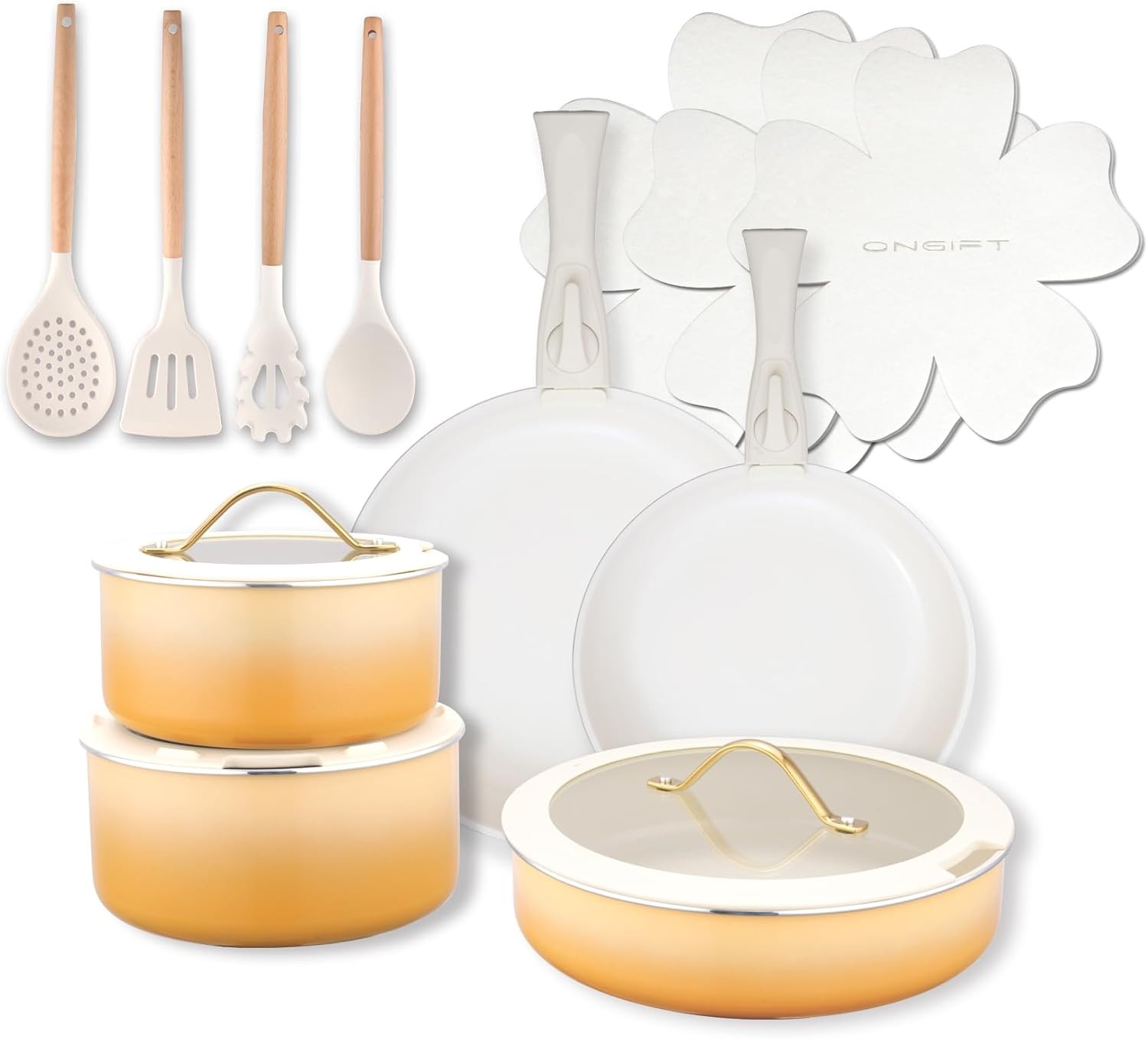
- Detachable-handle sets save cabinet space and allow oven-to-table use, but the handle latch is a wear point; fixed riveted stainless handles are more durable for daily cooking.
At a glance
- Category
- Cookware & Cutlery
- Last updated
- Nov 28, 2026
Current offers
Highlights
- Ceramic nonstick is a sol-gel silica coating, not pure ceramic; it is PFAS-free and stable to roughly 450–500°F, but loses release performance faster than PTFE after repeated high-heat cycles.
- Base construction separates tiers: forged aluminum with a stainless steel induction plate resists warping and works on all stovetops, while thin stamped aluminum (under 2.5 mm) dents and hotspots on gas and induction.
- Detachable-handle sets save cabinet space and allow oven-to-table use, but the handle latch is a wear point; fixed riveted stainless handles are more durable for daily cooking.
- Coating thickness matters more than marketing: quality ceramic layers run 25–40 microns over a primer; unrated or single-layer coatings scuff to bare metal within months.
Best use cases
- Best fit: induction or glass-top cooks should choose forged aluminum or clad stainless bases with a magnetic steel plate rated for induction; skip thin stamped aluminum that won't trigger the burner.
- Best fit: oven-finishing and broiler-adjacent cooking needs pans rated to at least 450°F with oven-safe handles (stainless or removable silicone); skip sets with plastic handles rated only to 350°F.
- Best fit: small kitchens and RV/galley use benefit from detachable-handle nesting sets; skip these as the primary daily set if you cook with metal utensils or high heat, since the latch and coating wear faster.
- Wrong fit: high-heat searing and metal-utensil cooking belong to cast iron or carbon steel; ceramic nonstick degrades above 500°F and scratches, so keep a separate skillet for those tasks.
Buying tips
- Match pan diameter to burner: 8-inch for small burners and eggs, 10-inch for two servings, 12-inch for family sautés; a 10-inch skillet and 2-quart saucepan cover most daily cooking.
- Check base thickness: seek at least 2.5–3 mm forged aluminum or a full clad stainless base; thinner pans warp and lose contact with induction and glass cooktops.
- Confirm oven and dishwasher ratings: oven-safe to 450°F minimum for finishing, and dishwasher-safe only if the coating is labeled reinforced; hand washing extends ceramic life significantly.
- Prefer riveted stainless or fully sealed handles over screwed-on plastic; detachable handles are space-savers but not durability leaders for a primary set.
Specs
| Coating Type | Sol-gel ceramic (PFAS-free) vs PTFE |
|---|---|
| Base Construction | Forged aluminum / clad stainless vs stamped |
| Induction Ready | Magnetic steel plate required |
| Oven Safe Temp | 450–500°F typical; plastic handles 350°F |
Related searches
What to check before buying
- Measure your largest burner and oven interior: a 12-inch skillet needs a 12-inch burner zone and oven clearance; verify handle length fits under the broiler element.
- Confirm your cooktop type: induction requires a magnetic stainless base plate; gas and electric coil work with any flat-bottom pan, but glass-top demands a perfectly flat, warp-resistant base.
- Check voltage and plug standard if the set includes any electric component (rare); otherwise verify the set is stovetop-only and not advertised as induction-compatible without a magnetic base.
- Plan storage: nesting sets with detachable handles need less cabinet height, while fixed-handle 12-inch skillets need a 14-inch-wide slot or hanging space.
FAQ
Data sources: eBay / Amazon listings and product attribute feeds. Updated Nov 28, 2026.
Some links on this page are affiliate links. If you buy after clicking one, we may earn a commission at no extra cost to you. This does not change which products appear here or their order. Affiliate disclosure.