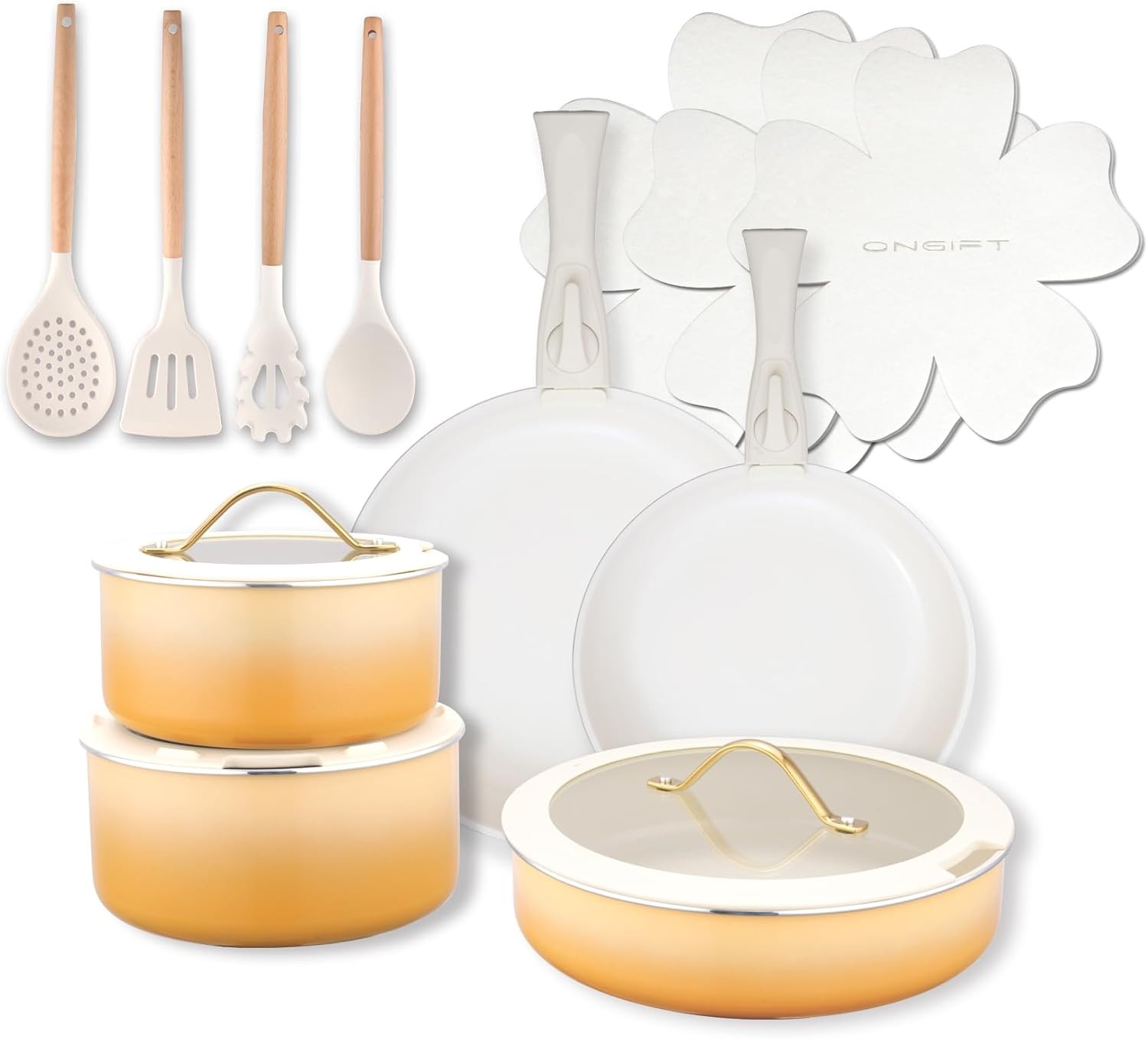

Photos from current listings. Actual item, color, and included accessories may vary.
Ceramic Pot And Pan Buying Guide
Ceramic pot and pan sets use a sol-gel ceramic coating over an aluminum or stainless steel base, delivering PTFE-free nonstick performance but with a shorter lifespan than traditional coated cookware. The core trade-off is coating thickness and base construction: thin sprayed ceramic on stamped aluminum warps and loses release quickly, while thicker ceramic over a clad or forged base resists scratching and heat cycling. Buy ceramic only if you cook at low-to-medium heat and accept a 1-3 year coating life; otherwise choose clad stainless or cast iron.
Key takeaways
- Ceramic coatings are sol-gel silica applied 20-40 microns thick; thicker coatings resist scratching but still degrade above 450°F.
- Detachable-handle sets save 40-60% storage space but rely on a single locking mechanism that must be rated for the pan's loaded weight.
- Stainless steel bases with encapsulated aluminum cores resist warping on induction; stamped aluminum bases bow above 400°F.
At a glance
- Category
- Cookware & Cutlery
- Last updated
- Nov 28, 2026
Current offers
Highlights
- Ceramic coatings are sol-gel silica applied 20-40 microns thick; thicker coatings resist scratching but still degrade above 450°F.
- Detachable-handle sets save 40-60% storage space but rely on a single locking mechanism that must be rated for the pan's loaded weight.
- Stainless steel bases with encapsulated aluminum cores resist warping on induction; stamped aluminum bases bow above 400°F.
- Ceramic is PTFE- and PFOA-free but not truly nonstick forever; release drops noticeably after 200-300 dishwasher cycles or metal utensil use.
Best use cases
- Best fit: low-to-medium heat eggs, sauces, and reheated leftovers on gas or electric — choose a 3-5 piece ceramic set with riveted stainless handles.
- Best fit: small kitchens and RV/tiny-home storage — pick a detachable-handle ceramic set with a locking rating for at least 3 lb per pan.
- Wrong fit: high-heat searing, wok cooking, or daily dishwasher use — ceramic glaze cracks and releases degrade; use clad stainless or cast iron instead.
- Wrong fit: induction cooktops unless the base is explicitly magnetic stainless-clad; pure aluminum ceramic pans will not heat.
Buying tips
- Match pan diameter to burner: 8-inch for 6-inch burners, 10-inch for 8-inch; oversized pans on small burners warp from uneven heat.
- Choose ceramic over a forged or clad magnetic stainless base for induction; stamped aluminum is gas/electric only.
- Detachable-handle sets need a lock rated for the heaviest pan filled with food — at least 3 lb static load per pan.
- Skip sets with exposed aluminum rims; ceramic should wrap the rim or the base will corrode in the dishwasher.
Specs
| Coating Type | Sol-gel ceramic (PTFE-free) |
|---|---|
| Base Material | Aluminum, forged or clad stainless |
| Induction Ready | Magnetic stainless base only |
| Max Oven Temp | 450°F / 232°C typical |
Related searches
What to check before buying
- Measure your largest burner and oven interior: a 12-inch pan needs a 13-inch burner zone and 2 inches of oven clearance.
- Confirm your cooktop type: induction requires a magnetic stainless base; gas and electric accept aluminum or clad.
- Check cabinet height for stacking: detachable-handle sets need 2-3 inches per nested pan; fixed-handle sets need 4-6 inches.
- Verify lid compatibility: tempered glass lids with steam vents fit specific diameters; mismatched lids waste vertical space.
FAQ
Data sources: eBay / Amazon listings and product attribute feeds. Updated Nov 28, 2026.
Some links on this page are affiliate links. If you buy after clicking one, we may earn a commission at no extra cost to you. This does not change which products appear here or their order. Affiliate disclosure.