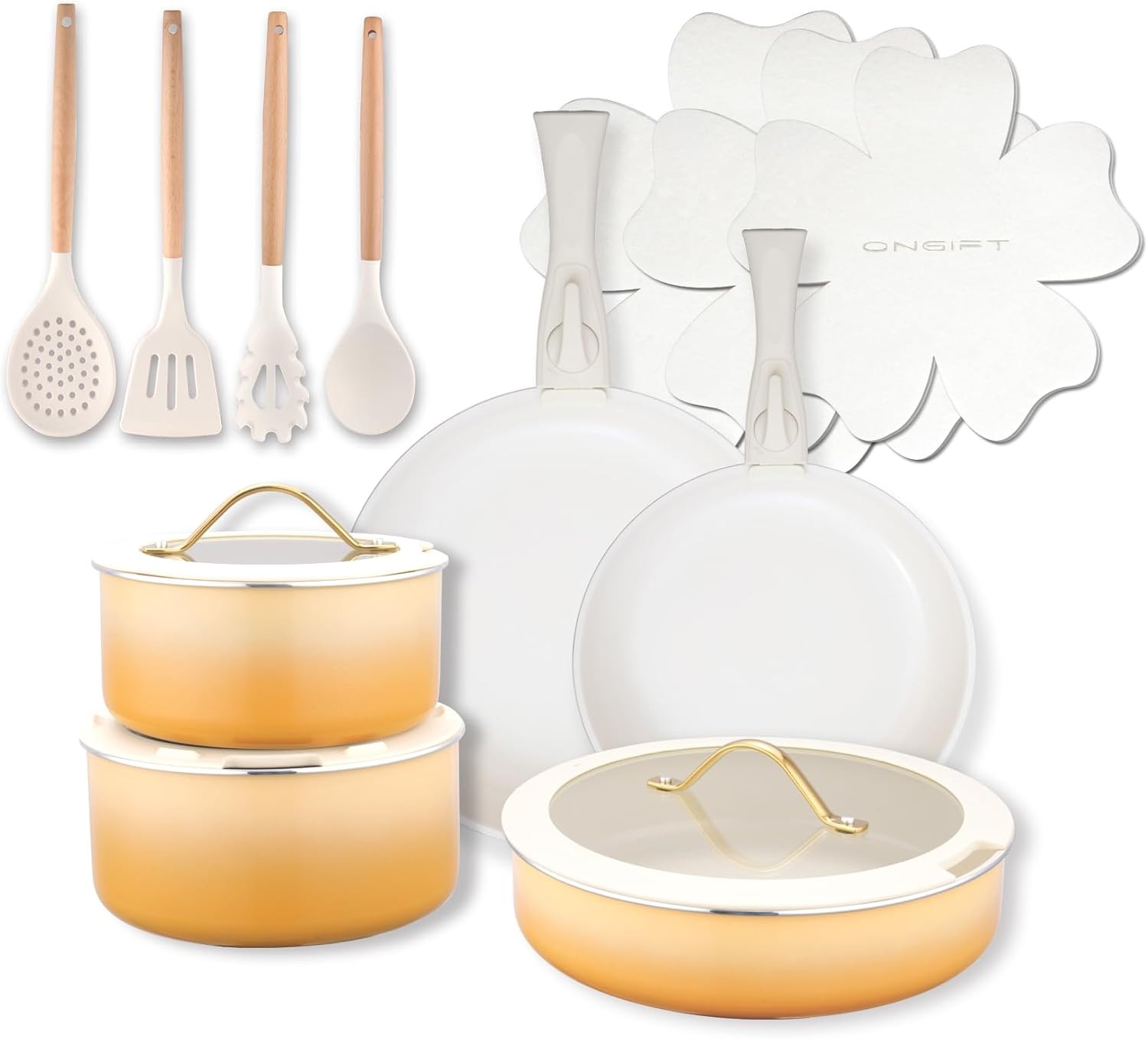

Photos from current listings. Actual item, color, and included accessories may vary.
Ceramic Pot Set Buying Guide
Ceramic pot sets span two very different architectures—true ceramic (clay/stoneware) and metal cookware with a ceramic nonstick coating—so the first decision is substrate, not color. The core trade-off is thermal mass and oven/table versatility versus lightweight, stick-resistant daily cooking; true ceramic survives high heat but chips, while coated metal resists sticking but degrades if overheated or scrubbed. Choose true ceramic for oven-to-table and slow moist cooking, coated metal for everyday stovetop speed and easy release.
Median $137.68
Key takeaways
- True ceramic (stoneware) is fired clay—oven-safe to roughly 450–500°F, but thermal shock from cold liquid or a cold countertop can crack it; never move it hot-to-cold.
- Ceramic-coated metal sets use aluminum or stainless bodies; the coating is typically PTFE-free sol-gel, which loses release performance above roughly 450°F and scratches under metal utensils.
- Detachable-handle sets with ceramic coating save cabinet space and stack, but the handle coupling is the wear point—look for a stainless lug and a rated load rather than plastic clips.
At a glance
- Category
- Cookware & Cutlery
- Last updated
- Nov 28, 2026
Current offers
Highlights
- True ceramic (stoneware) is fired clay—oven-safe to roughly 450–500°F, but thermal shock from cold liquid or a cold countertop can crack it; never move it hot-to-cold.
- Ceramic-coated metal sets use aluminum or stainless bodies; the coating is typically PTFE-free sol-gel, which loses release performance above roughly 450°F and scratches under metal utensils.
- Detachable-handle sets with ceramic coating save cabinet space and stack, but the handle coupling is the wear point—look for a stainless lug and a rated load rather than plastic clips.
- Enameled cast iron (ceramic-glass enamel over iron) is a third path: heaviest, sears and retains heat best, oven-safe to 500°F, but chips at the rim if banged and must not be thermal-shocked.
Best use cases
- Best fit: true ceramic or enameled cast iron for oven-to-table braises, stews, and bread—pick cast iron when you also want stovetop searing; skip coated aluminum here.
- Best fit: ceramic-coated aluminum or stainless sets for everyday eggs, sauces, and quick sautés on electric or gas; choose stainless bodies if you use induction or dishwasher cycles.
- Best fit: detachable-handle ceramic sets for small kitchens and RV/van use where nesting matters; skip them for high-heat searing or daily dishwasher abuse.
- Wrong fit: true ceramic on high-output gas burners or direct broiler heat—thermal shock and flame impingement crack clay; use coated metal or cast iron instead.
Buying tips
- Match cooktop first: induction requires a magnetic base—choose stainless or cast iron bodies; pure ceramic and many aluminum sets will not heat on induction.
- Size the set to your burners and oven: a 10–11 in skillet and 3–4 qt pot cover most two-person cooking; step to 5–6 qt only if you regularly cook for four or more.
- For coated metal, confirm the coating is labeled PFAS/PTFE-free and the body is at least 2.5–3 mm aluminum or clad stainless for even heat and warp resistance.
- For true ceramic, check the label says oven-safe and gives a temperature limit; unglazed exteriors need seasoning and are not dishwasher-safe.
Specs
| Substrate | Fired clay / coated aluminum / enameled iron |
|---|---|
| Induction Ready | Stainless or cast iron only |
| Oven Limit | 350–500°F by substrate |
| Coating Type | Sol-gel ceramic / glass enamel |
Related searches
What to check before buying
- Measure your largest burner and oven interior: confirm pot diameter fits the burner and handles clear the oven walls and door.
- Confirm your cooktop type—induction demands magnetic bases, so verify stainless or cast iron before buying any ceramic set.
- Check cabinet space and lid storage: nesting detachable-handle sets save room; fixed-handle sets need roughly their full footprint per pot.
- Verify voltage and plug only for electric countertop units; stovetop and oven pots have no electrical requirement.
FAQ
Data sources: eBay / Amazon listings and product attribute feeds. Updated Nov 28, 2026.
Some links on this page are affiliate links. If you buy after clicking one, we may earn a commission at no extra cost to you. This does not change which products appear here or their order. Affiliate disclosure.