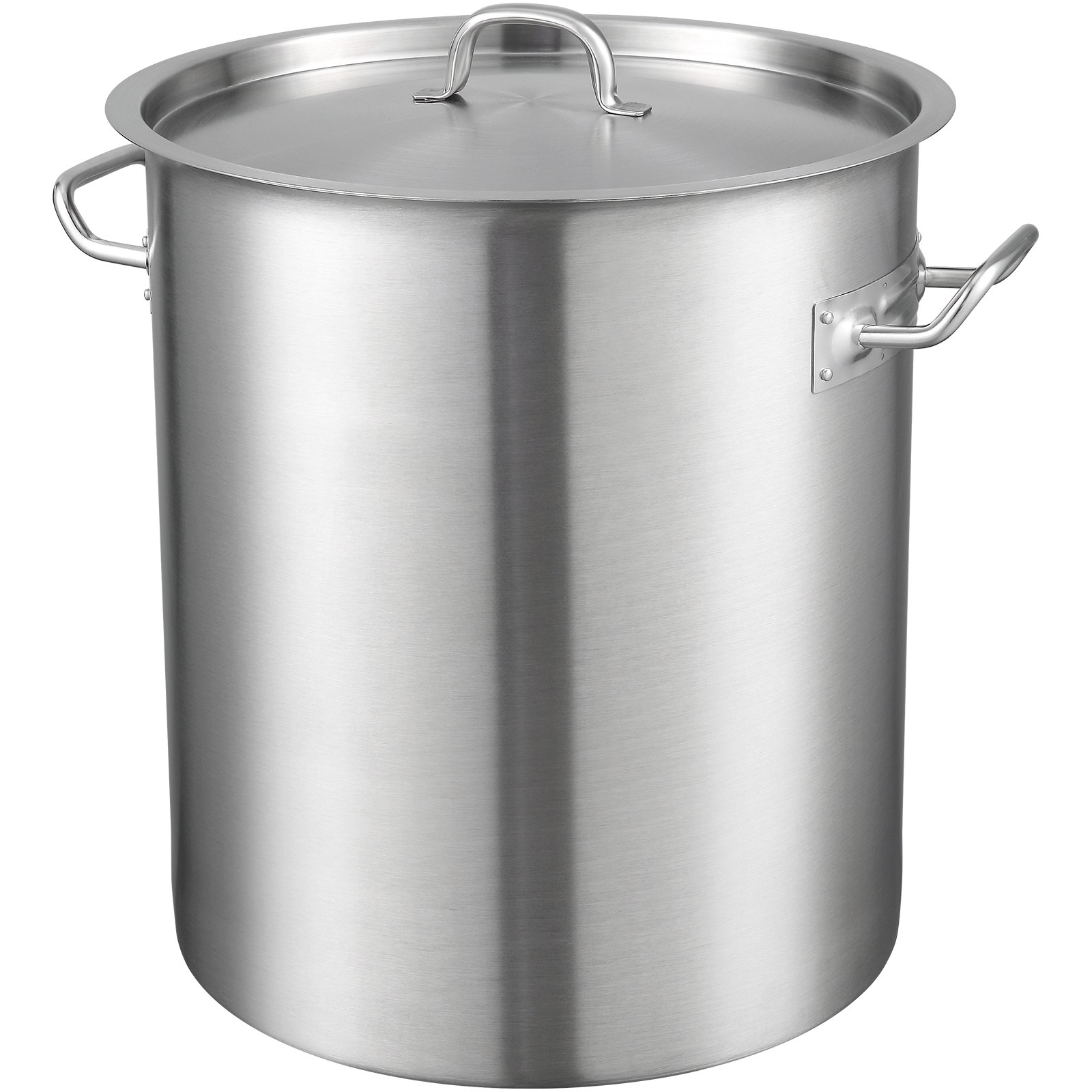

Photos from current listings. Actual item, color, and included accessories may vary.
Commercial Stock Pot Buying Guide
Commercial stock pots are high-capacity vessels (typically 16–100+ quarts) built for batch cooking, canning, brewing, and food service, where the key trade-off is wall/base thickness and metal grade versus weight and cost. The decisive rule: choose 18/8 (304) stainless with a clad or encapsulated aluminum core and a 4–6 mm base for durability and even heat; skip thin single-ply 0.5–0.8 mm pots unless you only need occasional water boiling.
Key takeaways
- Metal grade: 18/8 (304) stainless resists pitting and acidic stocks; 18/0 (430) is magnetic but less corrosion-resistant and common on budget pots.
- Base construction: a clad/encapsulated aluminum core (3–5 layers total) spreads heat evenly; single-ply 0.5–0.8 mm stainless creates hot spots and warps.
- Capacity tiers: 16–24 qt for home canning/brewing, 32–42 qt for large families and clubs, 60–100 qt for commercial kitchens and crawfish boils.
At a glance
- Category
- Cookware & Cutlery
- Last updated
- Nov 28, 2026
Current offers
Highlights
- Metal grade: 18/8 (304) stainless resists pitting and acidic stocks; 18/0 (430) is magnetic but less corrosion-resistant and common on budget pots.
- Base construction: a clad/encapsulated aluminum core (3–5 layers total) spreads heat evenly; single-ply 0.5–0.8 mm stainless creates hot spots and warps.
- Capacity tiers: 16–24 qt for home canning/brewing, 32–42 qt for large families and clubs, 60–100 qt for commercial kitchens and crawfish boils.
- Lid and handle design: tight-fitting domed lids retain steam; riveted, stay-cool handles rated for the pot's full loaded weight (water weighs 2.2 lb/qt).
Best use cases
- Best fit: home canners and homebrewers processing 5–10 gallon batches — pick a 20–24 qt clad-bottom pot with a steamer/basket insert and a flat base that fits your largest burner.
- Best fit: clubs, churches, and caterers doing crawfish boils or chili for 50+ people — choose 40–60 qt with riveted handles and a lid; skip thin 1 mm pots that dent under full load.
- Wrong fit: induction cooktops need a magnetic base (18/0 or a magnetic clad layer); pure 18/8 single-ply pots will not heat on induction — pick a clad pot labeled induction-compatible.
- Wrong fit: glass-top ranges — avoid pots wider than the burner ring and never slide a heavy 60+ qt pot across the surface; use a trivet or outdoor burner for large batches.
Buying tips
- Sizing math: 1 qt of water weighs ~2.1 lb; a full 42 qt pot weighs ~90 lb — confirm your burner and lifting ability before buying above 32 qt.
- Grade check: look for '18/8' or '304' stamped on the pot; '18/0' or '430' is acceptable only for water-based cooking, not long-simmer acidic tomato or vinegar stocks.
- Base thickness: for stock pots, demand a 4–6 mm base (clad or disk-bottom); below 3 mm, heat spreads unevenly and the bottom can warp on high heat.
- Lid and handles: riveted (not spot-welded) handles and a domed lid that seals; a vent hole prevents boil-overs, and a steamer insert adds canning/brewing flexibility.
Specs
| Metal Grade | 18/8 (304) vs 18/0 (430) stainless |
|---|---|
| Base Construction | Clad aluminum core vs single-ply |
| Capacity Range | 16–100 qt (home to commercial) |
| Cooktop Compat | Induction needs magnetic base |
Related searches
What to check before buying
- Measure your largest burner diameter and oven interior — a 42 qt pot is typically 18–20 inches wide and will not fit most home ovens.
- Confirm cooktop type: induction requires a magnetic base; glass-top requires a flat, heavy base and pot diameter within the burner ring.
- Check ceiling clearance and ventilation if using a high-output outdoor propane burner for 60+ qt batches.
- Verify the pot's interior depth against your longest utensils and canning rack; a 24 qt pot is typically 12–14 inches deep.
FAQ
Data sources: eBay / Amazon listings and product attribute feeds. Updated Nov 28, 2026.
Some links on this page are affiliate links. If you buy after clicking one, we may earn a commission at no extra cost to you. This does not change which products appear here or their order. Affiliate disclosure.