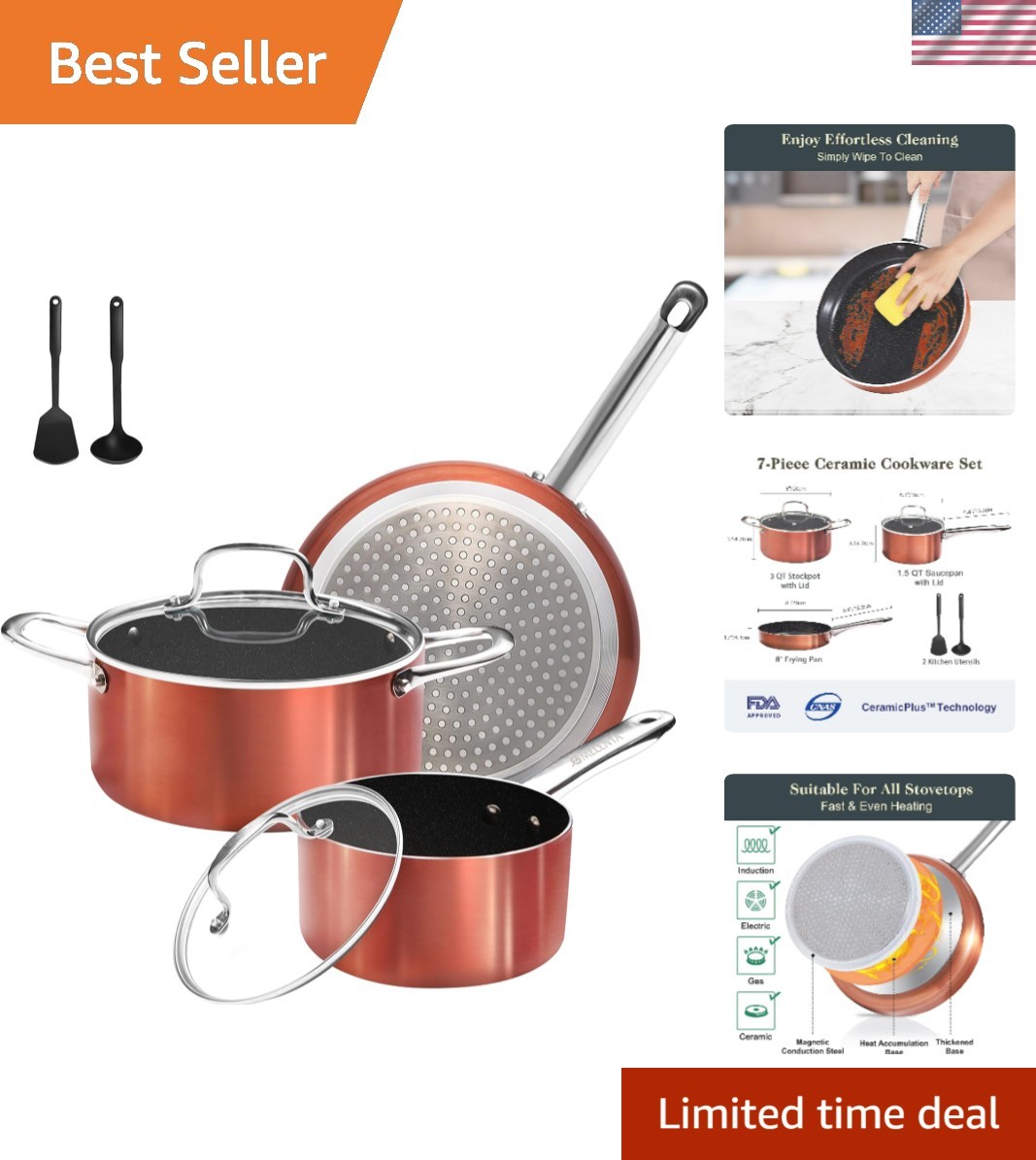

Photos from current listings. Actual item, color, and included accessories may vary.
Copper Cookware Set Buying Guide
Copper cookware sets split into two distinct constructions: solid copper (1.5–3 mm tin- or stainless-lined) for unmatched heat responsiveness, and copper-clad or copper-ceramic coated aluminum for lighter weight and low maintenance. The decisive trade-off is thermal performance versus reactivity and care: solid copper demands hand washing and re-tinning, while copper-ceramic nonstick suits daily low-oil cooking but degrades in 3–5 years. Buy solid copper only if you accept maintenance; otherwise choose a copper-core clad set.
Median $144.00 · Pre-owned listings
Key takeaways
- Solid copper conductivity is ~398 W/m·K versus ~205 for aluminum and ~16 for stainless steel—1.5 mm copper responds to heat changes in seconds.
- Copper-ceramic sets are aluminum cores with a sprayed ceramic layer typically 20–40 µm thick; the coating, not the copper color, determines lifespan.
- Tin linings soften above 230°C and require re-tinning every 5–20 years; stainless-steel linings (0.2–0.4 mm) tolerate high heat and metal utensils.
At a glance
- Category
- Cookware & Cutlery
- Last updated
- Nov 28, 2026
Current offers
Highlights
- Solid copper conductivity is ~398 W/m·K versus ~205 for aluminum and ~16 for stainless steel—1.5 mm copper responds to heat changes in seconds.
- Copper-ceramic sets are aluminum cores with a sprayed ceramic layer typically 20–40 µm thick; the coating, not the copper color, determines lifespan.
- Tin linings soften above 230°C and require re-tinning every 5–20 years; stainless-steel linings (0.2–0.4 mm) tolerate high heat and metal utensils.
- Tri-ply clad sets bond 0.5–1 mm copper to stainless; 5-ply versions add layers but only the copper core thickness governs heat spread.
Best use cases
- Best fit: solid copper 1.5–2.5 mm tin-lined for sauce work, sugar, and egg pans where precise temperature control matters—skip for high-heat searing.
- Best fit: copper-ceramic coated aluminum for everyday low-oil cooking on electric or induction-compatible bases—skip if you routinely use metal utensils.
- Best fit: copper-core tri-ply stainless for induction ranges and dishwasher tolerance—skip if you want the raw responsiveness of solid copper.
- Wrong fit: unlined or decorative vintage copper pans for daily cooking—tin may be worn through; use only as serving pieces unless re-tinned.
Buying tips
- Check lining: tin-lined for responsiveness and gentle foods; stainless-lined for durability, high heat, and metal utensils—solid copper with no lining is decorative only.
- Gauge thickness: 1.5 mm is entry-level responsive; 2–2.5 mm resists warping on gas; above 3 mm is heavy and slow to respond.
- Match base to cooktop: solid copper and most copper-ceramic sets are not induction-ready unless a magnetic steel base of at least 3 mm is bonded.
- Verify handle attachment: riveted stainless or cast iron handles outlast soldered brass; soldered handles fail above 230°C and cannot go in the oven.
Specs
| Construction | Solid copper vs copper-core clad vs ceramic-coated |
|---|---|
| Copper Thickness | 1.5–3 mm (solid); 0.5–1 mm (clad core) |
| Lining Type | Tin (230°C) vs stainless (260°C+) |
| Induction Ready | Magnetic steel base required |
Related searches
What to check before buying
- Measure your largest burner: solid copper pans wider than the burner ring cause hot spots and handle overheating on gas.
- Confirm induction compatibility: place a magnet on the base—if it does not stick firmly, the pan will not heat on induction.
- Check oven rating: tin-lined copper is typically oven-safe to 230°C; stainless-lined and ceramic-coated sets often reach 260°C.
- Plan storage: copper scratches and dents; allow 2–3 cm clearance per pan and avoid stacking without felt pads.
FAQ
Data sources: eBay / Amazon listings and product attribute feeds. Updated Nov 28, 2026.
Some links on this page are affiliate links. If you buy after clicking one, we may earn a commission at no extra cost to you. This does not change which products appear here or their order. Affiliate disclosure.