
Photos from current listings. Actual item, color, and included accessories may vary.
Frying Pan Buying Guide
A frying pan is the workhorse skillet defined by its base material and cooking surface: cast iron and carbon steel offer seared crust and decades of durability, while aluminum and stainless steel with nonstick coatings trade heat response and easy release for finite coating life. The core trade-off is thermal mass and surface longevity versus weight and convenience. Buy cast iron or clad stainless for a lifetime pan, coated aluminum for eggs and delicate proteins, and skip thin unclad aluminum or unverified 'titanium' alloys for high-heat searing.
Median $51.99 · Pre-owned listings
Key takeaways
- Cast iron skillets (6/8/10 in sets) are pre-seasoned, oven-safe to 500°F+, and deliver the highest heat retention; they weigh 2-3x a comparable aluminum pan.
- Nonstick coatings split into PTFE (PFOA-free) and ceramic; both degrade with high heat and metal utensils, while ceramic typically loses release sooner than PTFE.
- Clad stainless steel (tri-ply aluminum core between steel layers) is dishwasher-safe, oven-safe, and induction-compatible; unclad stainless is a poor heat conductor.
At a glance
- Category
- Cookware & Cutlery
- Last updated
- Nov 28, 2026
Current offers
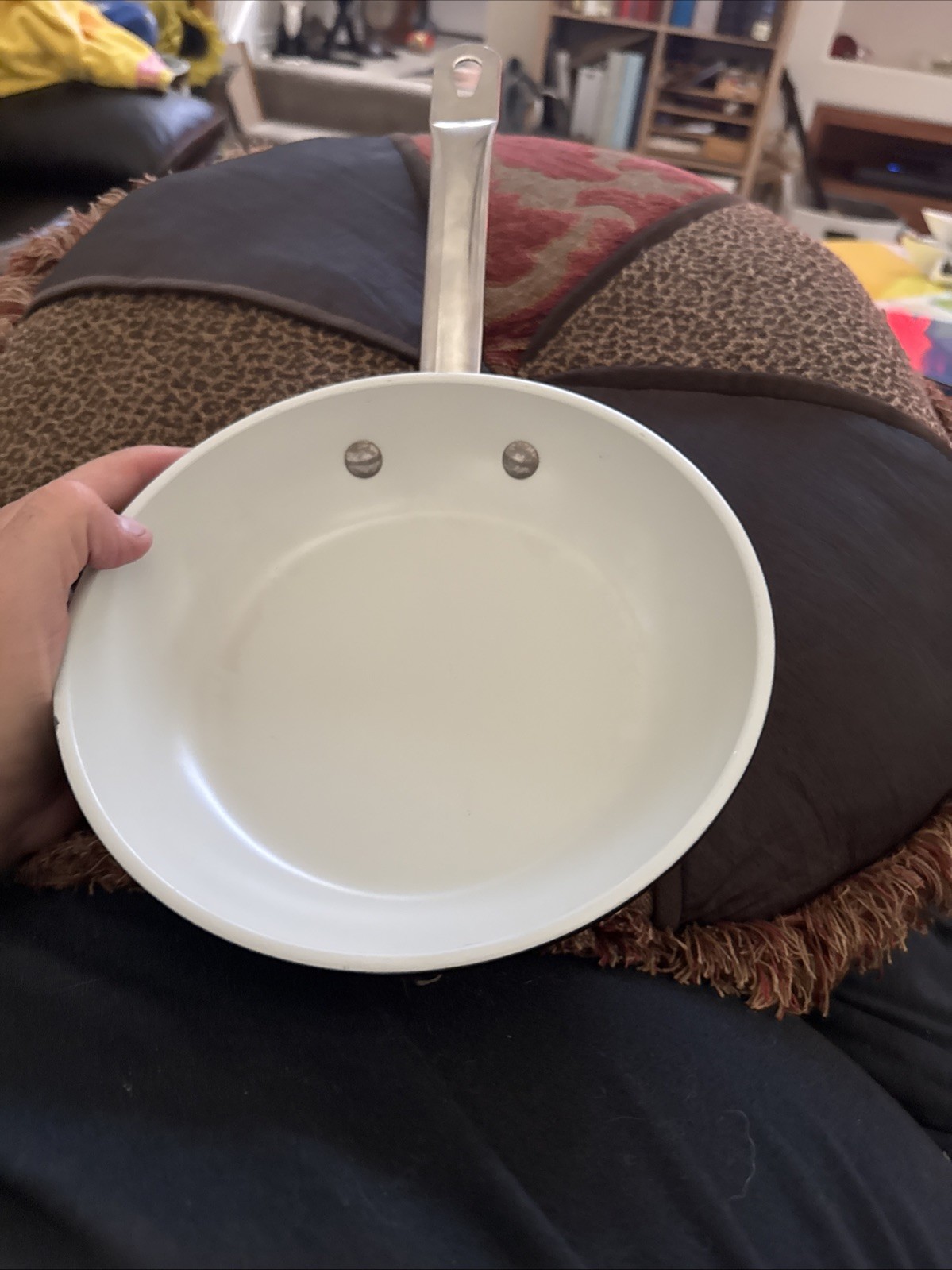 Paderno 8 Inch Frying Stainless Foodservice Pan Great Condition WOW$19.99Last checked Nov 27, 2026View on eBay
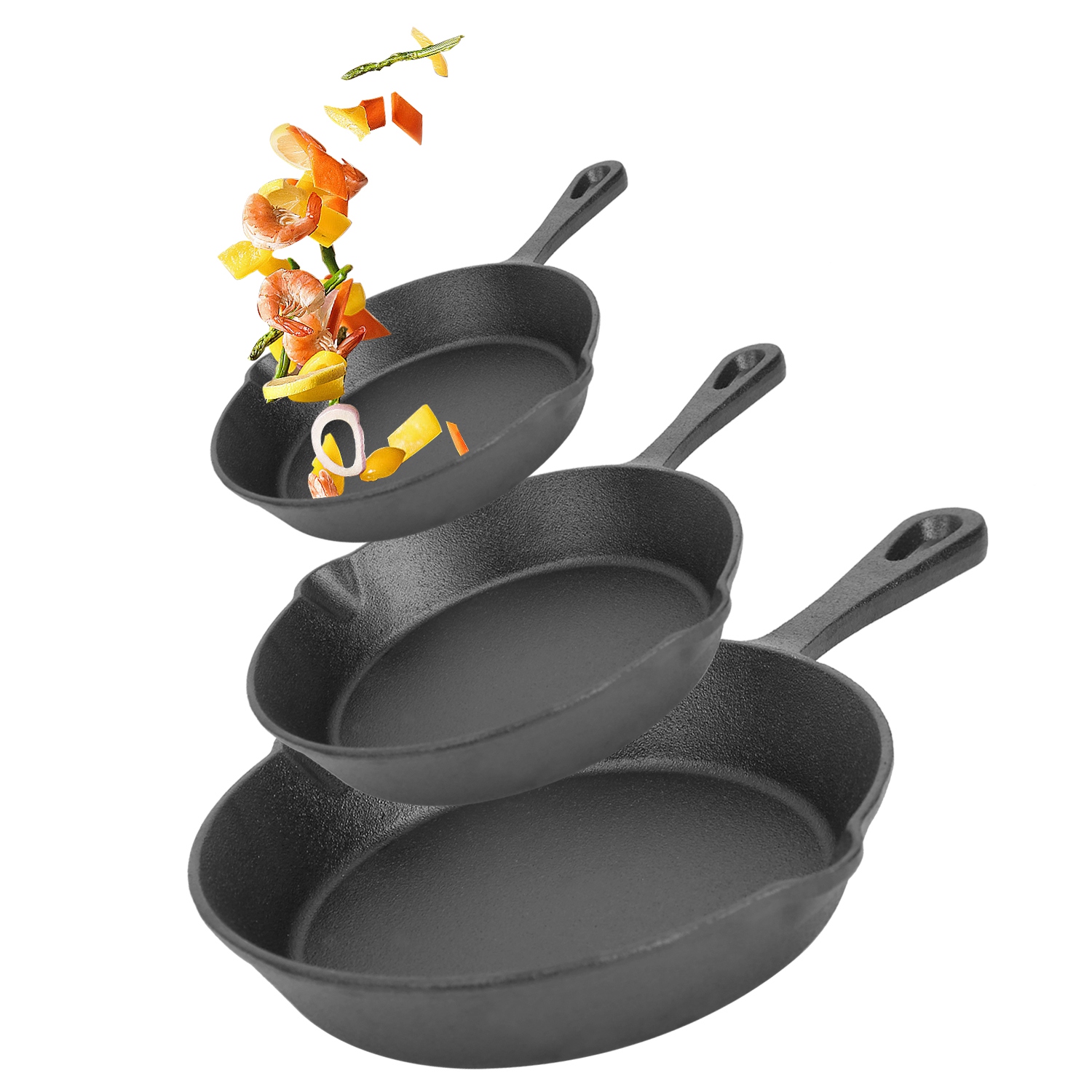 3Pcs Pre-Seasoned Cast Iron Skillet Set For Indoor Outdoor 6in 8in 10in Non-Stick Oven Safe Cookware Heat-Resistant Frying Pan For Cooking Baking$36.99View on Mallflare
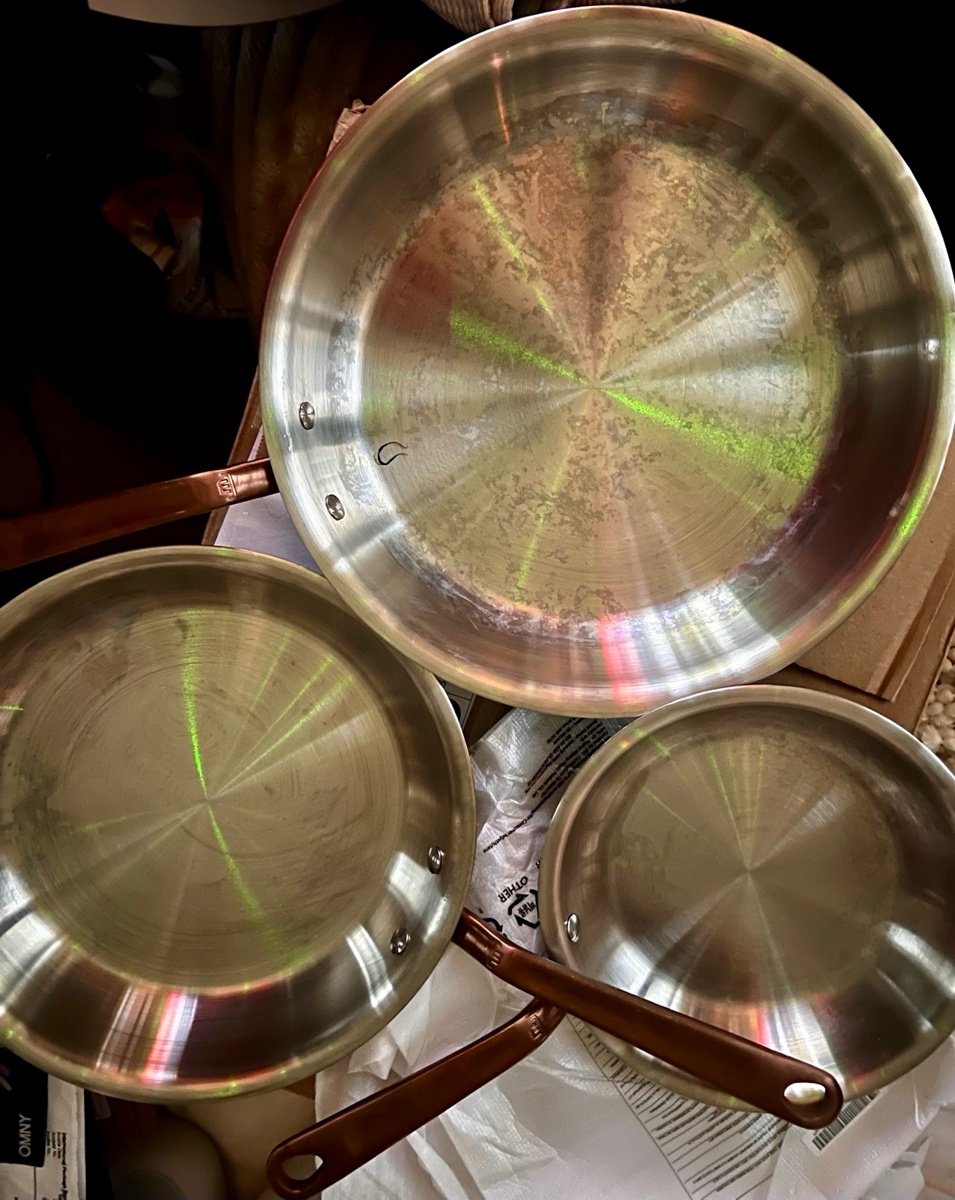 Made in Cookware Stainless Steel Copper Handle 3-Piece Frying Pan Set 8” 10” 12”$200.00Used · Last checked Nov 25, 2026View on eBay
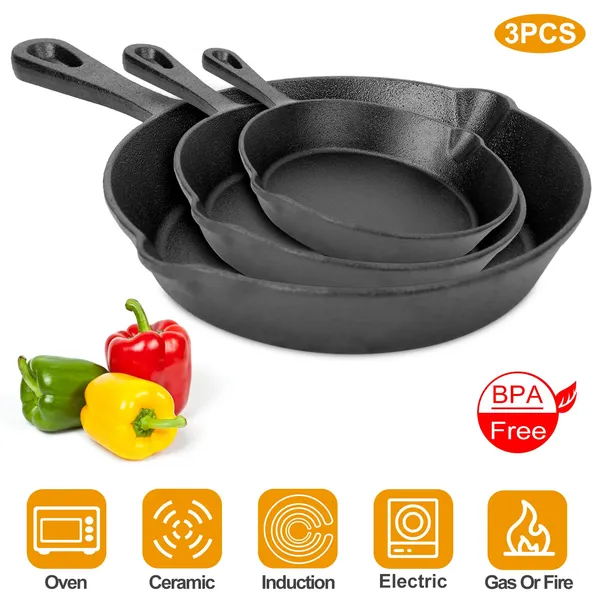 3Pcs Pre-Seasoned Cast Iron Skillet Set 6-8-10in Non-Stick Oven Safe Cookware Heat-Resistant Frying Pan$44.99View on Mallflare
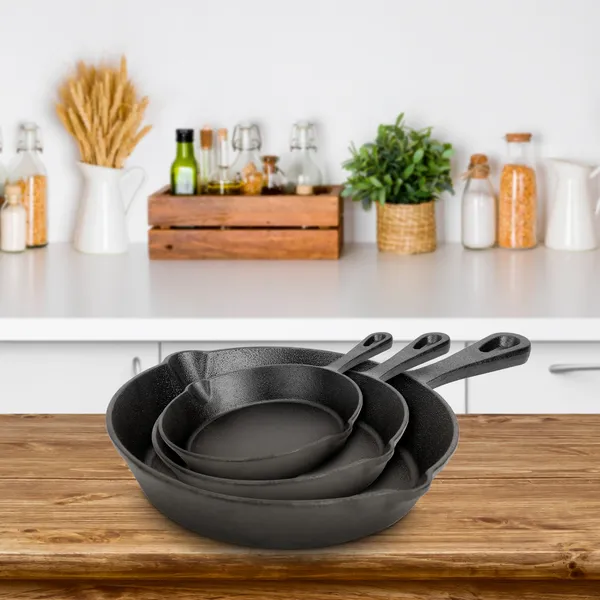 3Pcs Pre-Seasoned Cast Iron Skillet Set 6/8/10in Non-Stick Oven Safe Cookware Heat-Resistant Frying Pan$51.99View on Mallflare
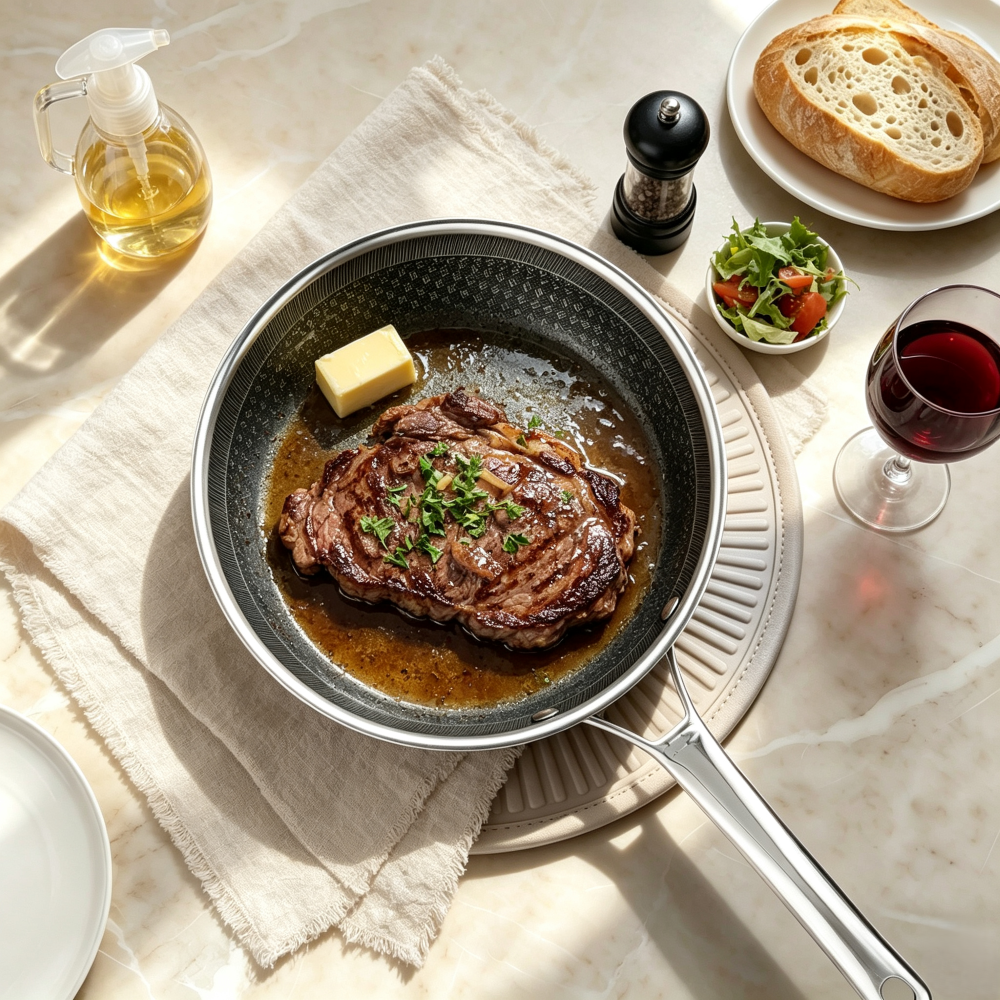 1 Coated Stainless Steel Frying Pan 10in$53.99View on Mallflare
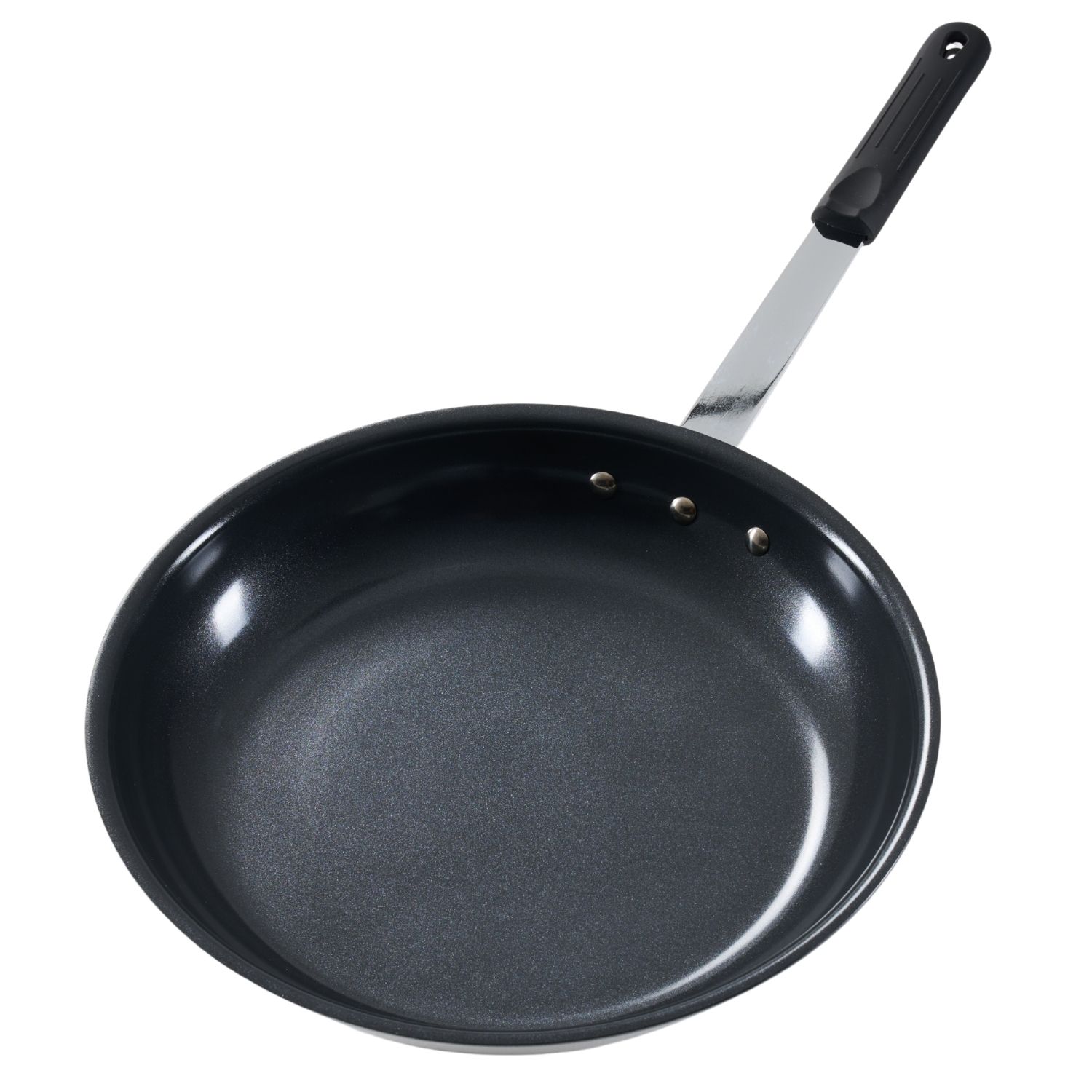 Ceramic Nonstick Egg Pan, Aluminum Frying Pan With Stainless Steel Base, Oven Safe, Dishwasher Skillet$54.99View on Mallflare
Highlights
- Cast iron skillets (6/8/10 in sets) are pre-seasoned, oven-safe to 500°F+, and deliver the highest heat retention; they weigh 2-3x a comparable aluminum pan.
- Nonstick coatings split into PTFE (PFOA-free) and ceramic; both degrade with high heat and metal utensils, while ceramic typically loses release sooner than PTFE.
- Clad stainless steel (tri-ply aluminum core between steel layers) is dishwasher-safe, oven-safe, and induction-compatible; unclad stainless is a poor heat conductor.
- Induction compatibility requires a magnetic base; cast iron and magnetic stainless qualify, while most aluminum and ceramic-coated aluminum pans do not unless a steel base plate is added.
Best use cases
- Best for high-heat searing, cornbread, and campfire/oven-to-table cooking: a pre-seasoned cast iron skillet set in 6/8/10 in covers single eggs through family steaks and never wears out.
- Best for eggs, omelets, and delicate fish: a ceramic or PTFE nonstick aluminum pan with a stainless base gives clean release and lighter handling; expect 1-3 years of coating life with careful use.
- Best for acidic pan sauces, pasta, and dishwasher cleaning: tri-ply clad stainless steel (or a stainless pan with a nonstick coating) resists pitting and tolerates metal utensils.
- Wrong fit: thin unclad aluminum or 'titanium alloy' pans marketed as multifunctional for all stovetops—verify a magnetic base and avoid high-heat searing on any nonstick coating.
Buying tips
- Match pan diameter to burner and task: 8 in for eggs and single servings, 10 in for two to three portions, 12 in for family sautés and searing; a 10 in pan needs at least a 10 in burner or a 12 in induction zone.
- For induction cooktops, choose cast iron, carbon steel, or stainless with a magnetic base; test with a magnet—if it doesn't stick, the pan won't heat on induction.
- For oven use, confirm the handle material and max temperature: cast iron and all-metal stainless go to 500°F+, while most nonstick coatings are rated to 400-450°F and plastic handles lower.
- Weight matters for handling: cast iron 10 in runs 5-7 lb, tri-ply stainless 10 in about 2-3 lb, nonstick aluminum 10 in under 2 lb; pick the heaviest pan you can comfortably lift one-handed with food.
Specs
| Base Material | Cast iron / carbon steel / clad stainless / aluminum |
|---|---|
| Cooktop Compatibility | Gas, electric, ceramic glass; induction if magnetic |
| Oven-Safe Limit | Cast iron 500°F+; nonstick often 400–450°F |
| Common Sizes | 8 in / 10 in / 12 in (20 / 25 / 30 cm) |
Related searches
What to check before buying
- Measure your burner or induction zone diameter and your storage space: a 12 in pan needs a 12 in heat source and cabinet clearance; 10 in is the versatile default.
- Confirm your cooktop type (gas, electric coil, ceramic glass, induction) and verify base compatibility—especially magnetic induction for aluminum and nonstick pans.
- Check oven and broiler limits against the pan's handle and coating rating; remove plastic or silicone handles before broiling.
- Budget for companion items: a lid (many pans sold without one), a 10-12 in splatter screen, and seasoning oil for cast iron; nonstick pans need silicone or wooden utensils.
FAQ
Data sources: eBay / Amazon listings and product attribute feeds. Updated Nov 28, 2026.
Some links on this page are affiliate links. If you buy after clicking one, we may earn a commission at no extra cost to you. This does not change which products appear here or their order. Affiliate disclosure.