
Photos from current listings. Actual item, color, and included accessories may vary.
Griddle Plate Buying Guide
A griddle plate is a flat, heat-conductive cooking surface—cast iron, carbon steel, or stainless steel—used on gas grills, stoves, ovens, or campfires to sear, griddle, and cook foods that fall through grill grates. The primary trade-off is thermal mass and seasoning retention versus weight, rust resistance, and warp risk: cast iron and carbon steel deliver restaurant-grade searing but require oil maintenance, while stainless steel resists rust but heats unevenly. The clear decision rule: buy pre-seasoned cast iron or carbon steel at least 4 mm thick for durable high-heat performance, and choose stainless steel only for low-maintenance, low-acidity cooking where even heat is secondary.
Median $81.49
Key takeaways
- Cast iron and carbon steel both season to a natural non-stick patina; carbon steel is roughly half the weight of cast iron at equal thickness, reducing wrist strain and warp risk.
- Thickness determines heat retention and warp resistance: carbon steel plates 3–4 mm thick hold searing heat and resist warping, while sub-2 mm stainless steel plates can oil-can and develop hot spots.
- Reversible plates (grill ribs on one side, flat on the other) add versatility but reduce usable flat area by roughly 15–20% versus same-size single-sided plates.
At a glance
- Category
- Cookware & Cutlery
- Last updated
- Nov 28, 2026
Current offers
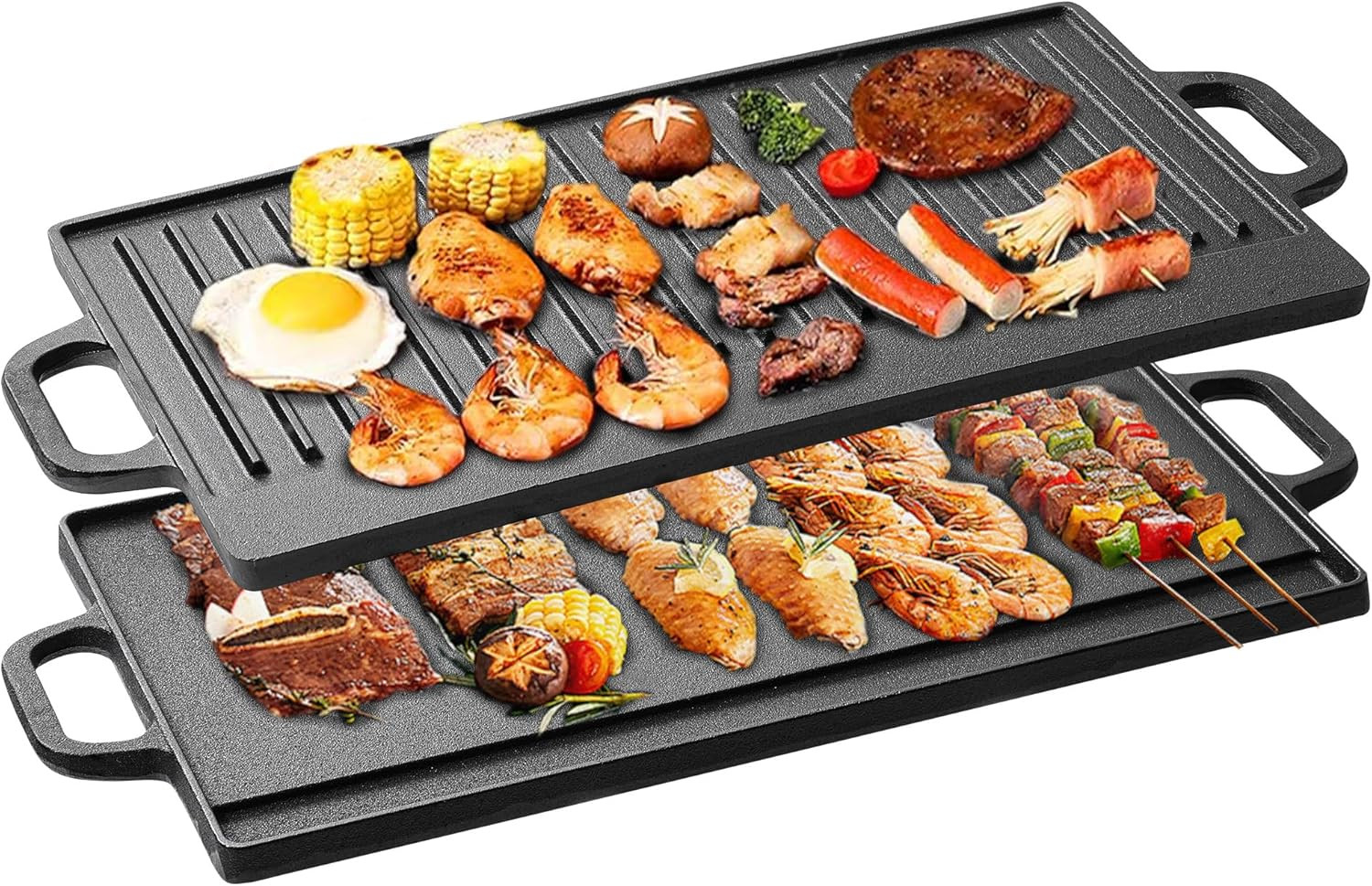 Cast Iron Griddle for Stove, Grill, and Outdoor Cooking$36.22Last checked Nov 26, 2026View on eBay
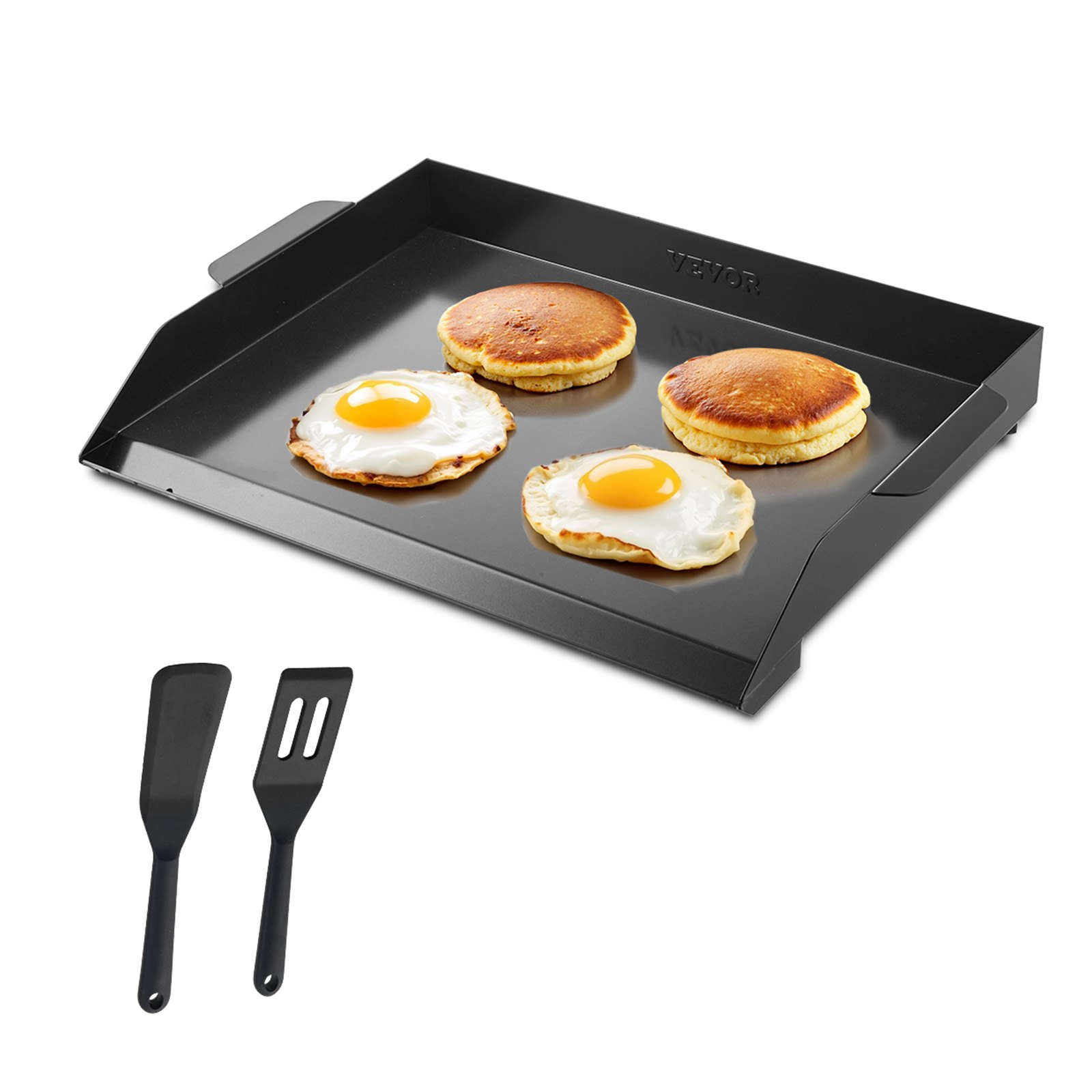 22x16 In Flat Top Griddle Carbon Steel Universal BBQ Grill Pan Cookware$58.99View on Mallflare
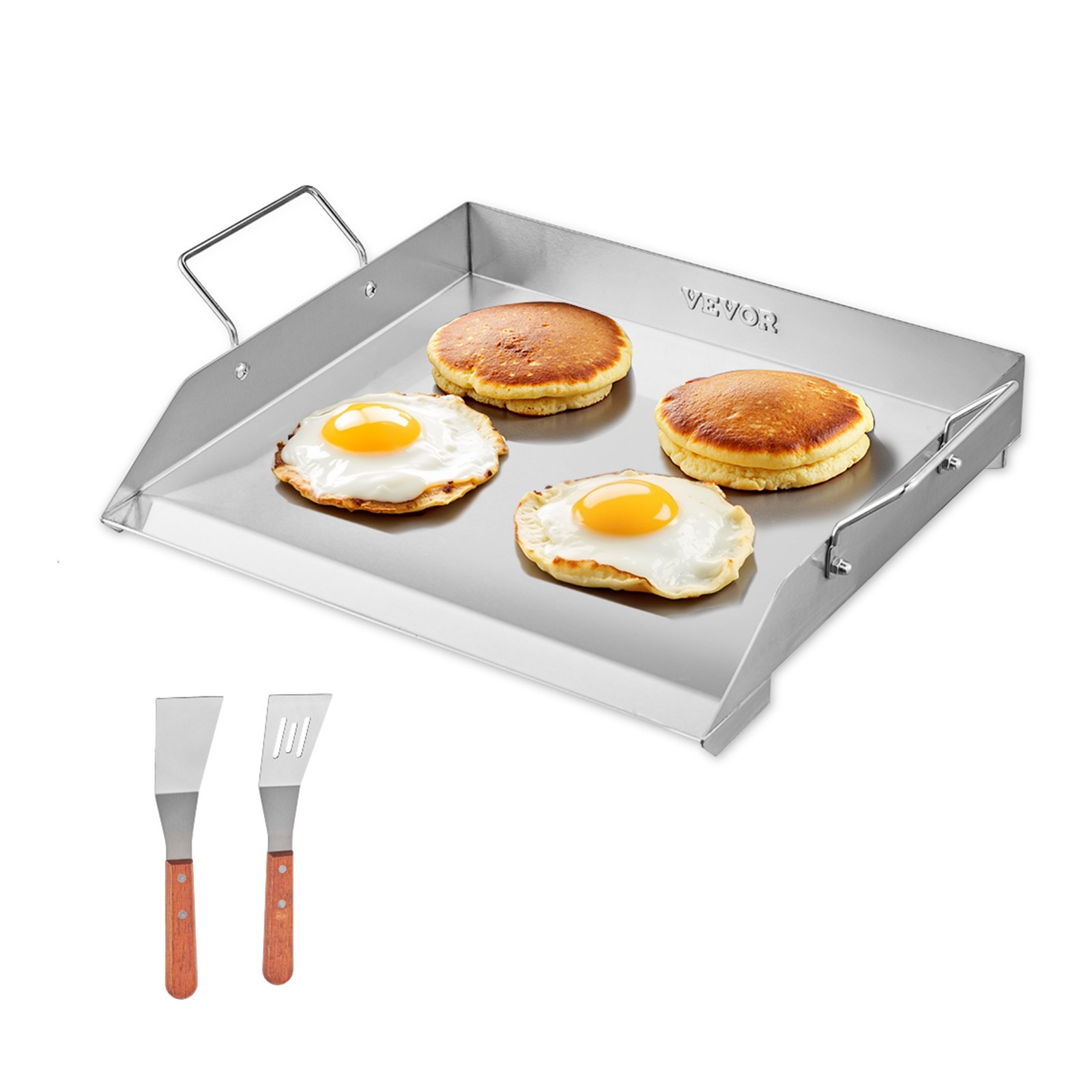 18x16 In Flat Top Griddle Stainless Steel Universal BBQ Grill Pan Cookware$65.99View on Mallflare
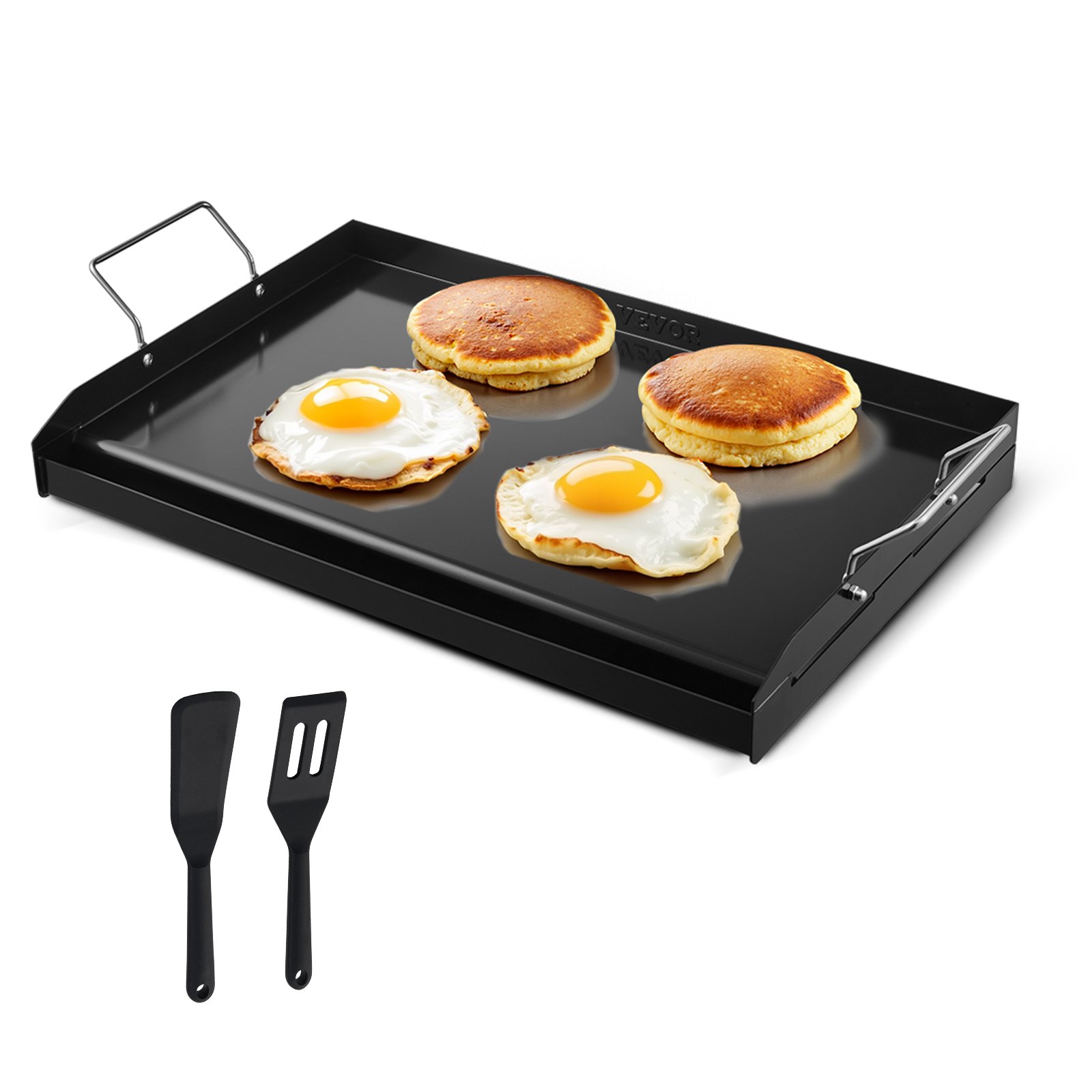 24x16 In Flat Top Griddle Carbon Steel Universal BBQ Grill Pan Cookware$68.99View on Mallflare
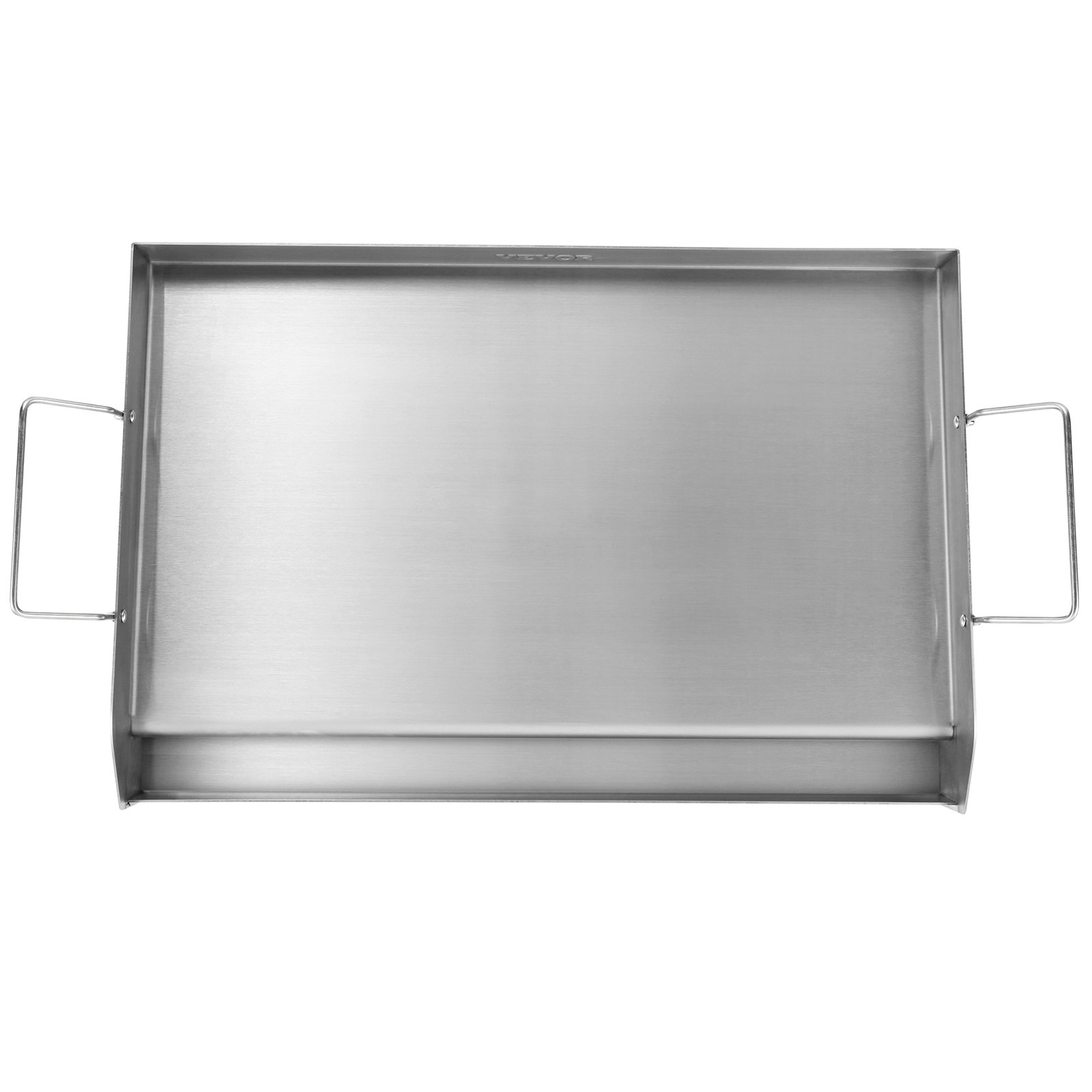 Stove Top Griddle, 23.5"x16" Pre-Seasoned Stainless Steel Rectangular Double Burner Pan, Non-Stick Family Pan Cookware With Handles And Oil Groove, For BBQ, Gas Grills, Silver$93.99View on Mallflare
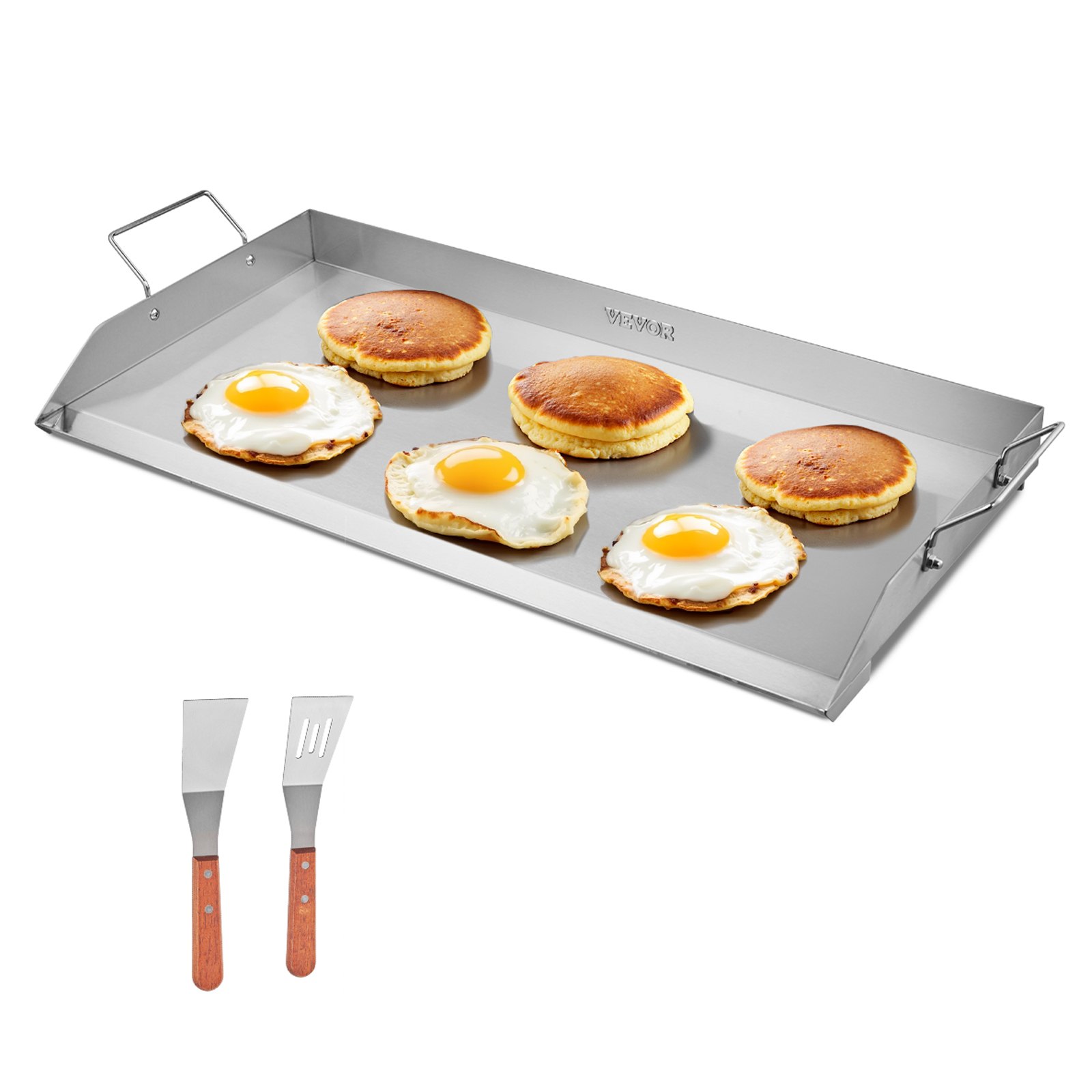 32x16 In Flat Top Griddle Stainless Steel Universal BBQ Grill Pan Cookware$103.99View on Mallflare
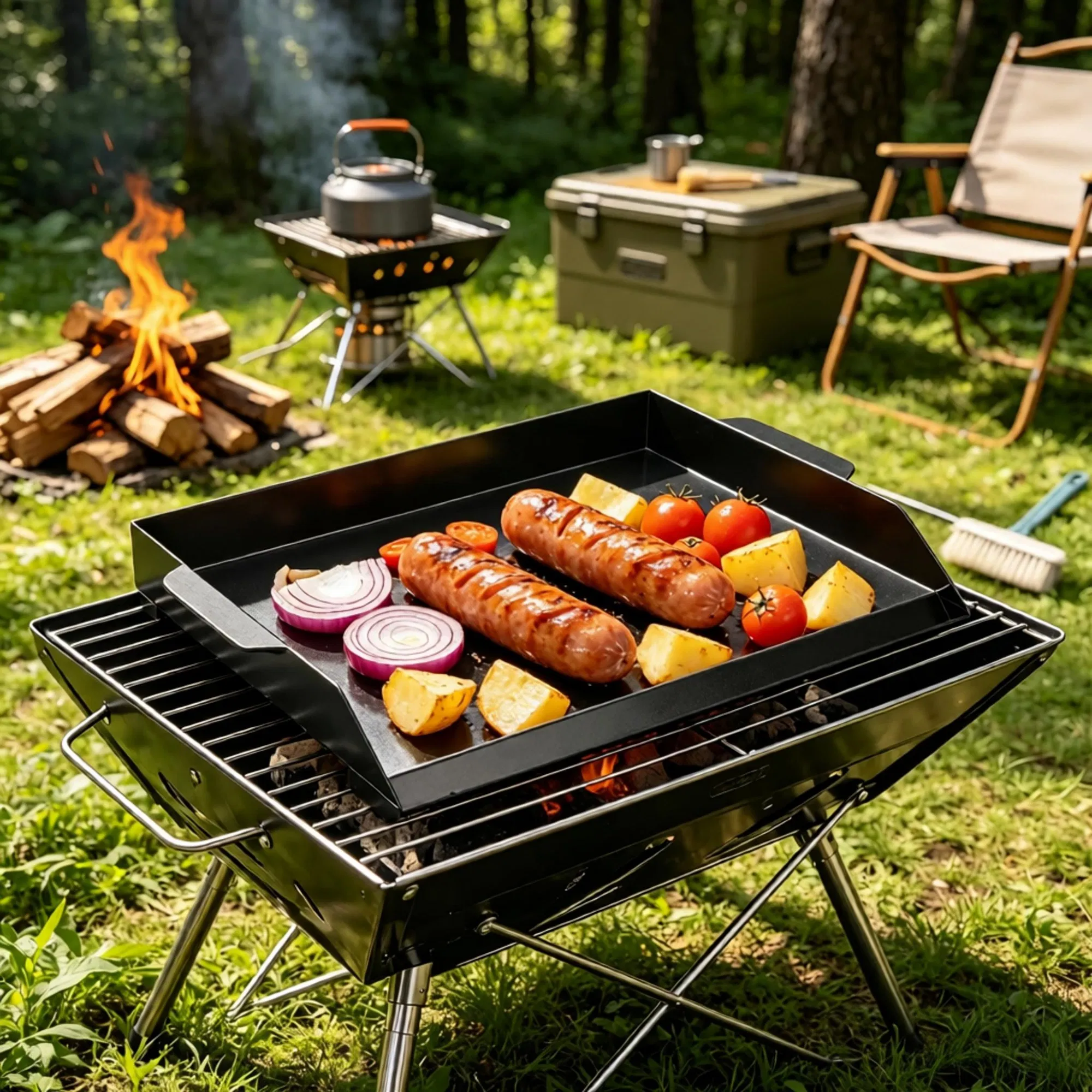 20x16 Inch Carbon Steel Griddle, Universal Flat Top Rectangular Plate, Gas Grill for BBQ, Teppanyaki(only baking tray )$129.99View on Mallflare
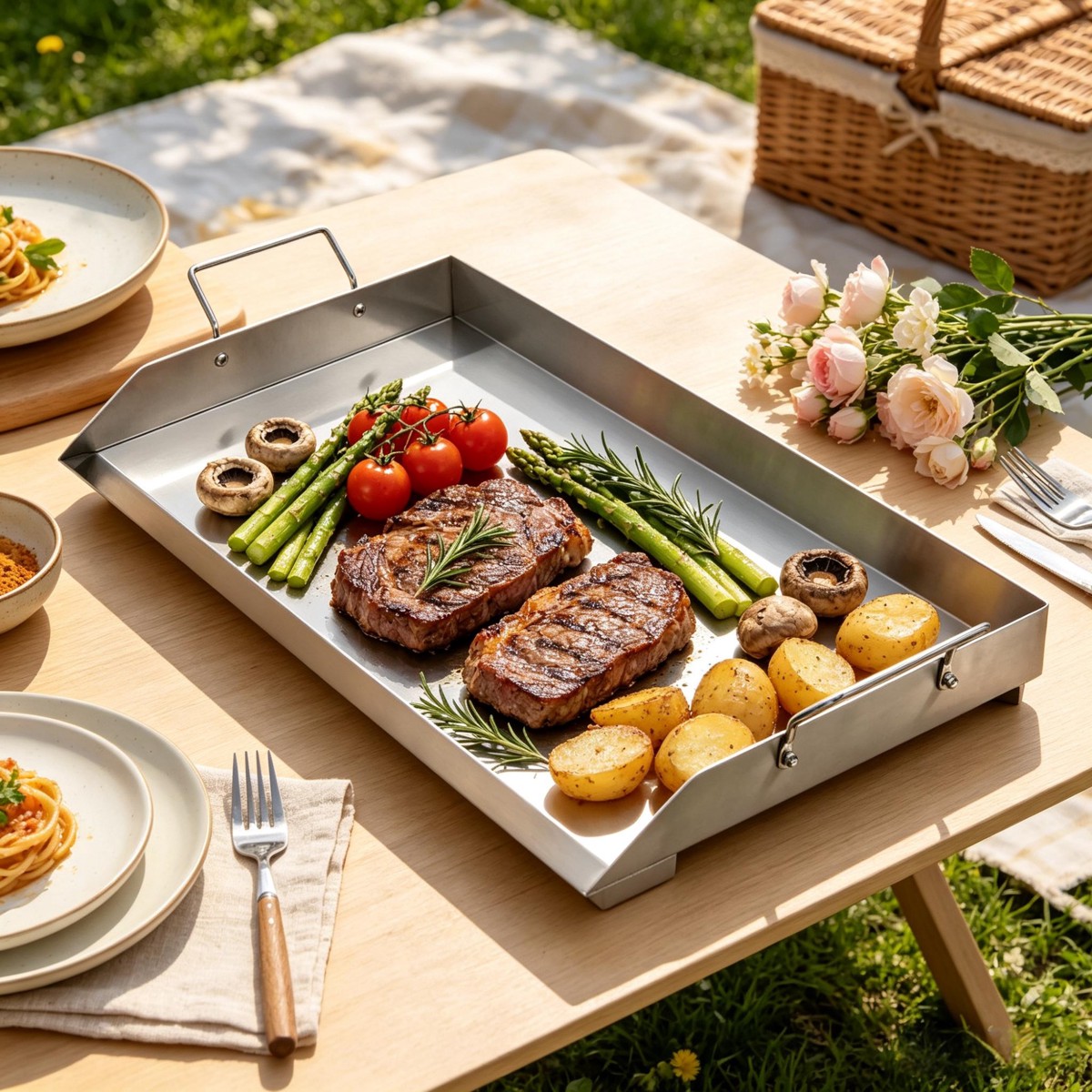 32 x 16 Inch Stainless Steel Griddle Universal Flat Top Plate Gas Grill Teppanyaki Portable Family Cookware for Camping$195.99View on Mallflare
Highlights
- Cast iron and carbon steel both season to a natural non-stick patina; carbon steel is roughly half the weight of cast iron at equal thickness, reducing wrist strain and warp risk.
- Thickness determines heat retention and warp resistance: carbon steel plates 3–4 mm thick hold searing heat and resist warping, while sub-2 mm stainless steel plates can oil-can and develop hot spots.
- Reversible plates (grill ribs on one side, flat on the other) add versatility but reduce usable flat area by roughly 15–20% versus same-size single-sided plates.
- Stainless steel plates resist rust and acidic foods but conduct heat unevenly; they rely on an aluminum or carbon steel core or a thick base to spread heat, and thin stainless units scorch at the center.
Best use cases
- Best fit: gas grill owners cooking burgers, pancakes, eggs, and smash patties—choose a pre-seasoned carbon steel or cast iron flat-top plate sized to cover 60–80% of the grill grate area for even heat and no flare-ups. Skip stainless steel here.
- Best fit: induction or glass-top stove users needing a flat surface—pick a cast iron or magnetic stainless steel plate with a perfectly flat underside; carbon steel also works on induction if the base is flat and magnetic.
- Best fit: campers and tailgaters—choose a 17x9 to 20x10 inch carbon steel plate with a handle; it is lighter than cast iron, seasons like cast iron, and fits over two-burner camp stoves or campfire grates.
- Wrong fit: high-acid cooking (tomato sauces, citrus marinades) on cast iron or carbon steel—the acid strips seasoning and causes metallic taste; use enameled cast iron or stainless steel instead, or reserve the plate for neutral-pH foods.
Buying tips
- Match plate size to your heat source: a 22x16 inch plate covers a large gas grill's primary burner zone, while 17x9 or 20x10 inch plates suit two-burner camp stoves and compact grills; leave 2–3 inches of grate edge exposed for airflow and handle clearance.
- Choose thickness tiers: 3–4 mm carbon steel for high-heat searing and warp resistance; 4–6 mm cast iron for maximum thermal mass and even heat; 1.5–2 mm stainless steel only for low-heat cooking where rust resistance matters more than searing.
- For induction compatibility, confirm the plate base is ferromagnetic: cast iron and most carbon steel work, but many stainless steel plates are non-magnetic and will not heat on induction—look for 'induction-ready' or test with a magnet.
- Pre-seasoned plates from the factory still need 2–3 thin oil coats before first use; avoid plates sold with silicone or non-stick coatings, which degrade above 450°F and defeat the purpose of a bare-metal griddle.
Specs
| Material | Cast iron / carbon steel / stainless |
|---|---|
| Thickness | 2–6 mm (3–4 mm ideal) |
| Heat Source | Gas / induction / oven / campfire |
| Seasoning | Pre-seasoned or bare metal |
Related searches
What to check before buying
- Measure your grill or stove grate: plate length plus handle must fit within the grate with at least 2 inches clearance on all sides for heat circulation and lid closure.
- Check your heat source type: gas grill, induction, electric coil, or campfire—cast iron and carbon steel work on all; stainless steel must be magnetic for induction and flat for glass-top.
- Confirm your oven's maximum temperature and rack size if you plan to use the plate in the oven; cast iron and carbon steel are oven-safe to 500°F+, but handles and coatings may limit use.
- Plan for seasoning maintenance: cast iron and carbon steel require drying and oiling after every wash to prevent rust; stainless steel tolerates dish soap and air-drying but may need barkeep's friend for scorch marks.
FAQ
Data sources: eBay / Amazon listings and product attribute feeds. Updated Nov 28, 2026.
Some links on this page are affiliate links. If you buy after clicking one, we may earn a commission at no extra cost to you. This does not change which products appear here or their order. Affiliate disclosure.