
Photos from current listings. Actual item, color, and included accessories may vary.
Grill Griddle Buying Guide
A grill griddle is a flat, heat-spreading cooking plate that sits on a gas grill, stove, or campfire to deliver diner-style searing and even heat without food falling through grates. The core trade-off is thermal mass versus responsiveness: thick cast iron holds heat for big batches but heats slowly, while thinner carbon or stainless steel reacts faster but can warp or scorch. The decision rule is simple—match plate thickness and material to your burner count and batch size, and require a grease-management edge or groove for anything beyond occasional use.
Median $81.49
Key takeaways
- Cast iron griddles (typically 3/16 to 1/4 inch thick) offer the highest thermal mass and retain heat during cold-food loads, but weigh 2-3x more than carbon steel of equal footprint.
- Carbon steel griddles at 14-16 gauge (about 1.5-2 mm) pre-season like cast iron, heat faster, and are the standard for high-output flat-top cooking when weight matters.
- Stainless steel griddles resist rust and are dishwasher-safe but have lower thermal conductivity, so they need a heat-spreader base or thicker clad construction to avoid hot spots.
At a glance
- Category
- Cookware & Cutlery
- Last updated
- Nov 28, 2026
Current offers
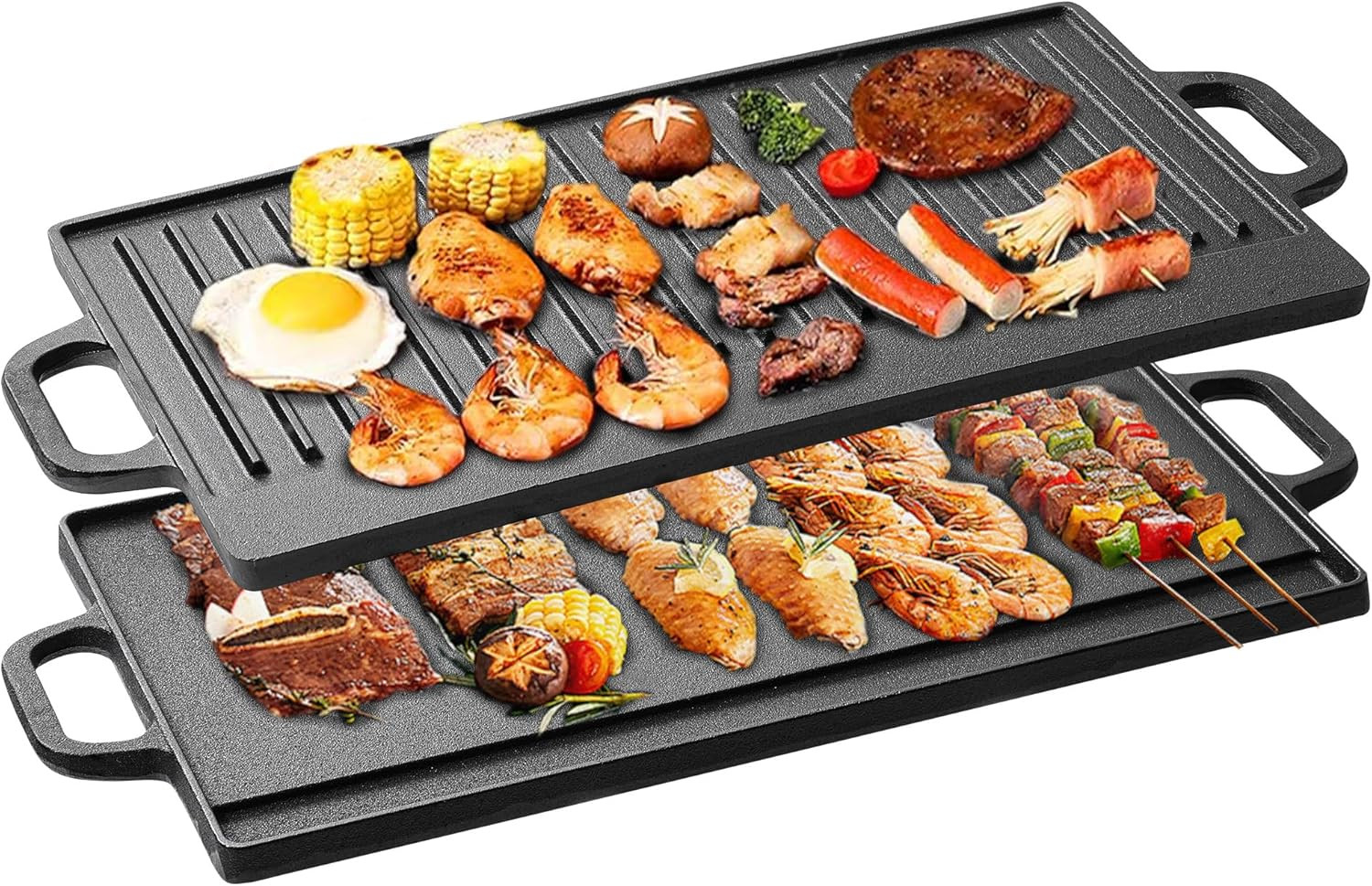 Cast Iron Griddle for Stove, Grill, and Outdoor Cooking$36.22Last checked Nov 26, 2026View on eBay
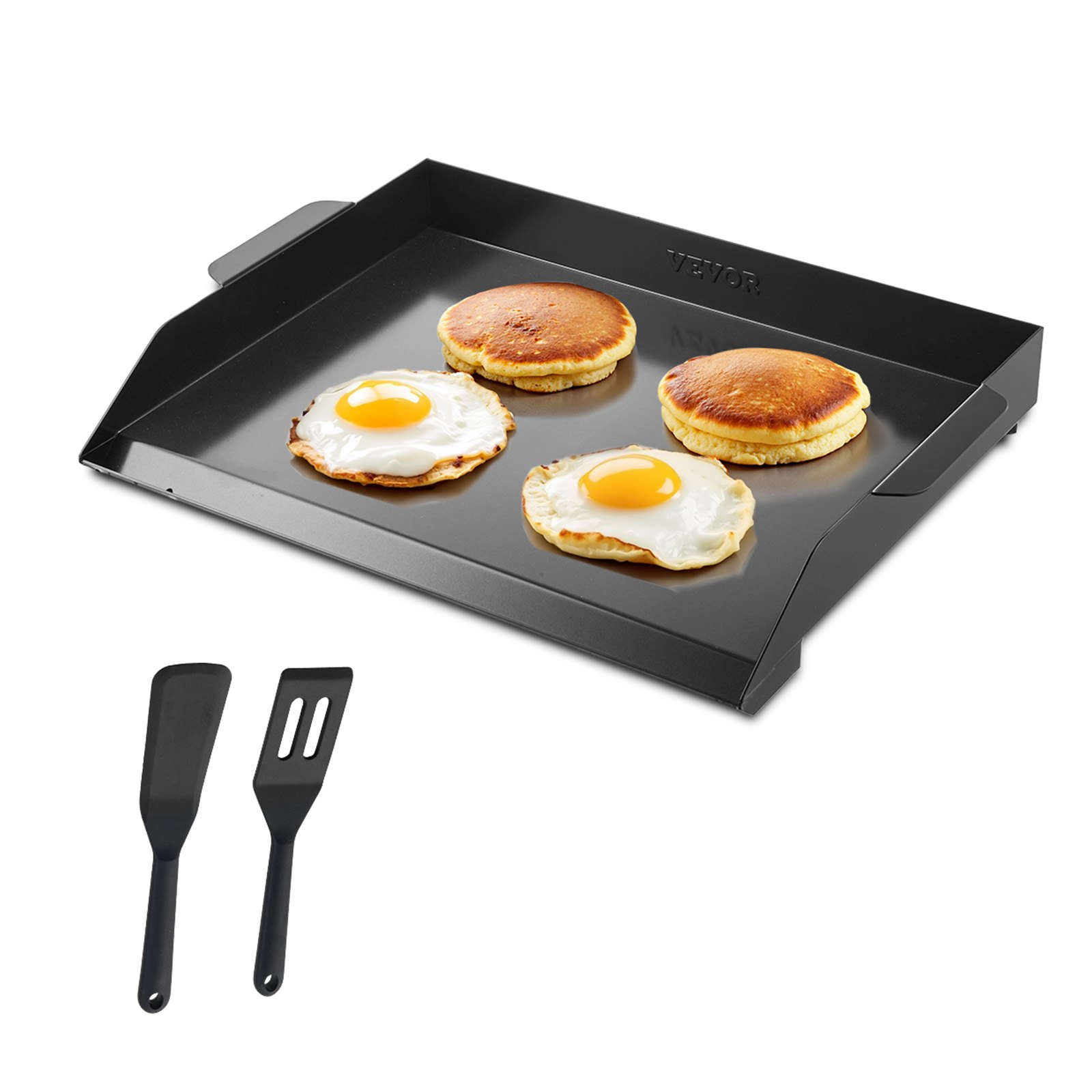 22x16 In Flat Top Griddle Carbon Steel Universal BBQ Grill Pan Cookware$58.99View on Mallflare
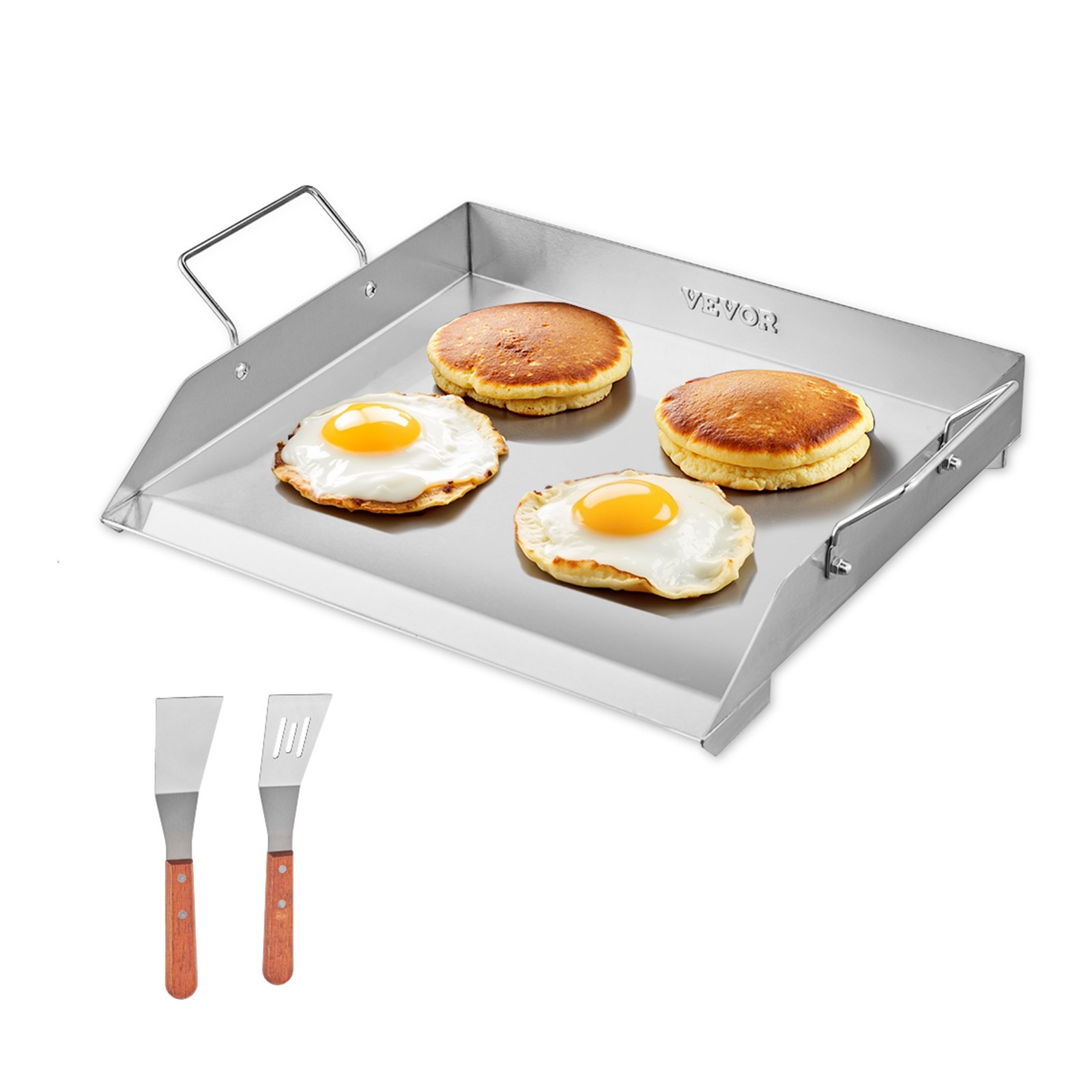 18x16 In Flat Top Griddle Stainless Steel Universal BBQ Grill Pan Cookware$65.99View on Mallflare
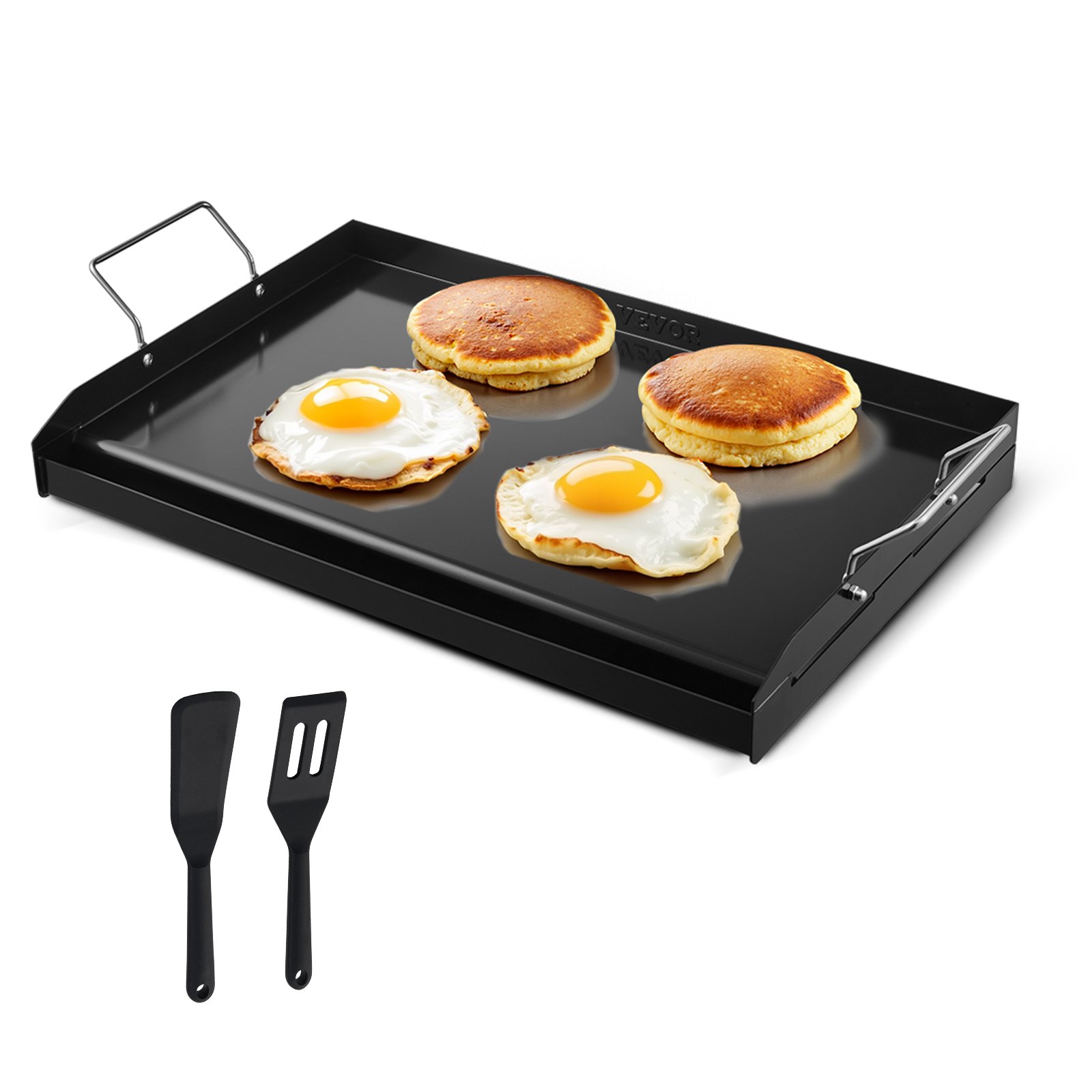 24x16 In Flat Top Griddle Carbon Steel Universal BBQ Grill Pan Cookware$68.99View on Mallflare
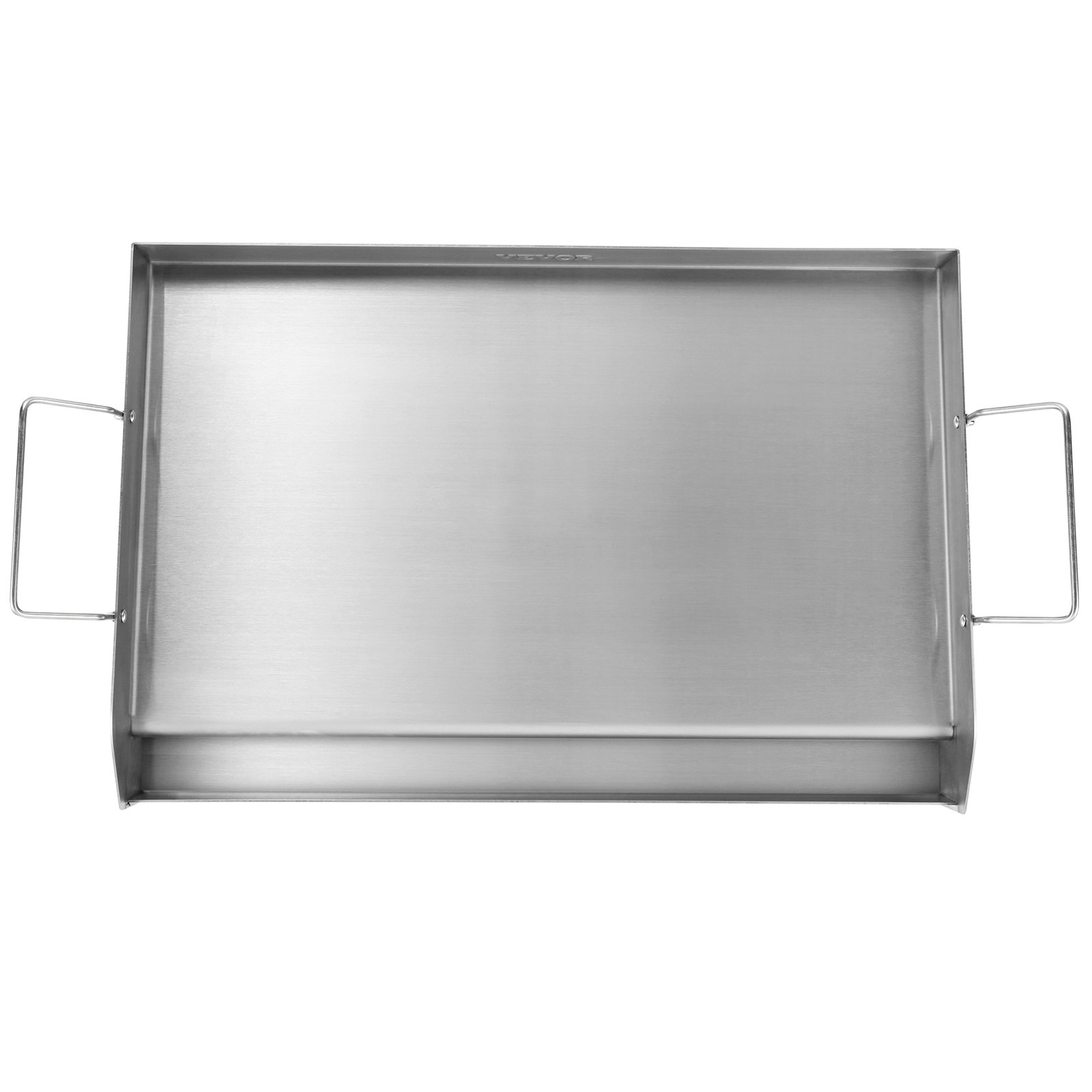 Stove Top Griddle, 23.5"x16" Pre-Seasoned Stainless Steel Rectangular Double Burner Pan, Non-Stick Family Pan Cookware With Handles And Oil Groove, For BBQ, Gas Grills, Silver$93.99View on Mallflare
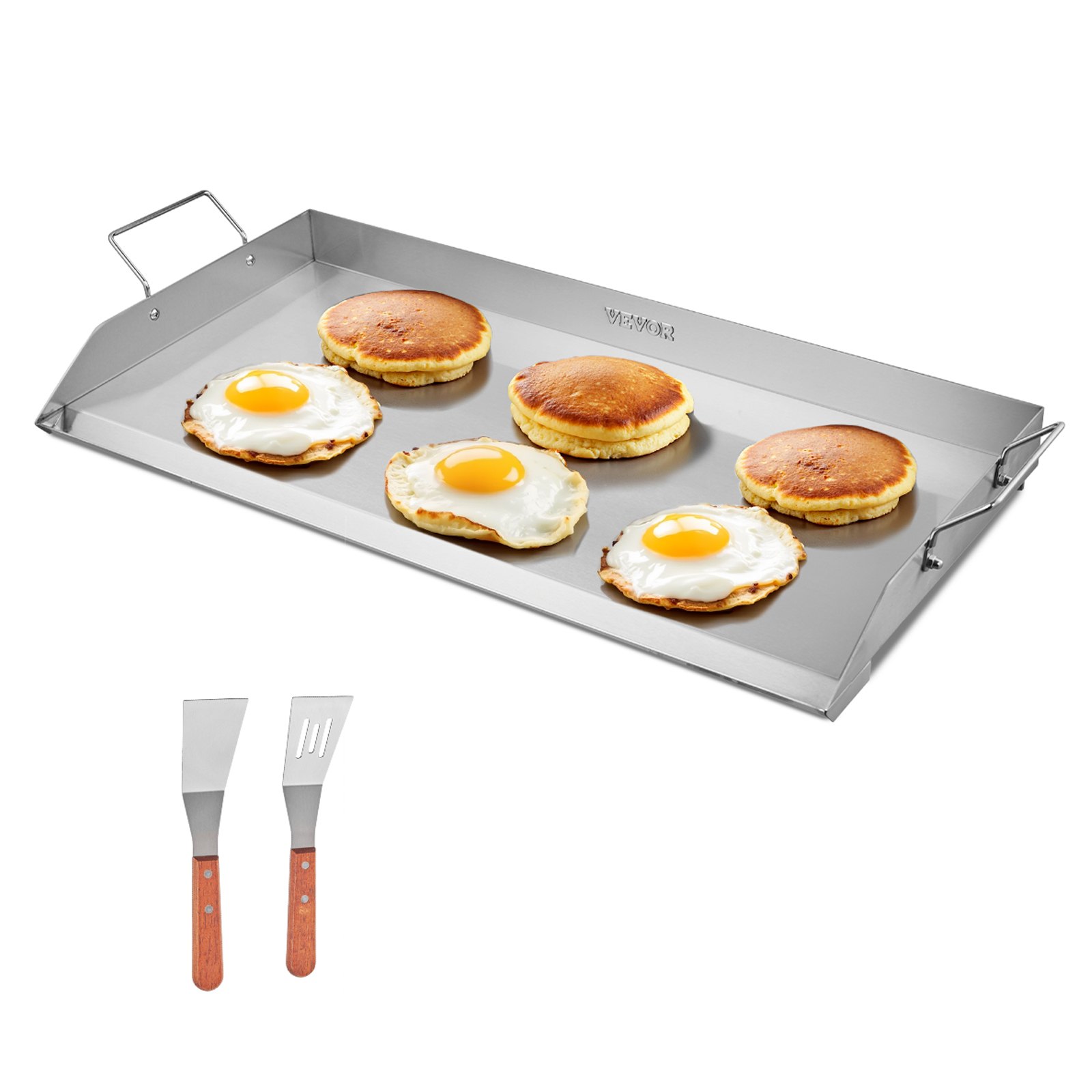 32x16 In Flat Top Griddle Stainless Steel Universal BBQ Grill Pan Cookware$103.99View on Mallflare
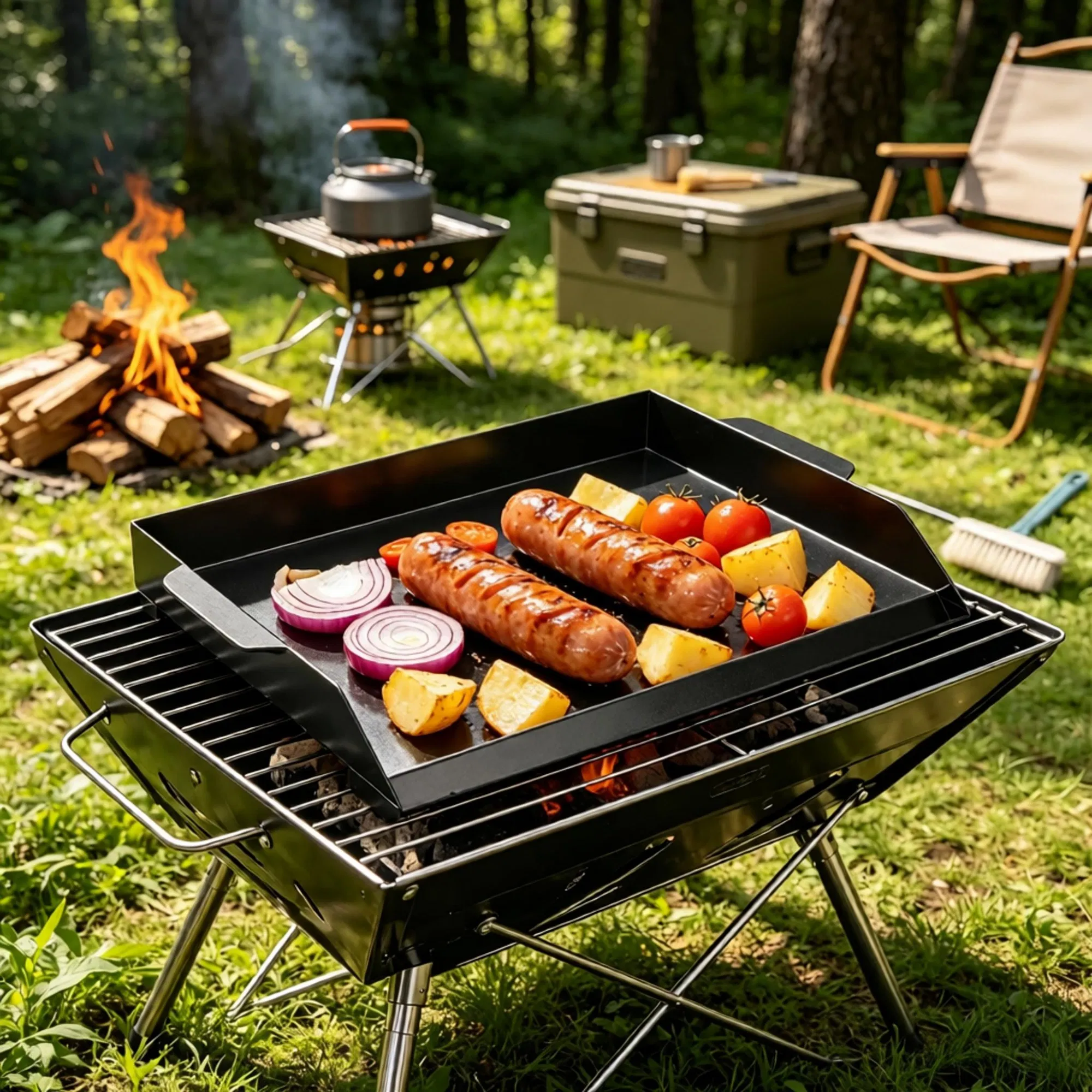 20x16 Inch Carbon Steel Griddle, Universal Flat Top Rectangular Plate, Gas Grill for BBQ, Teppanyaki(only baking tray )$129.99View on Mallflare
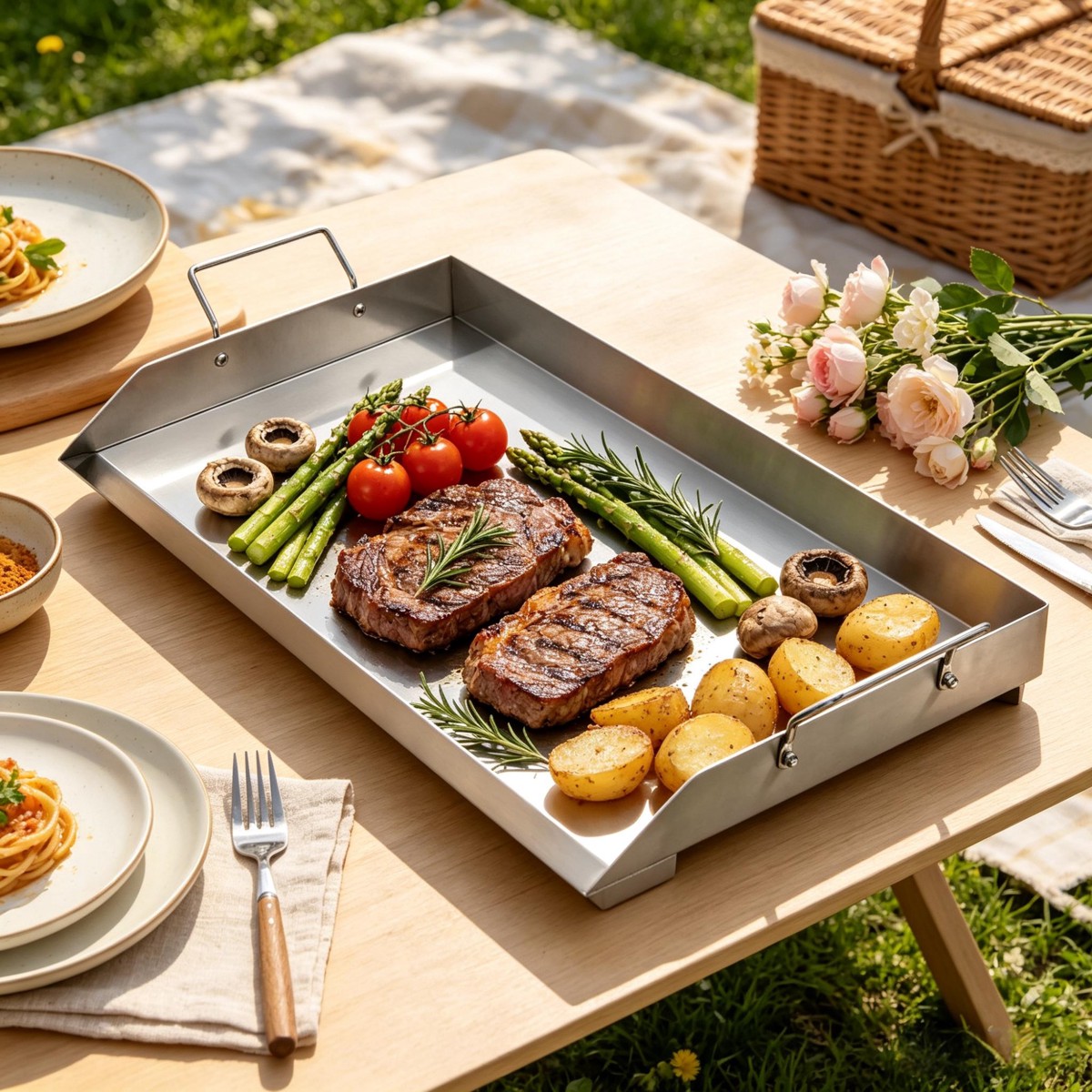 32 x 16 Inch Stainless Steel Griddle Universal Flat Top Plate Gas Grill Teppanyaki Portable Family Cookware for Camping$195.99View on Mallflare
Highlights
- Cast iron griddles (typically 3/16 to 1/4 inch thick) offer the highest thermal mass and retain heat during cold-food loads, but weigh 2-3x more than carbon steel of equal footprint.
- Carbon steel griddles at 14-16 gauge (about 1.5-2 mm) pre-season like cast iron, heat faster, and are the standard for high-output flat-top cooking when weight matters.
- Stainless steel griddles resist rust and are dishwasher-safe but have lower thermal conductivity, so they need a heat-spreader base or thicker clad construction to avoid hot spots.
- Universal flat-top sizing follows grill grate dimensions: a 16-inch depth fits most 2- to 4-burner gas grills, while 23-25 inch widths cover the full firebox of 3- to 5-burner models.
Best use cases
- Best fit: 3- to 5-burner gas grill owners cooking breakfasts, smash burgers, and stir-fry for 4+ people—choose a 23-25 x 16 inch carbon steel plate with raised side walls and a grease trough.
- Best fit: renters or campers using a two-burner stove or portable grill—pick a 17-22 x 11-16 inch carbon steel or cast iron plate that fits the burner footprint and stores upright.
- Wrong fit: high-heat searing purists who want open-flame char—a griddle blocks direct flame; use grill grates or a cast-iron skillet instead.
- Wrong fit: buyers wanting dishwasher cleanup—only stainless steel models tolerate it; cast iron and carbon steel require hand wash and re-oiling.
Buying tips
- Measure your grill's grate opening first: the griddle footprint must sit flush across the firebox, and depth beyond 16 inches overhangs or blocks the lid on most gas grills.
- Match plate thickness to burner count: 1/4-inch cast iron for 4+ burners and large batches; 14-16 gauge carbon steel for 2-3 burners where fast temperature changes matter.
- Require a grease channel or sloped edge on plates wider than 20 inches—flat plates pool fat and cause flare-ups when drippings hit the burners.
- Check handle construction: welded steel handles rated for the plate's loaded weight; riveted handles on thin stainless plates loosen under repeated heat cycling.
Specs
| Plate Material | Cast iron / carbon steel / stainless |
|---|---|
| Thickness Grade | 1/4 in cast iron / 14-16 ga carbon steel |
| Footprint Range | 17x11 to 32x16 in |
| Grease Management | Trough / sloped edge / flat |
Related searches
What to check before buying
- Measure grill grate length, width, and depth; confirm the plate covers at least 80% of the firebox without blocking lid closure.
- Confirm your grill or stove fuel type and burner layout—gas grills need a plate that sits above the burner tubes, not directly on them.
- Verify plate weight against your grill's grate load rating; a 1/4-inch cast iron plate at 24 x 16 inches can exceed 25 pounds.
- Check storage space and handle clearance—larger plates need vertical storage or a dedicated shelf, and handles add 2-4 inches per side.
FAQ
Data sources: eBay / Amazon listings and product attribute feeds. Updated Nov 28, 2026.
Some links on this page are affiliate links. If you buy after clicking one, we may earn a commission at no extra cost to you. This does not change which products appear here or their order. Affiliate disclosure.