
Photos from current listings. Actual item, color, and included accessories may vary.
Non Stick Cookware Buying Guide
Non-stick cookware is a coated aluminum or steel pan system where the release layer defines usable life, heat ceiling, and utensil tolerance. The core trade-off is coating type and thickness versus base-pan conductivity: thin stamped aluminum heats fast but warps, while forged or clad bases plus a reinforced PTFE or ceramic layer hold flat and last longer. Buy a multi-layer PTFE or PFOA-free coating on a forged aluminum base for daily eggs and fish; skip featherweight stamped pans, bare 'non-stick' cast iron claims, and utensil-only silicone bundles when you need actual cooking vessels.
Median $105.99 · New listings
Key takeaways
- Coating system tiers: 2-layer PTFE is entry-level and degrades within a year of daily use; 3-5 layer reinforced PTFE or PFOA-free ceramic lasts 2-5 years with hand washing and no metal contact.
- Base construction: forged or hard-anodized aluminum at 2.5-4 mm thickness resists warping; stamped 1.5-2 mm pans bow on high heat and spin on glass cooktops.
- Induction compatibility requires a magnetic steel base plate; pure aluminum non-stick disc pans will not heat on induction without an added ferromagnetic layer.
At a glance
- Category
- Cookware & Cutlery
- Last updated
- Nov 28, 2026
Current offers
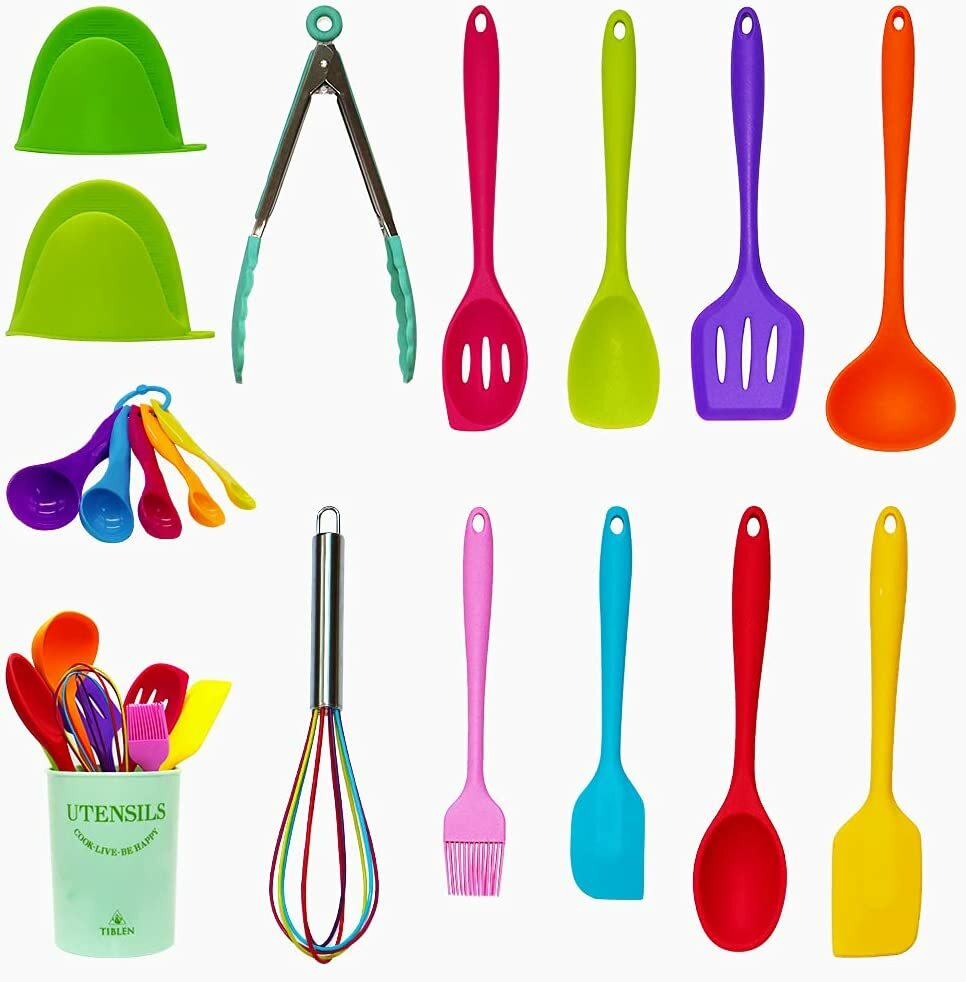 18 pcs Silicone Kitchen Cooking Utensil Set, Non-stick Heat Resistant Cookware$18.75Last checked Nov 19, 2026View on eBay
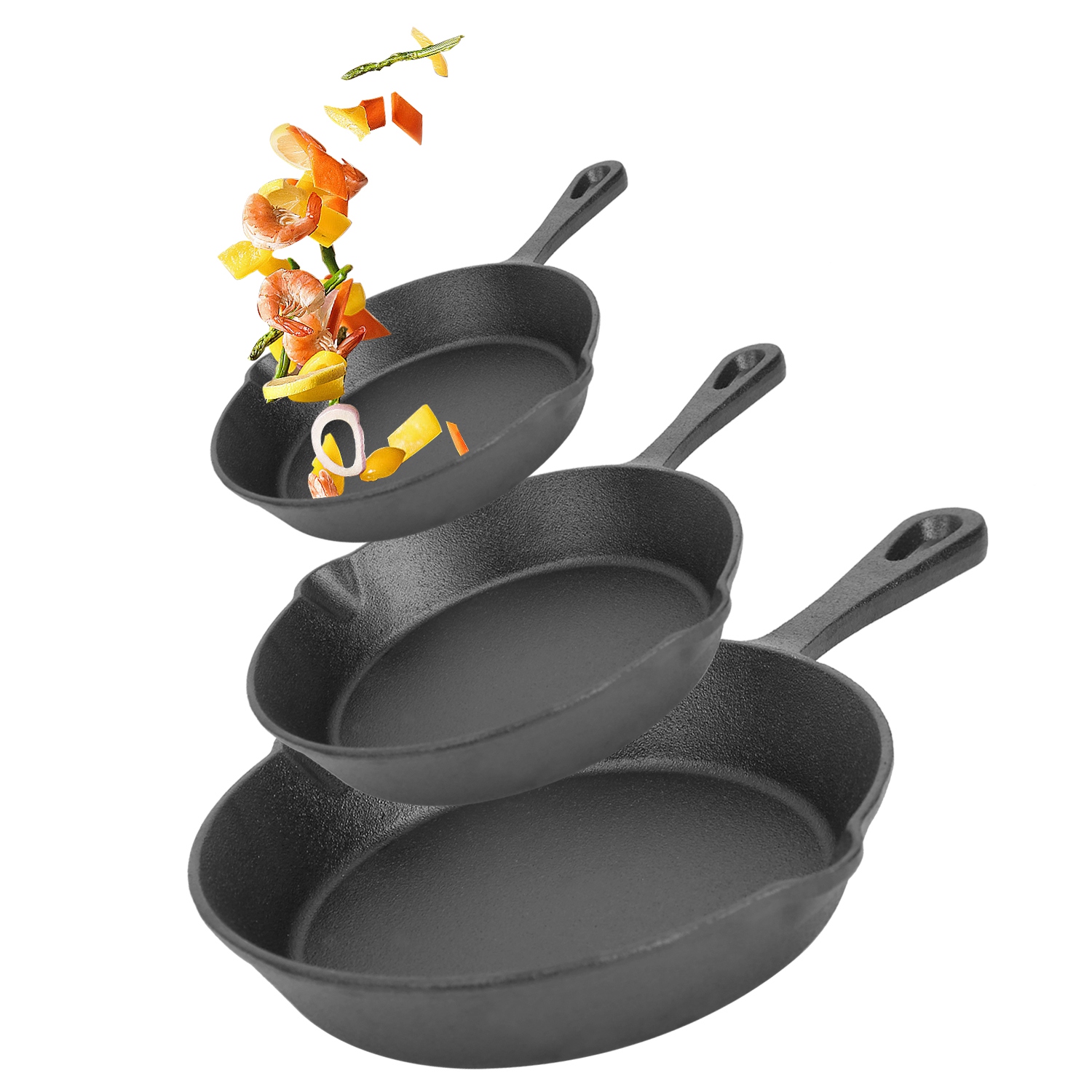 3Pcs Pre-Seasoned Cast Iron Skillet Set For Indoor Outdoor 6in 8in 10in Non-Stick Oven Safe Cookware Heat-Resistant Frying Pan For Cooking Baking$36.99View on Mallflare
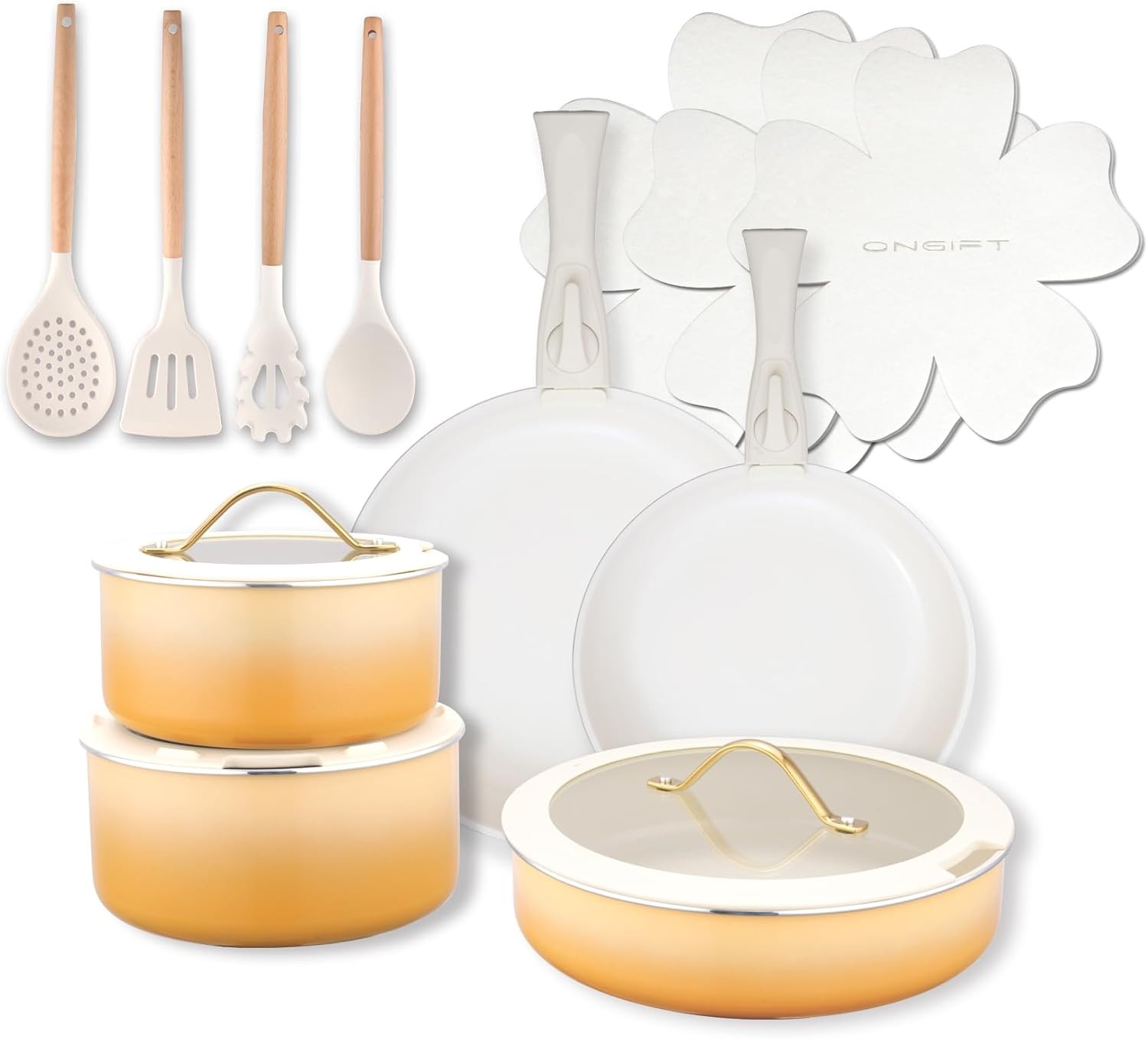 20pcs Ceramic Cookware Set Nonstick, Detachable Handle Pots and Pans Set, Non To$116.36View on eBay
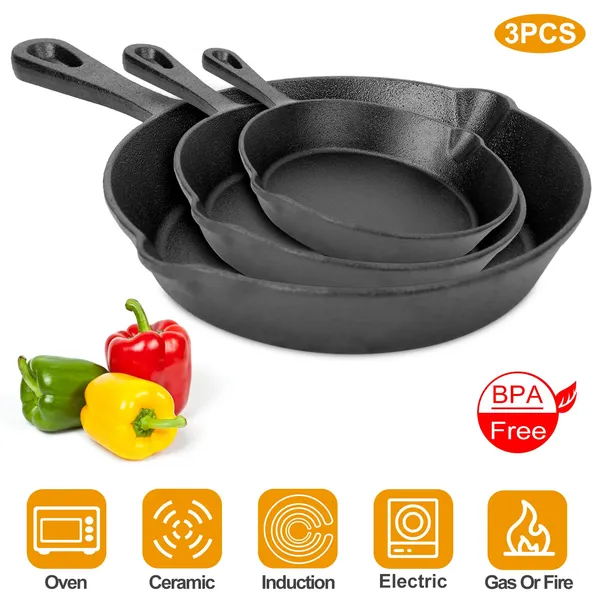 3Pcs Pre-Seasoned Cast Iron Skillet Set 6-8-10in Non-Stick Oven Safe Cookware Heat-Resistant Frying Pan$44.99View on Mallflare
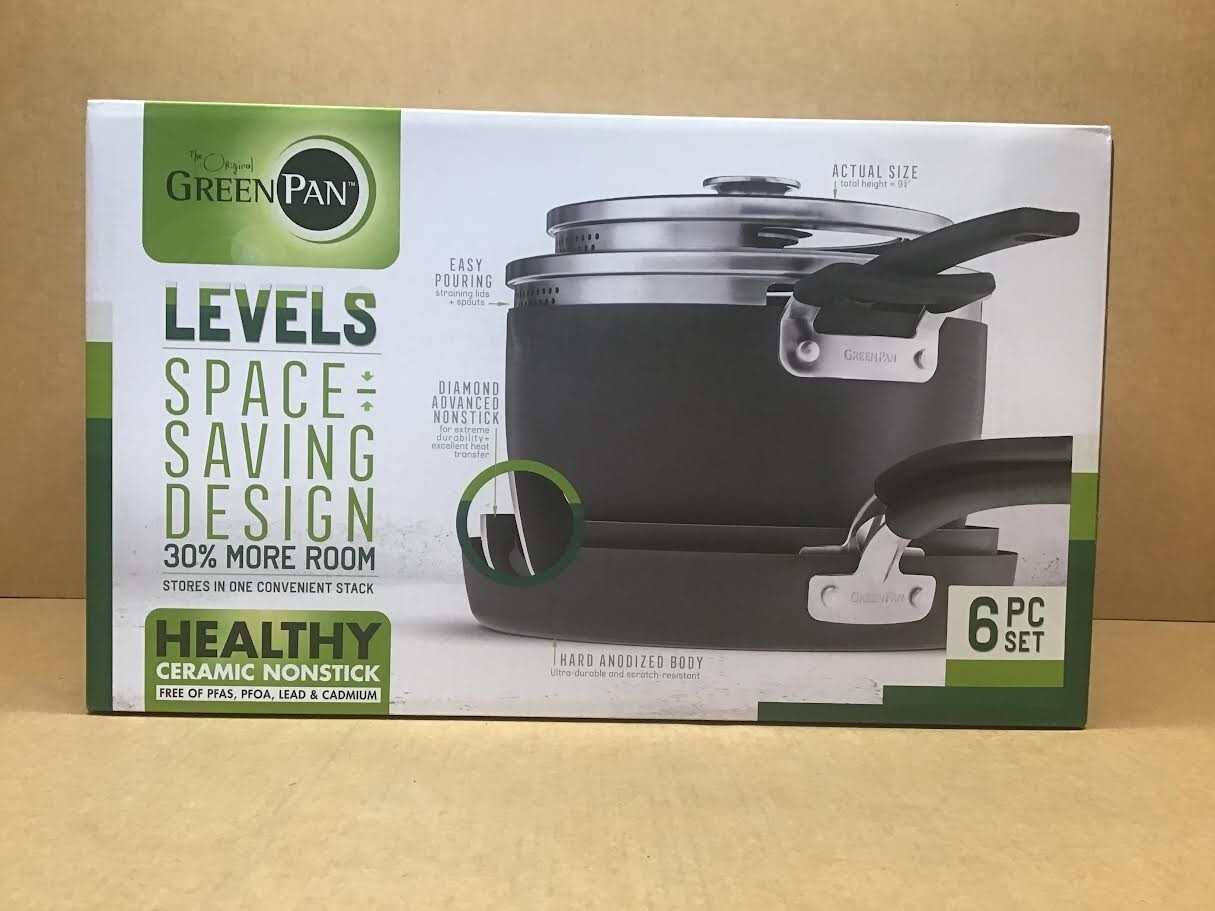 GreenPan Levels Stackable Hard Anodized Healthy Ceramic Nonstick, 6 Pc Cookware$219.96Last checked Nov 14, 2026View on eBay
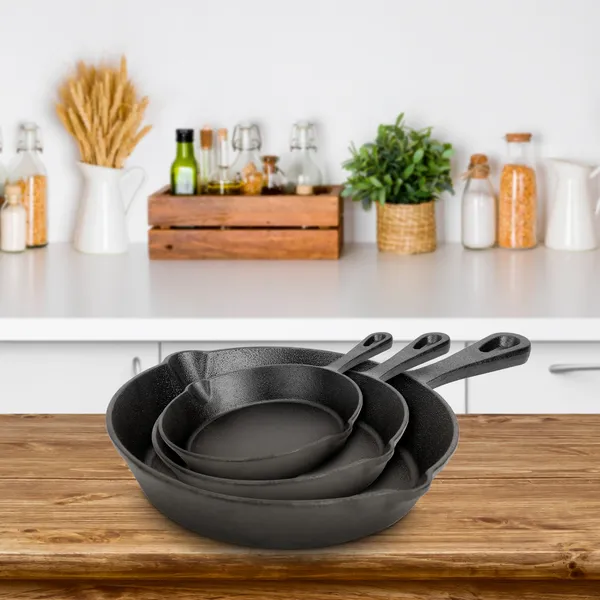 3Pcs Pre-Seasoned Cast Iron Skillet Set 6/8/10in Non-Stick Oven Safe Cookware Heat-Resistant Frying Pan$51.99View on Mallflare
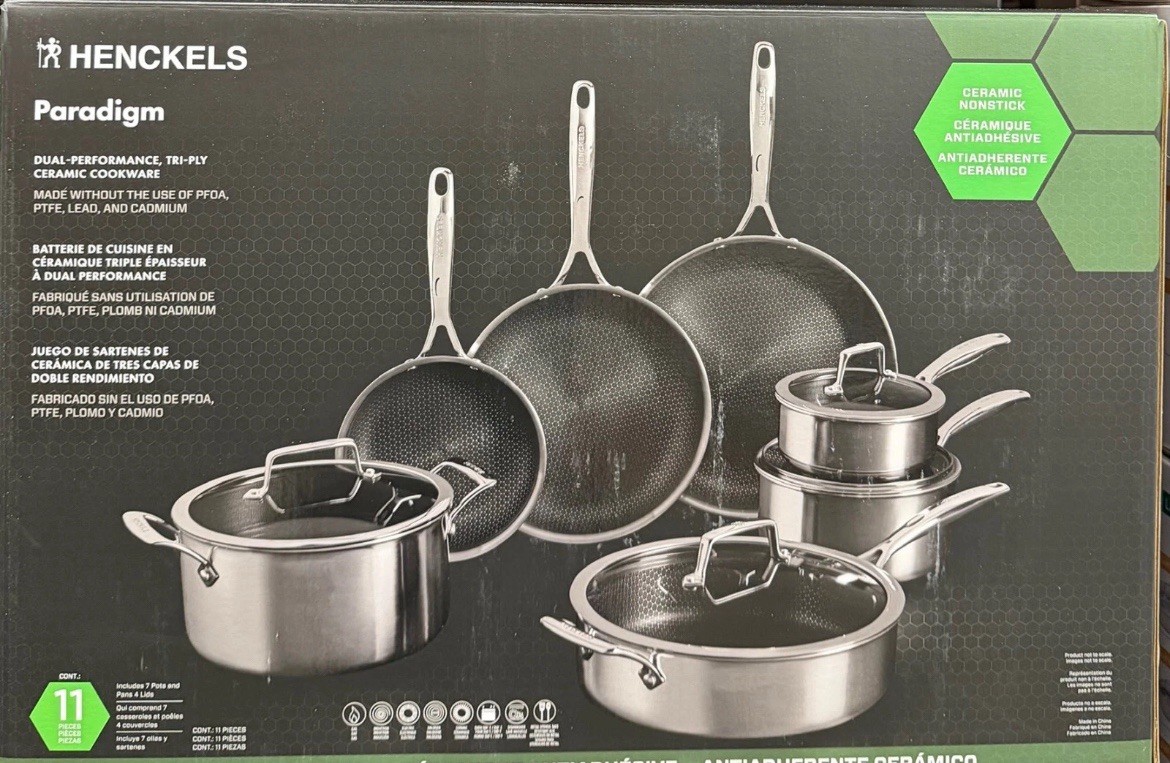 Henckels Paradigm Ceramic 11-pc Stainless Steel Cookware Set, Tri-Ply Nonstick$228.99New · Last checked Nov 25, 2026View on eBay
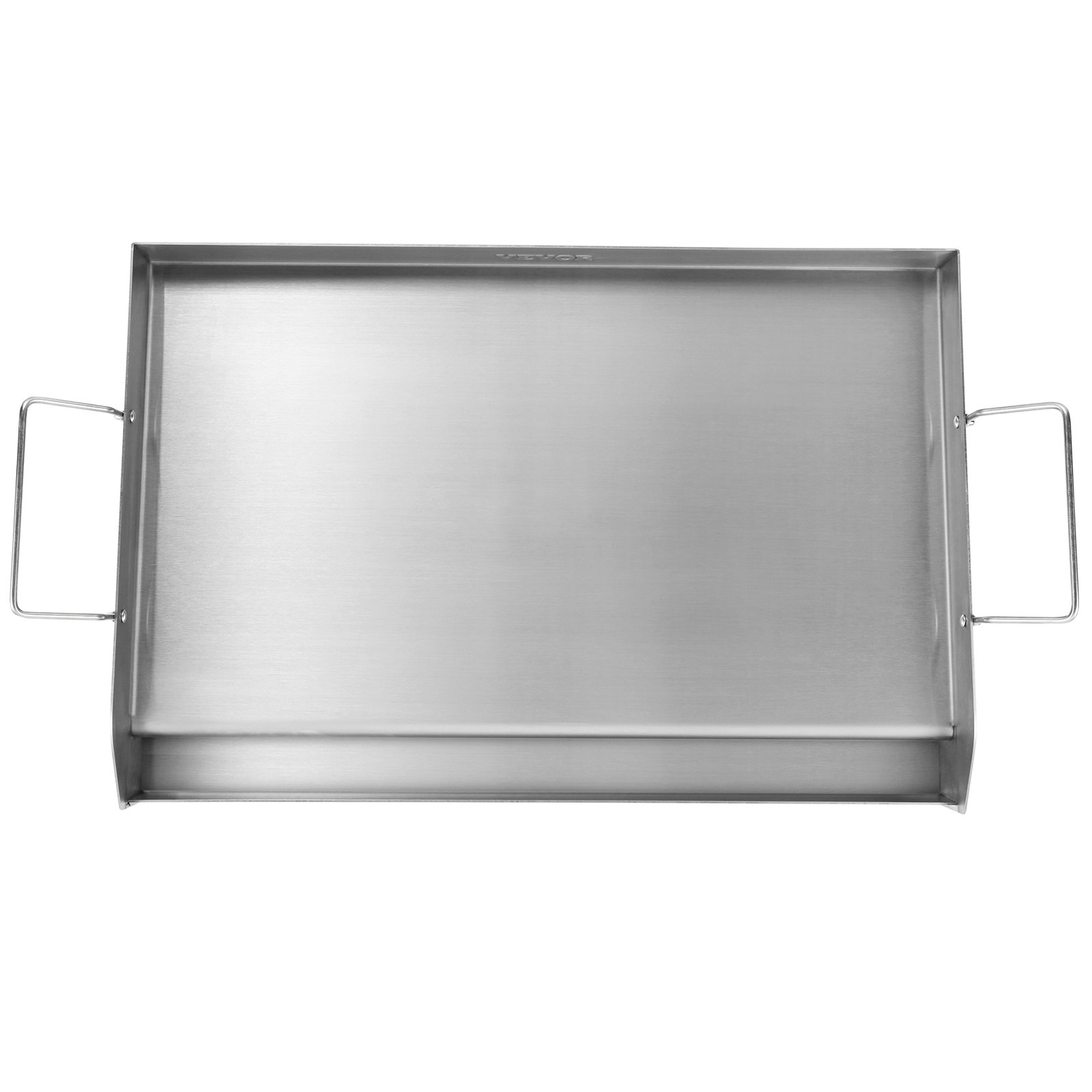 Stove Top Griddle, 23.5"x16" Pre-Seasoned Stainless Steel Rectangular Double Burner Pan, Non-Stick Family Pan Cookware With Handles And Oil Groove, For BBQ, Gas Grills, Silver$93.99View on Mallflare
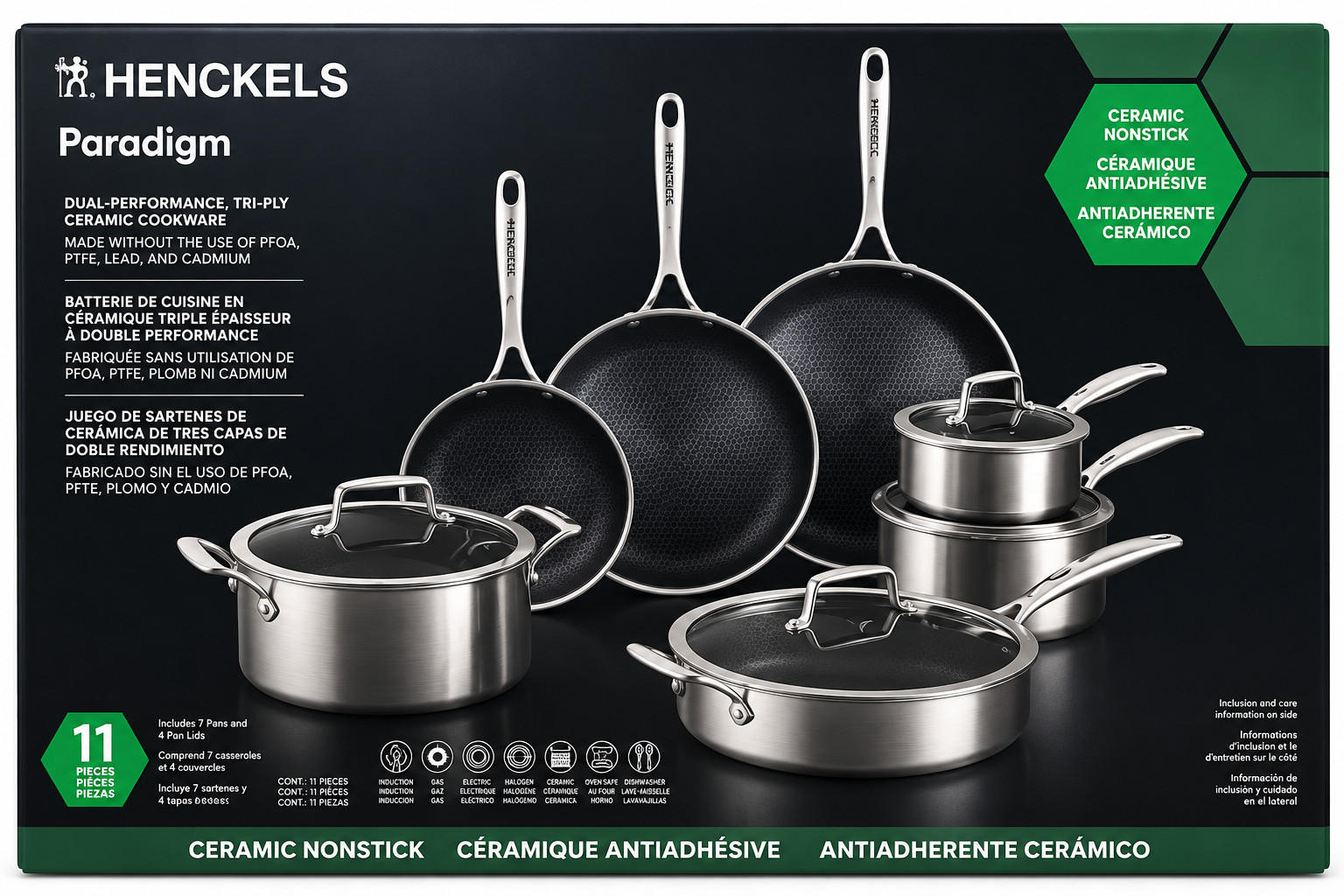 Henckels Paradigm Ceramic 11-pc Stainless Steel Cookware Set, Tri-Ply Nonstick$229.88New · Last checked Nov 25, 2026View on eBay
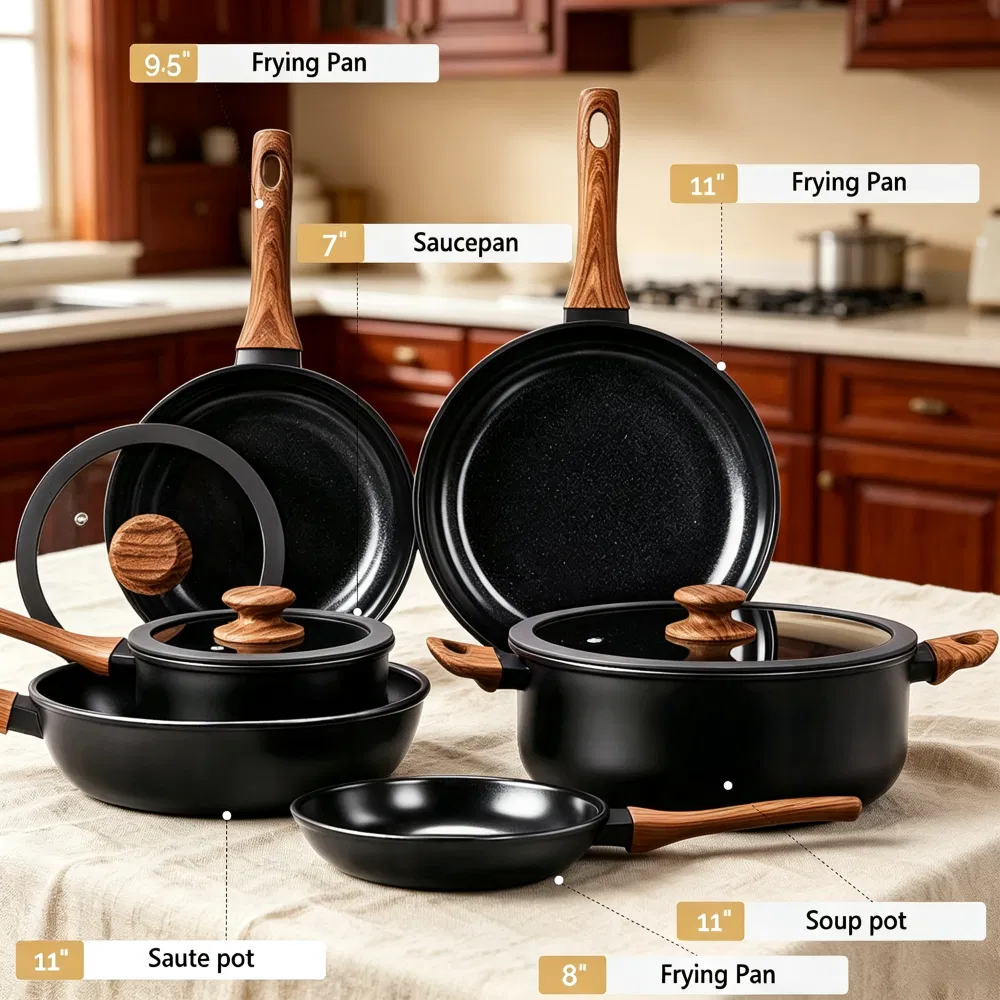 20-Piece Aluminum Cookware Set, Black Non-Stick Pots and Pans Set with Assembled Handles - 6 (Including 28cm Stock Pot) & 3 Lids, Compatible Induction, Gas, Electric Stoves for Kitchen$94.99View on Mallflare
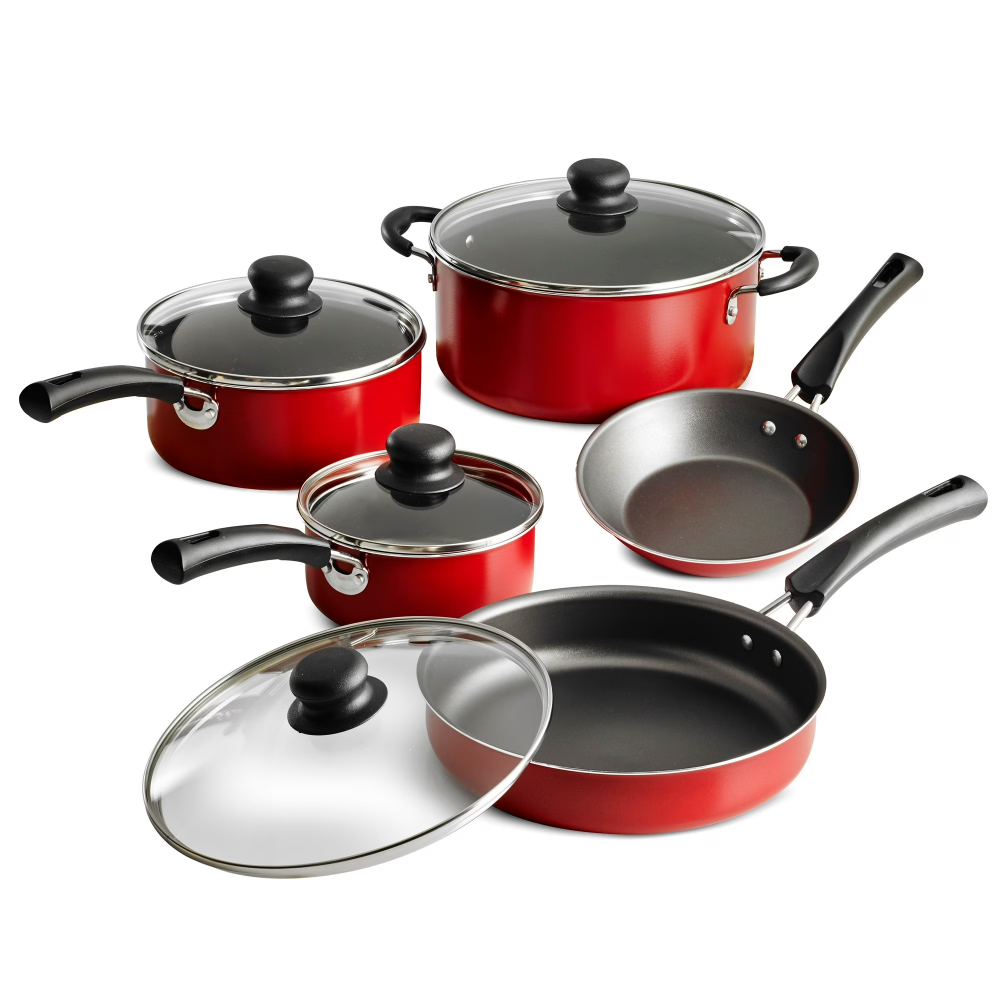 Non-Stick Red Cookware Set, 9 Piece$97.99View on Mallflare
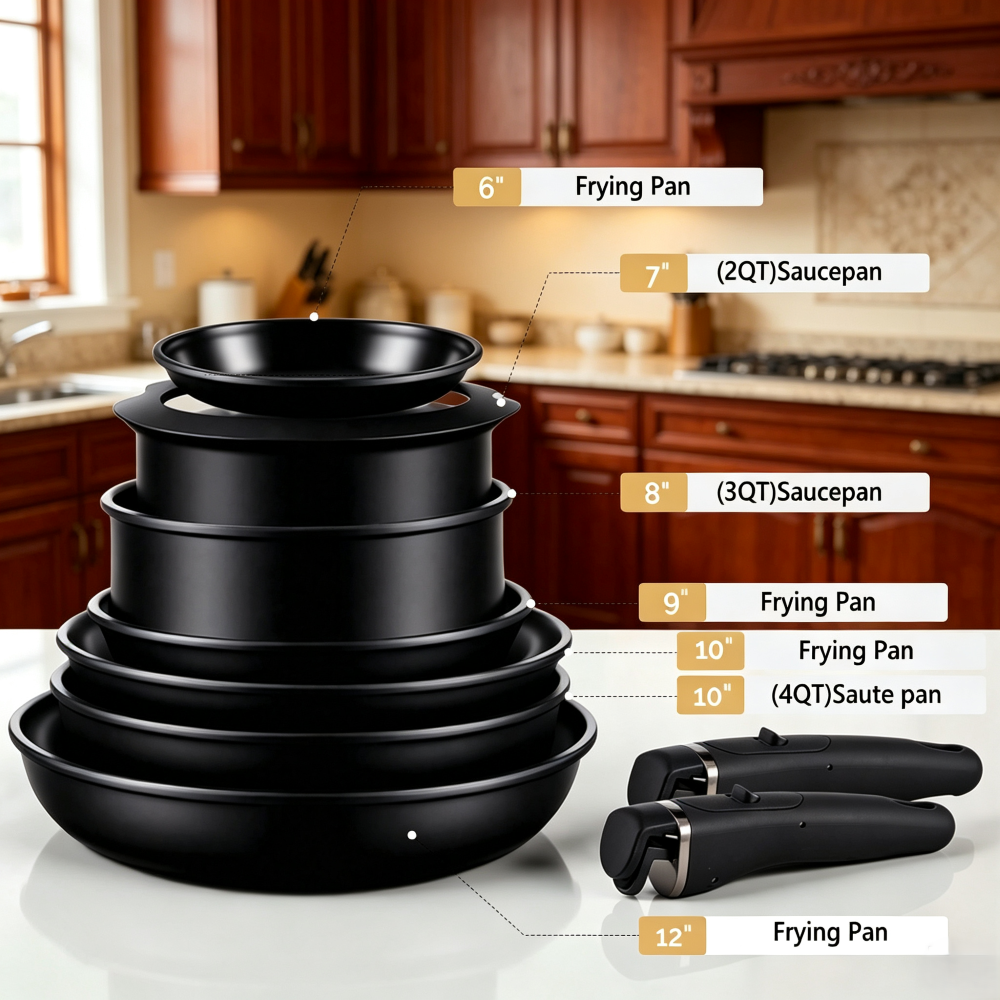 23-Piece Aluminum Cookware Set, Black Non-Stick Pots and Pans Set with Removable Handles - 7 & 2 Lids, Compatible Induction, Gas, Electric Stoves, Ideal for Home Kitchen & Outdoor Camping$113.99View on Mallflare
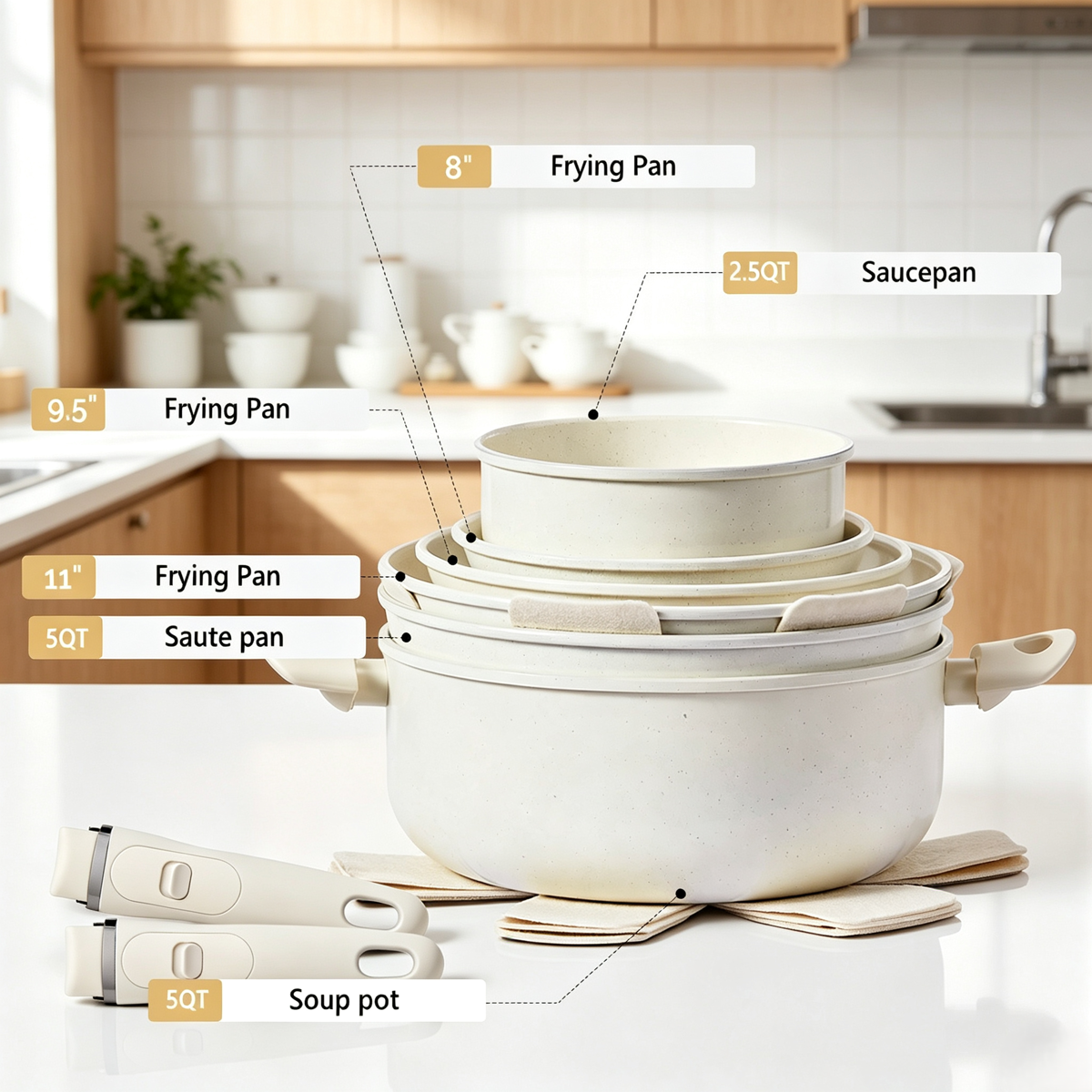 22-Piece Non-Stick Cookware Set, 6 Pots & 3 Lids, Removable Handles, Oven & Dishwasher Safe, Includes 28cm Soup Pot, Cream White Aluminum$113.99View on Mallflare
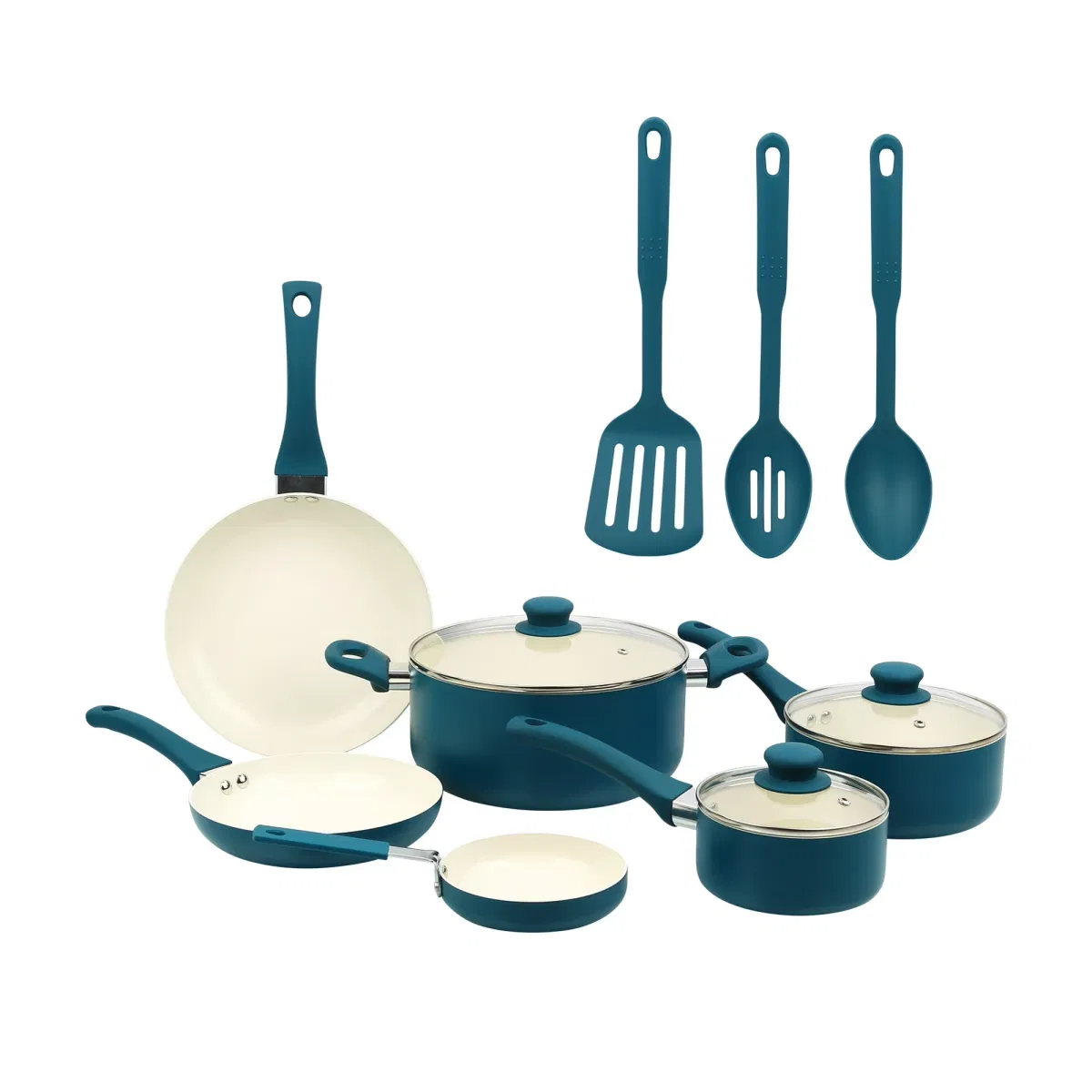 12 Piece Ceramic Nonstick Aluminum Cookware Set, Corsair Blue$130.99View on Mallflare
Highlights
- Coating system tiers: 2-layer PTFE is entry-level and degrades within a year of daily use; 3-5 layer reinforced PTFE or PFOA-free ceramic lasts 2-5 years with hand washing and no metal contact.
- Base construction: forged or hard-anodized aluminum at 2.5-4 mm thickness resists warping; stamped 1.5-2 mm pans bow on high heat and spin on glass cooktops.
- Induction compatibility requires a magnetic steel base plate; pure aluminum non-stick disc pans will not heat on induction without an added ferromagnetic layer.
- Oven-safe ratings split by handle material: riveted stainless handles typically reach 400-500°F; plastic or silicone-wrapped handles cap at 350°F and must stay off broiler heat.
Best use cases
- Best fit: a 10-12 inch forged aluminum skillet with 3+ layer PTFE and riveted stainless handle for daily eggs, fish, and crepes; add a 2-3 quart covered saucepan for sauces.
- Best fit: ceramic-coated PFOA-free pans for low-to-medium heat egg and vegetable cooking when you want a PTFE-free surface, accepting a shorter 1-2 year lifespan.
- Wrong fit: 59-piece mega-sets that bundle utensils — piece count inflates storage needs while pan coating quality stays entry-level; buy 3-5 core vessels instead.
- Wrong fit: silicone utensil sets marketed as 'non-stick cookware' — they protect coatings but cannot cook; pair them with real pans rather than substituting.
Buying tips
- Match pan diameter to burner and storage: 8 inch for eggs, 10 inch for two-egg omelets, 12 inch for family sautés; measure cabinet clearance before buying sets.
- Choose 3-5 layer PTFE for high-release daily use; choose ceramic only if you never exceed medium heat — ceramic loses release above 450°F and with metal utensils.
- Verify induction readiness by the base symbol or a magnet test; an 11-inch induction-compatible skillet needs a flat 8-inch minimum burner contact for even heat.
- Skip sets beyond 10-12 pieces; scale to household size — 1-2 people need a skillet plus saucepan, 4+ people need a skillet, saute pan, and stockpot.
Specs
| Coating Type | PTFE vs ceramic / PFOA-free |
|---|---|
| Base Material | Forged aluminum / hard-anodized / steel |
| Induction Ready | Magnetic steel base required |
| Oven Safe | 350°F plastic handle / 500°F steel |
Related searches
What to check before buying
- Measure your cooktop burner diameters and largest storage drawer or cabinet shelf; 12-inch skillets with long handles need roughly 20 inches of linear space.
- Confirm your range type (gas, electric coil, glass-top, induction) and verify each pan's base is flat and magnetic if induction is in use.
- Check oven-safe temperature and handle material against your typical broiler or oven use; plastic handles must stay at or below 350°F.
- Plan utensil and care supplies: silicone or wood tools, a soft sponge, and no dishwasher for coated pans to preserve the release layer.
FAQ
Data sources: eBay / Amazon listings and product attribute feeds. Updated Nov 28, 2026.
Some links on this page are affiliate links. If you buy after clicking one, we may earn a commission at no extra cost to you. This does not change which products appear here or their order. Affiliate disclosure.