
Photos from current listings. Actual item, color, and included accessories may vary.
Pan Electric Stove Buying Guide
Electric coil and glass-top stoves demand flat, warp-resistant cookware with full-surface contact; the core trade-off is between responsive aluminum-clad discs and heavy, slow-heating cast iron or carbon steel. Choose fully clad stainless or hard-anodized aluminum with a machined flat base for coil burners, and avoid thin stamped pans or warped discs that rock and kill heat transfer.
Median $104.49
Key takeaways
- Coil burners transfer heat only through direct contact—pan bottoms must be flat within 0.5 mm across the disc; spun or stamped bases warp above 400°F and lose 30-50% contact area.
- Glass-top ranges require smooth, non-scratch bases; avoid cast-iron with rough seasoning or unpolished carbon steel that can gouge the ceramic surface.
- Fully clad stainless (18/10 body, aluminum core to the rim) heats evenly on coil rings; disc-bottom pans concentrate heat at the base and are lighter but less uniform at the walls.
At a glance
- Category
- Cookware & Cutlery
- Last updated
- Nov 28, 2026
Current offers
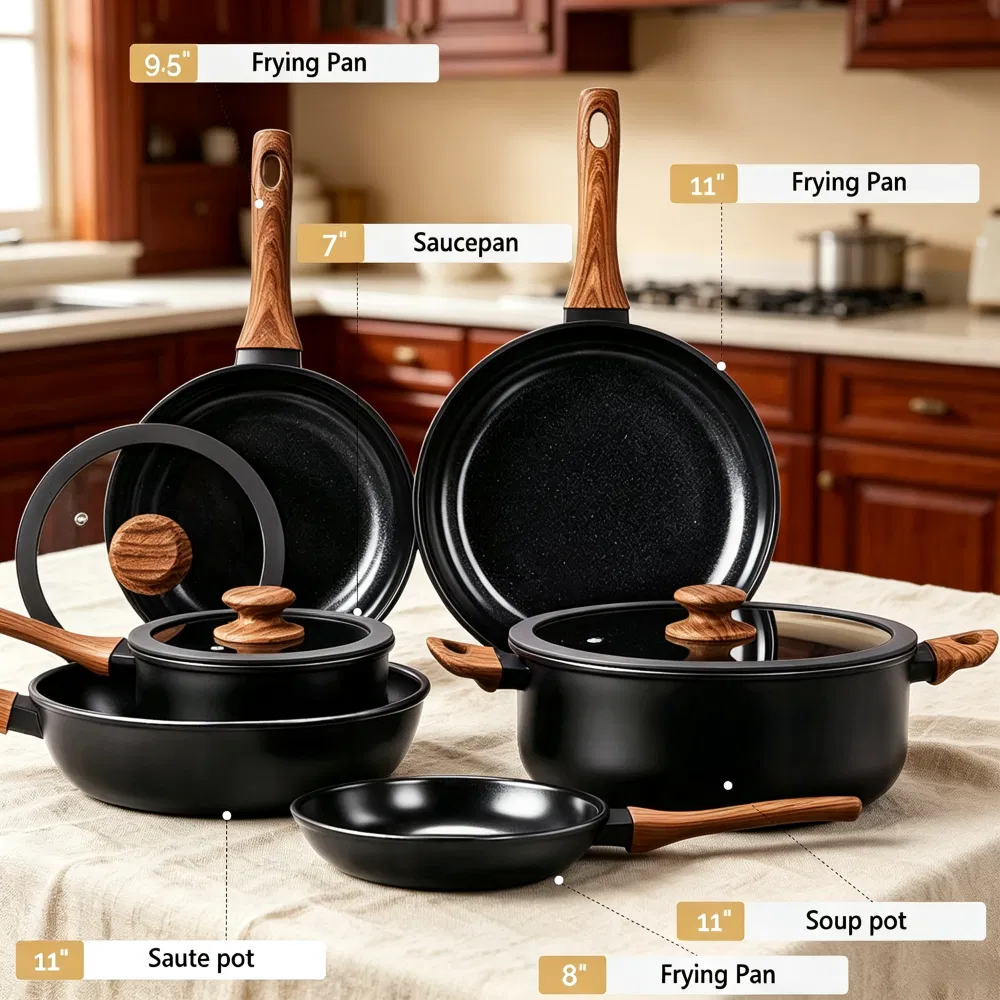 20-Piece Aluminum Cookware Set, Black Non-Stick Pots and Pans Set with Assembled Handles - 6 (Including 28cm Stock Pot) & 3 Lids, Compatible Induction, Gas, Electric Stoves for Kitchen$94.99View on Mallflare
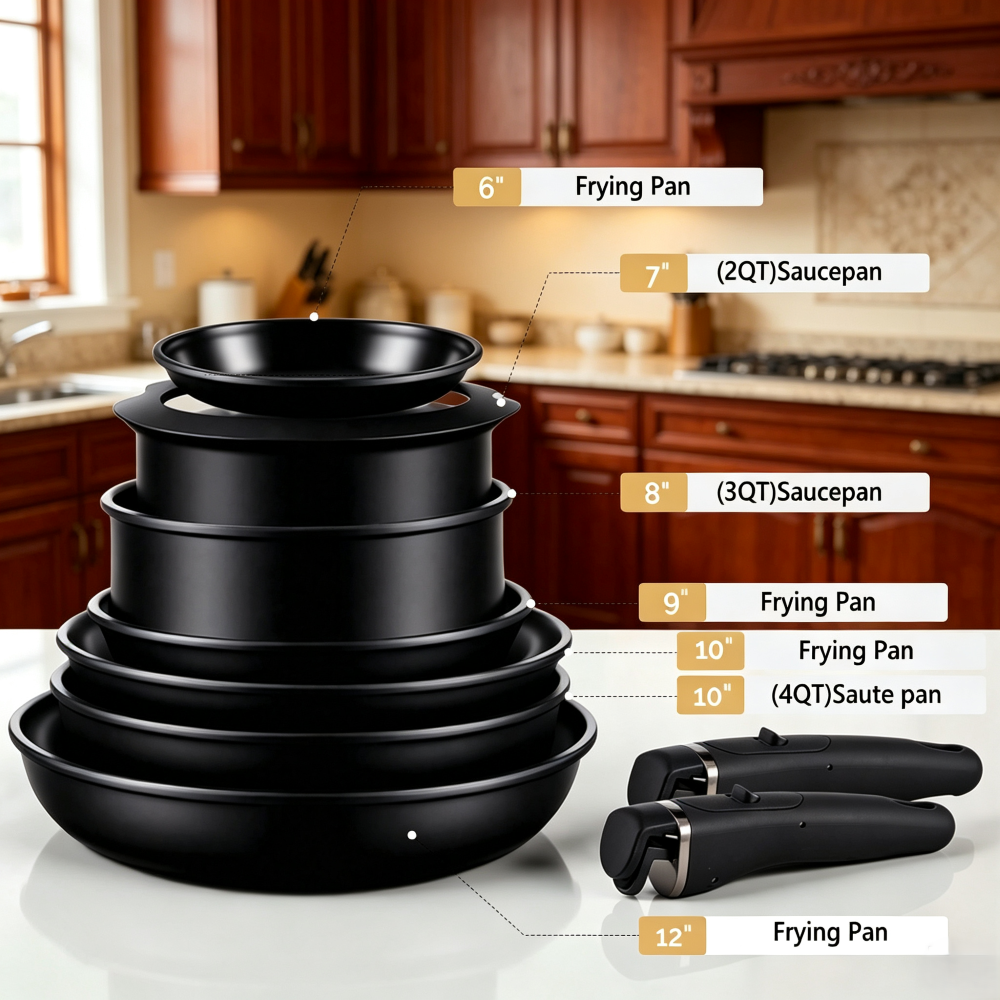 23-Piece Aluminum Cookware Set, Black Non-Stick Pots and Pans Set with Removable Handles - 7 & 2 Lids, Compatible Induction, Gas, Electric Stoves, Ideal for Home Kitchen & Outdoor Camping$113.99View on Mallflare
Highlights
- Coil burners transfer heat only through direct contact—pan bottoms must be flat within 0.5 mm across the disc; spun or stamped bases warp above 400°F and lose 30-50% contact area.
- Glass-top ranges require smooth, non-scratch bases; avoid cast-iron with rough seasoning or unpolished carbon steel that can gouge the ceramic surface.
- Fully clad stainless (18/10 body, aluminum core to the rim) heats evenly on coil rings; disc-bottom pans concentrate heat at the base and are lighter but less uniform at the walls.
- Hard-anodized aluminum delivers the fastest response on electric coils but is not induction-compatible; stainless-clad or cast iron covers both electric and future induction.
Best use cases
- Best for coil burners: tri-ply stainless or hard-anodized aluminum with a flat, machined base—choose 2.5-3 mm base thickness for even heat and warp resistance.
- Best for glass-top ranges: smooth-bottom stainless or enameled cast iron; skip bare cast iron and rough carbon steel that scratch the ceramic surface.
- Best for high-heat searing on electric: enameled cast iron or 3 mm carbon steel—preheat low and slow; skip thin nonstick, which degrades above 450°F.
- Wrong fit: lightweight stamped aluminum or warped disc-bottom pans on coil stoves—they rock, hot-spot, and waste energy; upgrade to clad or cast construction.
Buying tips
- Measure your coil or glass-top ring diameter: pan base should match or slightly exceed the burner (within 1 inch) to avoid heat spill and handle overheating.
- Pick 18/10 stainless for the cooking surface and a magnetic stainless exterior if you want induction compatibility later; aluminum-clad cores must reach the rim for side-wall heat.
- For coil stoves, a 3 mm+ base thickness resists warping; for glass tops, a polished flat base with no exposed rivets underneath prevents scratches.
- Skip nonstick for high-heat electric searing—PTFE coatings break down above 500°F; use stainless, carbon steel, or enameled cast iron instead.
Specs
| Base Flatness | ≤0.5 mm warp across base |
|---|---|
| Base Thickness | 2.5-3 mm for coil/glass-top |
| Construction | Fully clad vs disc-bottom |
| Induction Ready | Magnetic stainless exterior |
Related searches
What to check before buying
- Measure burner diameter and pan base: base should be within 1 inch of the burner ring for coil and glass-top efficiency.
- Check your stove type: coil burners tolerate disc-bottom pans; glass tops require smooth, flat bases with no rough edges.
- Confirm oven-safe temperature rating if you plan to finish dishes in the oven—stainless and cast iron typically handle 500°F+; nonstick often caps at 450°F.
- Verify handle material and rivets: stainless or oven-safe handles with riveted construction survive electric coil heat; plastic handles can melt if left over a hot ring.
FAQ
Data sources: eBay / Amazon listings and product attribute feeds. Updated Nov 28, 2026.
Some links on this page are affiliate links. If you buy after clicking one, we may earn a commission at no extra cost to you. This does not change which products appear here or their order. Affiliate disclosure.