
Photos from current listings. Actual item, color, and included accessories may vary.
Stainless Steel Griddle Buying Guide
A stainless steel griddle is the most durable flat-top you can put over a burner or grill, but buyers routinely pick the wrong footprint for their heat source and end up with hot spots and warped plates. Getting the thickness, size-to-burner match, and handle design right matters far more than brand name. This guide covers the configurations that actually hold heat evenly and survive years of high-heat cooking.
Median $98.99
Key takeaways
- Stainless steel conducts heat poorly on its own, so usable griddles use an aluminum or clad core; solid 3-ply or 5-ply construction at 3-5 mm total thickness resists warping under high heat.
- Footprint must match the heat source: single-burner 16-18 in wide models suit gas ranges, while 23.5 in and 32 in double-burner plates need two aligned burners or a wide grill firebox to heat evenly.
- Raised oil grooves and perimeter grease channels direct fat away from food; a pour spout or drain hole prevents pooling that causes flare-ups and uneven browning.
At a glance
- Category
- Cookware & Cutlery
- Last updated
- Nov 28, 2026
Current offers
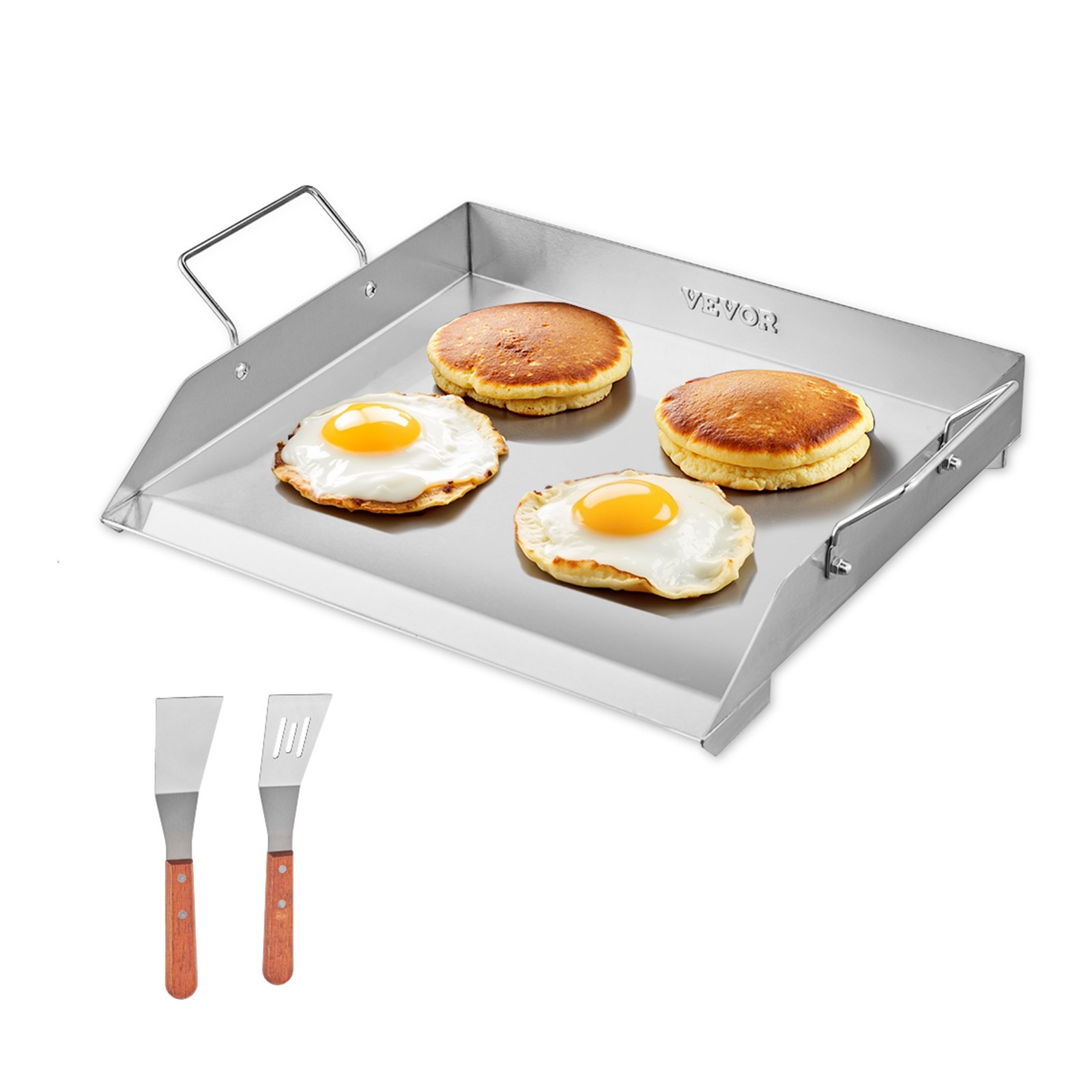 18x16 In Flat Top Griddle Stainless Steel Universal BBQ Grill Pan Cookware$65.99View on Mallflare
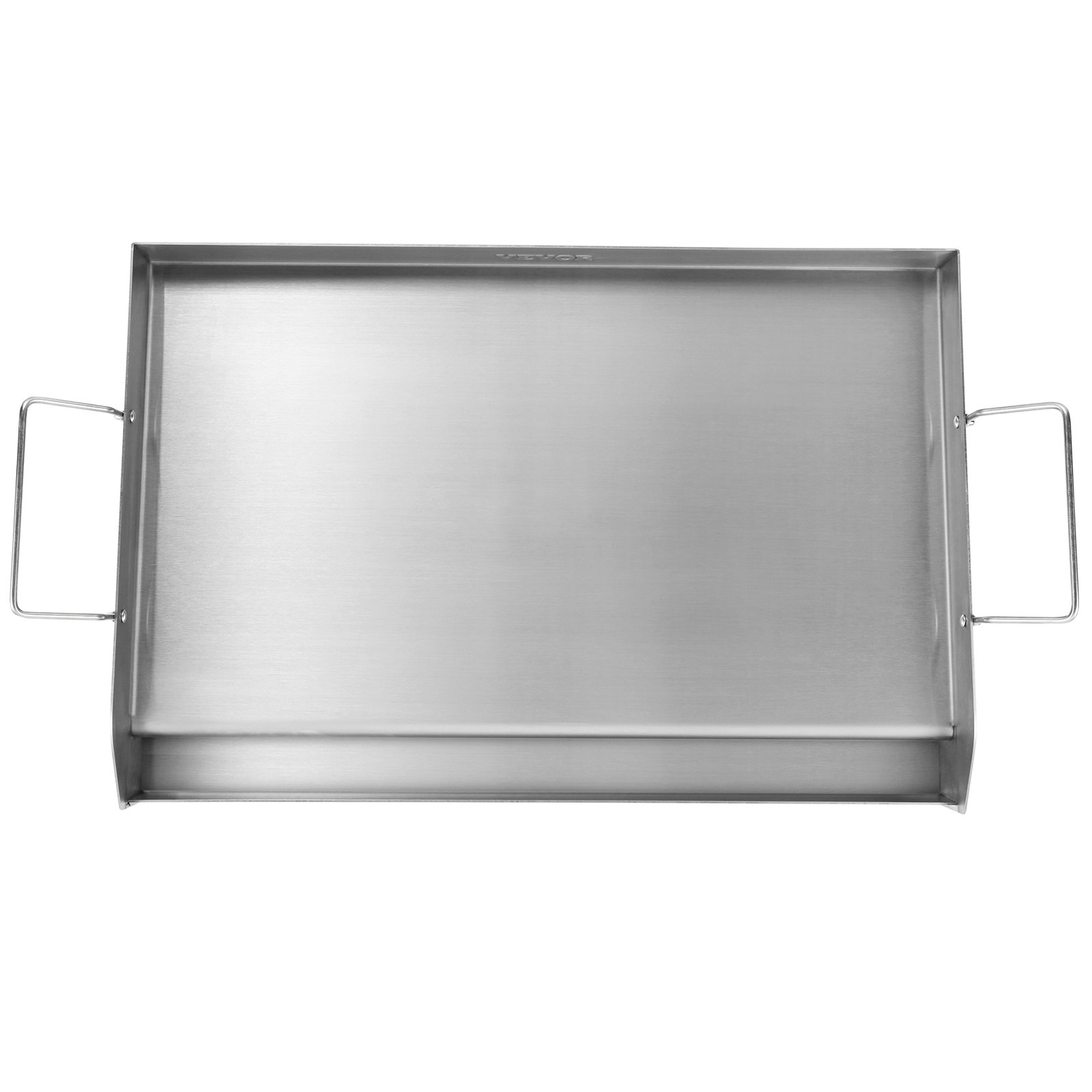 Stove Top Griddle, 23.5"x16" Pre-Seasoned Stainless Steel Rectangular Double Burner Pan, Non-Stick Family Pan Cookware With Handles And Oil Groove, For BBQ, Gas Grills, Silver$93.99View on Mallflare
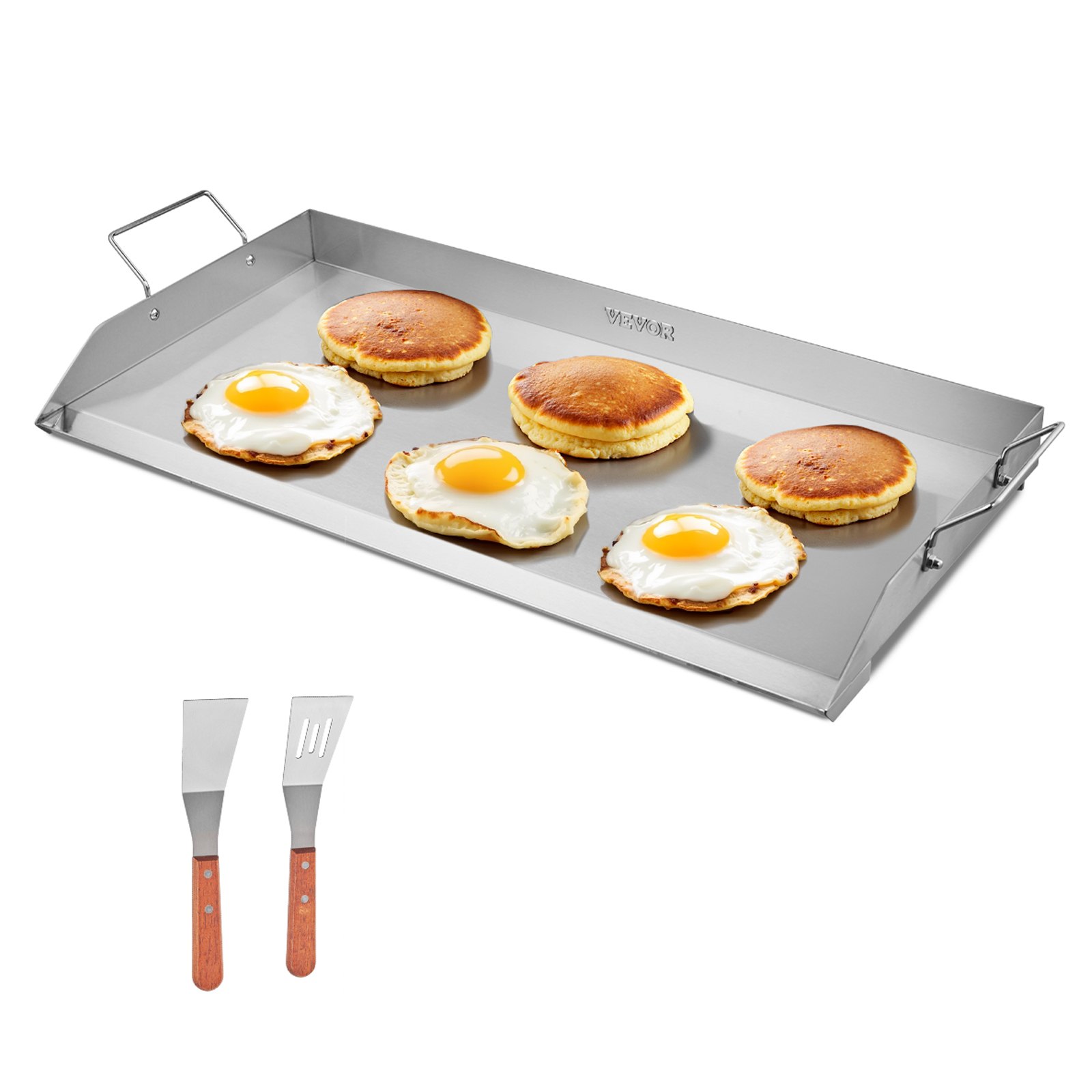 32x16 In Flat Top Griddle Stainless Steel Universal BBQ Grill Pan Cookware$103.99View on Mallflare
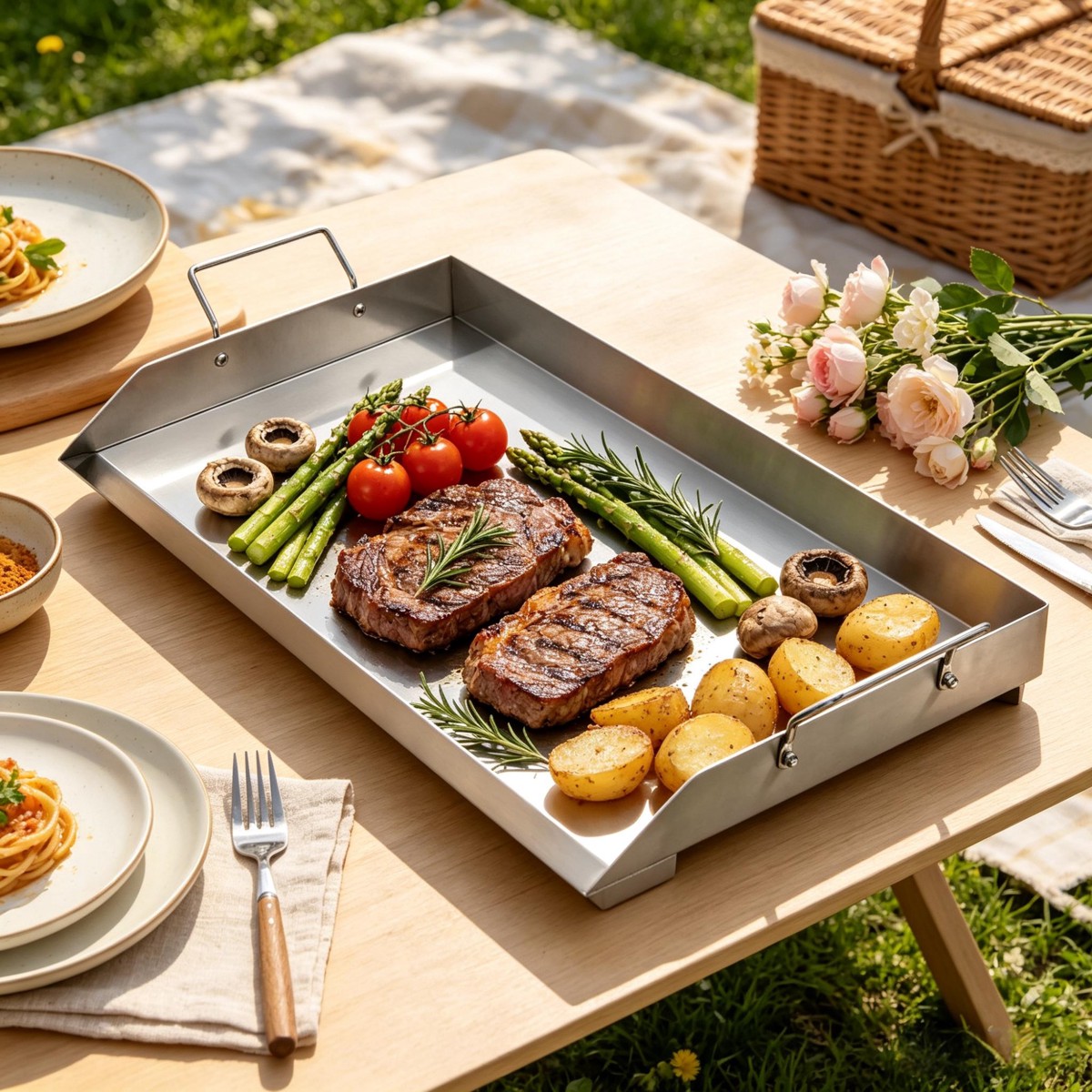 32 x 16 Inch Stainless Steel Griddle Universal Flat Top Plate Gas Grill Teppanyaki Portable Family Cookware for Camping$195.99View on Mallflare
Highlights
- Stainless steel conducts heat poorly on its own, so usable griddles use an aluminum or clad core; solid 3-ply or 5-ply construction at 3-5 mm total thickness resists warping under high heat.
- Footprint must match the heat source: single-burner 16-18 in wide models suit gas ranges, while 23.5 in and 32 in double-burner plates need two aligned burners or a wide grill firebox to heat evenly.
- Raised oil grooves and perimeter grease channels direct fat away from food; a pour spout or drain hole prevents pooling that causes flare-ups and uneven browning.
- Riveted stainless handles stay cooler than welded tube handles and give a secure grip when lifting a loaded plate; low-profile side walls under 1 in keep spatula access easy.
Best use cases
- Pick an 18x16 in single-burner plate for apartment gas ranges and two-person breakfasts; skip 32 in plates that overhang a single burner and never reach temperature.
- Choose the 23.5x16 in double-burner rectangular griddle for family cooking on a gas cooktop or a two-burner grill section where even heat across the full surface matters.
- Go with a 32x16 in flat top for large grills, outdoor kitchens, and batch cooking for crowds; avoid it on standard 30 in ranges where it blocks adjacent burners and cabinets.
Buying tips
- Check total thickness and core construction first: 3-ply stainless-aluminum-stainless at 3 mm or more resists warping, while thin single-layer stainless plates buckle at searing temperatures.
- Size the plate to your burners rather than your counter: a griddle should span only the burners beneath it, so measure burner spacing and grates before choosing width.
- Prioritize raised edges and a grease channel or spout on any plate wider than 18 in, since larger surfaces generate more runoff that pools without a drain path.
- Avoid unclad all-stainless plates and thin stamped pans marketed as flat tops; they scorch in rings above burner flames and rarely sit flat after repeated heating.
Specs
| Construction | 3-ply to 5-ply clad, 3-5 mm |
|---|---|
| Footprint Tiers | 18x16 / 23.5x16 / 32x16 in |
| Burner Match | Single vs double burner |
| Grease Management | Raised groove + pour spout |
Related searches
What to check before buying
- Measure your burner grates and the distance between burner centers so the plate footprint sits fully supported and centered over the heat.
- Confirm your cooktop or grill surface is flat and level; warped grates or a sloped firebox cause oil to run to one side regardless of channel design.
- Check that handles and side walls clear your backsplash, hood, and adjacent burners, especially on 23.5 in and 32 in plates.
- Verify the plate fits your heat type: gas ranges and grills work directly, while glass-top electric and induction cooktops need a flat-bottom plate rated for that surface.
FAQ
Data sources: eBay / Amazon listings and product attribute feeds. Updated Nov 28, 2026.
Some links on this page are affiliate links. If you buy after clicking one, we may earn a commission at no extra cost to you. This does not change which products appear here or their order. Affiliate disclosure.