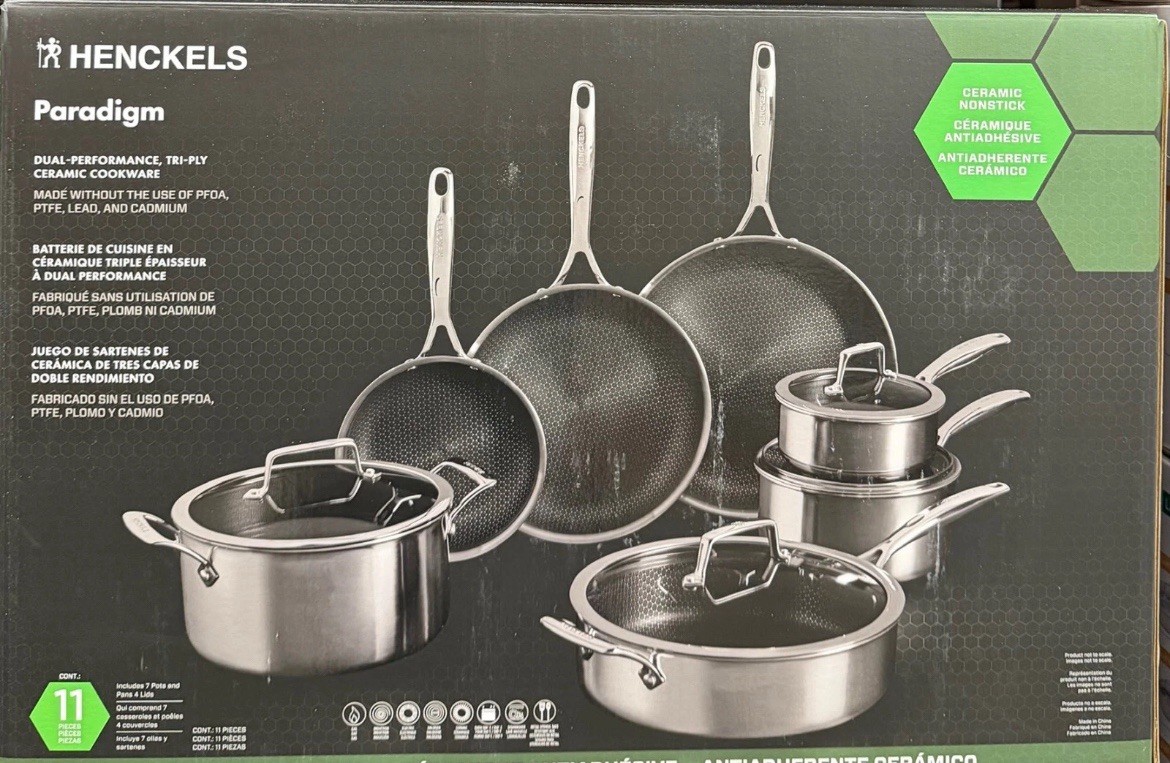

Photos from current listings. Actual item, color, and included accessories may vary.
Stainless Steel Nonstick Cookware Set Buying Guide
Stainless steel nonstick cookware sets combine a stainless-steel exterior for durability and induction compatibility with a PTFE or ceramic nonstick cooking surface for easy release. The core trade-off is nonstick coating longevity versus stainless-steel build quality: budget sets use thin aluminum cores and single-layer coatings that degrade within a year, while durable sets use thick multi-ply bases and reinforced or ceramic coatings rated for metal-utensil use. The decision rule is simple: choose a set with a bonded magnetic stainless base at least 2.5 mm thick and a coating explicitly rated for metal utensils or high-heat searing if you want it to last; skip any set that lists only 'aluminum' construction or a single-layer coating.
Median $229.44 · New listings
Key takeaways
- Base construction is the durability divider: fully clad 3-ply (stainless-aluminum-stainless) resists warping and heats evenly, while encapsulated disk bases can delaminate over time.
- Nonstick coating tier determines lifespan: standard PTFE lasts 1–2 years with careful use, reinforced PTFE (e.g., titanium or diamond particles) lasts 3–5 years, and ceramic coatings resist high heat but lose release sooner.
- Induction compatibility requires a magnetic stainless steel outer layer; sets labeled 'induction-ready' have a ferromagnetic base, while pure aluminum or copper cores alone will not work on induction.
At a glance
- Category
- Cookware & Cutlery
- Last updated
- Nov 28, 2026
Current offers
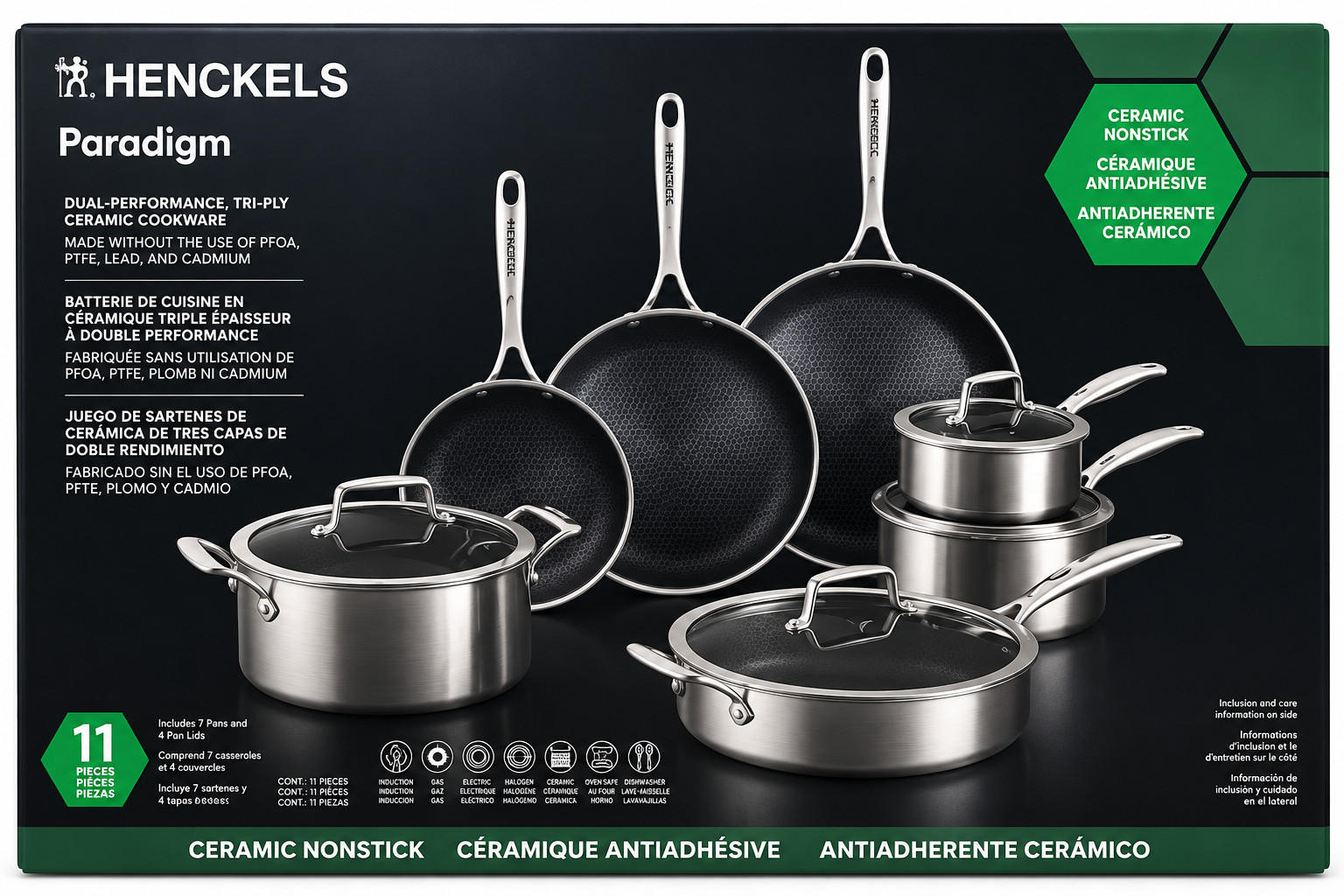
Highlights
- Base construction is the durability divider: fully clad 3-ply (stainless-aluminum-stainless) resists warping and heats evenly, while encapsulated disk bases can delaminate over time.
- Nonstick coating tier determines lifespan: standard PTFE lasts 1–2 years with careful use, reinforced PTFE (e.g., titanium or diamond particles) lasts 3–5 years, and ceramic coatings resist high heat but lose release sooner.
- Induction compatibility requires a magnetic stainless steel outer layer; sets labeled 'induction-ready' have a ferromagnetic base, while pure aluminum or copper cores alone will not work on induction.
- Oven-safe temperature ratings vary by handle material and coating: all-metal handles typically reach 500°F, silicone-wrapped handles often cap at 350–400°F, and nonstick coatings degrade above 500°F.
Best use cases
- Best fit: daily egg and delicate-protein cooking on induction — pick a 3-ply fully clad set with reinforced PTFE and all-metal handles for even heat and oven finishing.
- Best fit: high-heat searing and pan-broiling — choose uncoated stainless skillets or a set with a ceramic nonstick rated to 600°F; skip standard PTFE sets that off-gas above 500°F.
- Wrong fit: dishwasher-heavy households — most nonstick coatings degrade in dishwashers; choose uncoated stainless or a set explicitly labeled dishwasher-safe with a reinforced coating.
- Wrong fit: metal-utensil users — only buy sets whose coating is rated for metal utensils; standard PTFE scratches and flakes, so silicone or wood utensils are mandatory otherwise.
Buying tips
- Match pan base diameter to your largest burner: a 10–11 inch skillet needs a base of at least 8 inches to sit stable and heat evenly on gas or induction.
- For induction cooktops, confirm the set specifies a magnetic stainless steel base layer; test any pan with a magnet — if it sticks firmly, it will work.
- Choose 18/10 stainless steel for the cooking surface and exterior (18% chromium, 10% nickel) for better corrosion resistance than 18/0 or 304-grade mystery steel.
- Check coating warranty length as a proxy for durability: 1-year warranties signal basic PTFE, while 5-year or lifetime coating warranties indicate reinforced or ceramic tiers.
Specs
| Base Construction | Fully clad 3-ply vs encapsulated disk |
|---|---|
| Nonstick Coating | PTFE / reinforced PTFE / ceramic |
| Induction Ready | Magnetic stainless base required |
| Oven Safe Max | 350°F silicone handle / 500°F metal |
Related searches
What to check before buying
- Measure your stovetop burners and oven interior: ensure the largest skillet (10–12 inches) fits flat on the burner and the set's stockpot fits your oven with lid on.
- Confirm your cooktop type: induction requires magnetic stainless bases; gas and electric work with any base, but thin aluminum warps on high heat.
- Check handle material against your oven use: all-metal handles for broiler or 500°F+ roasting, silicone-wrapped for stovetop-only cooking.
- Verify lid compatibility: tempered glass lids are oven-safe to 350–400°F, while stainless lids handle higher heat but prevent visual monitoring.
FAQ
Data sources: eBay / Amazon listings and product attribute feeds. Updated Nov 28, 2026.
Some links on this page are affiliate links. If you buy after clicking one, we may earn a commission at no extra cost to you. This does not change which products appear here or their order. Affiliate disclosure.