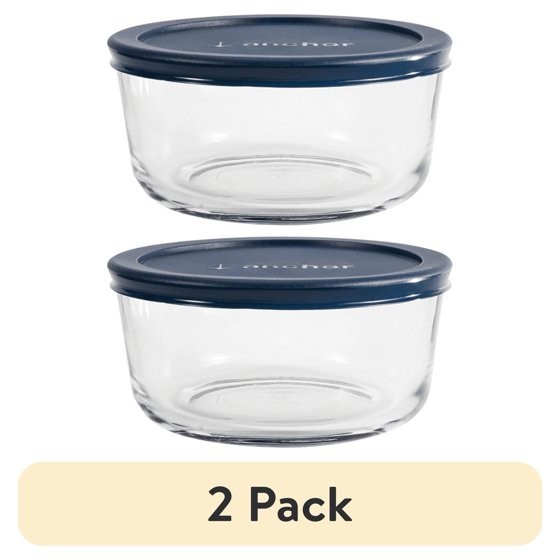

Photos from current listings. Actual item, color, and included accessories may vary.
1 Cup Glass Container With Lids Buying Guide
A 1-cup glass container with lid is a small-portion storage vessel (roughly 236 ml) built from tempered soda-lime or borosilicate glass with a rigid or snap-fit lid, used for leftovers, meal-prep components, and fridge or pantry organization. The core trade-off is glass type versus lid seal: borosilicate resists thermal shock for oven and freezer transitions, while tempered soda-lime is cheaper and tougher against impact but can shatter under sudden temperature change; lid material (PP vs silicone vs glass) determines leak-proofing and microwave safety. The clear decision rule is to buy borosilicate with a silicone-gasket locking lid when the container will move between freezer, microwave, and oven; choose tempered soda-lime with a vented PP lid only for cold or room-temperature dry storage.
Median $8.78
Key takeaways
- Borosilicate glass (~3.3 coefficient of thermal expansion) tolerates oven, microwave, freezer, and dishwasher cycles; tempered soda-lime is impact-tougher but can crack under sudden temperature shifts.
- A true 1-cup capacity is 8 fl oz (236 ml); many 'small' containers labeled 1 cup measure 6-7 oz usable because of lid recess and fill-line headspace.
- Silicone-gasket locking lids with 4 side clips create an airtight, leak-resistant seal for liquids; simple press-on PP lids are splash-resistant only and not leak-proof.
At a glance
- Category
- Food Storage & Containers
- Last updated
- Nov 28, 2026
Current offers
Highlights
- Borosilicate glass (~3.3 coefficient of thermal expansion) tolerates oven, microwave, freezer, and dishwasher cycles; tempered soda-lime is impact-tougher but can crack under sudden temperature shifts.
- A true 1-cup capacity is 8 fl oz (236 ml); many 'small' containers labeled 1 cup measure 6-7 oz usable because of lid recess and fill-line headspace.
- Silicone-gasket locking lids with 4 side clips create an airtight, leak-resistant seal for liquids; simple press-on PP lids are splash-resistant only and not leak-proof.
- Oven-safe glass bases are typically rated to 400-450°F (204-232°C) without the lid; PP lids are microwave-safe but not oven-safe and warp above ~250°F (121°C).
Best use cases
- Best fit: portioned leftovers, sauces, dips, and single-serve meal-prep — pick a borosilicate 1-cup with a 4-clip silicone-gasket lid for leak-proof fridge-to-microwave use.
- Best fit: pantry dry goods (spices, nuts, seeds) — choose tempered soda-lime with a vented PP lid; skip borosilicate if the container never sees heat or liquid.
- Wrong fit: oven baking or broiling — no 1-cup glass container with a plastic lid is broiler-safe; use an all-glass lid or a larger borosilicate baking dish instead.
- Wrong fit: backpack or lunchbox transport of thin liquids — a 1-cup glass vessel adds ~0.5 lb; use a smaller plastic or stainless container where weight and drop risk matter.
Buying tips
- Confirm usable capacity: a 1-cup (8 fl oz / 236 ml) container should hold at least 7 oz of liquid below the lid line; if the listing only gives exterior dimensions, calculate interior volume from length × width × height minus lid depth.
- Match glass to heat exposure: choose borosilicate for freezer-to-oven or microwave transitions; tempered soda-lime is acceptable for cold storage and hand-washing but risks thermal-shock cracking.
- Prioritize lid architecture: 4-clip locking lids with a removable silicone gasket are the only reliable leak-proof option; press-fit PP lids are splash-resistant and best for dry goods.
- Check lid and base compatibility across brands: 1-cup glass containers vary in rim diameter (typically 3.5-4.5 in), so replacement lids are not interchangeable between brands; buy lids from the same product line.
Specs
| Glass Type | Borosilicate vs Tempered soda-lime |
|---|---|
| Capacity | 8 fl oz / 236 ml (usable 6.5-7.5 oz) |
| Lid Seal | 4-clip silicone gasket vs press-fit PP |
| Oven Rating | Base 400-450°F; plastic lid not oven-safe |
Related searches
What to check before buying
- Measure your fridge shelf clearance and drawer height: a 1-cup glass container typically stands 2.5-3.5 in tall with the lid on, so confirm it fits upright in your intended storage zone.
- Verify your microwave and oven interior dimensions and that the glass base is rated for your appliance; PP lids must be removed or vented before microwaving.
- Check whether your dishwasher's top rack fits the container height and whether the lid gasket is removable for cleaning; non-removable gaskets trap residue.
- Confirm the lid seal type matches your use: locking clips with silicone gasket for liquids and transport; vented press-fit lid for dry pantry goods.
FAQ
Data sources: eBay / Amazon listings and product attribute feeds. Updated Nov 28, 2026.
Some links on this page are affiliate links. If you buy after clicking one, we may earn a commission at no extra cost to you. This does not change which products appear here or their order. Affiliate disclosure.