
Photos from current listings. Actual item, color, and included accessories may vary.
Glass Food Storage Jar Buying Guide
Glass food storage jars are rigid, non-porous containers defined by glass type (soda-lime vs borosilicate), lid seal architecture, and wall thickness—the trade-off is thermal shock resistance and airtightness versus weight and cost. The decision rule: choose borosilicate with a silicone-gasketed clamp or screw lid for oven-to-fridge use and true airtightness; accept soda-lime with a wooden or cork lid only for dry-goods pantry storage where thermal cycling and long-term moisture protection are not required.
Median $29.99
Key takeaways
- Borosilicate glass (low expansion ~3.3×10⁻⁶/°C) survives oven-to-fridge thermal shock; soda-lime glass (~9×10⁻⁶/°C) can crack under the same swing and is not oven-safe.
- Airtightness is set by the gasket, not the lid material—silicone O-ring or flat gasket with clamp/screw closure seals; wooden and cork lids without a gasket are moisture- and odor-permeable.
- Wooden lids are typically acacia, bamboo, or pine; they require hand washing and oiling, while glass bodies are dishwasher-safe and non-staining for oils and tomato sauces.
At a glance
- Category
- Food Storage & Containers
- Last updated
- Nov 27, 2026
Current offers
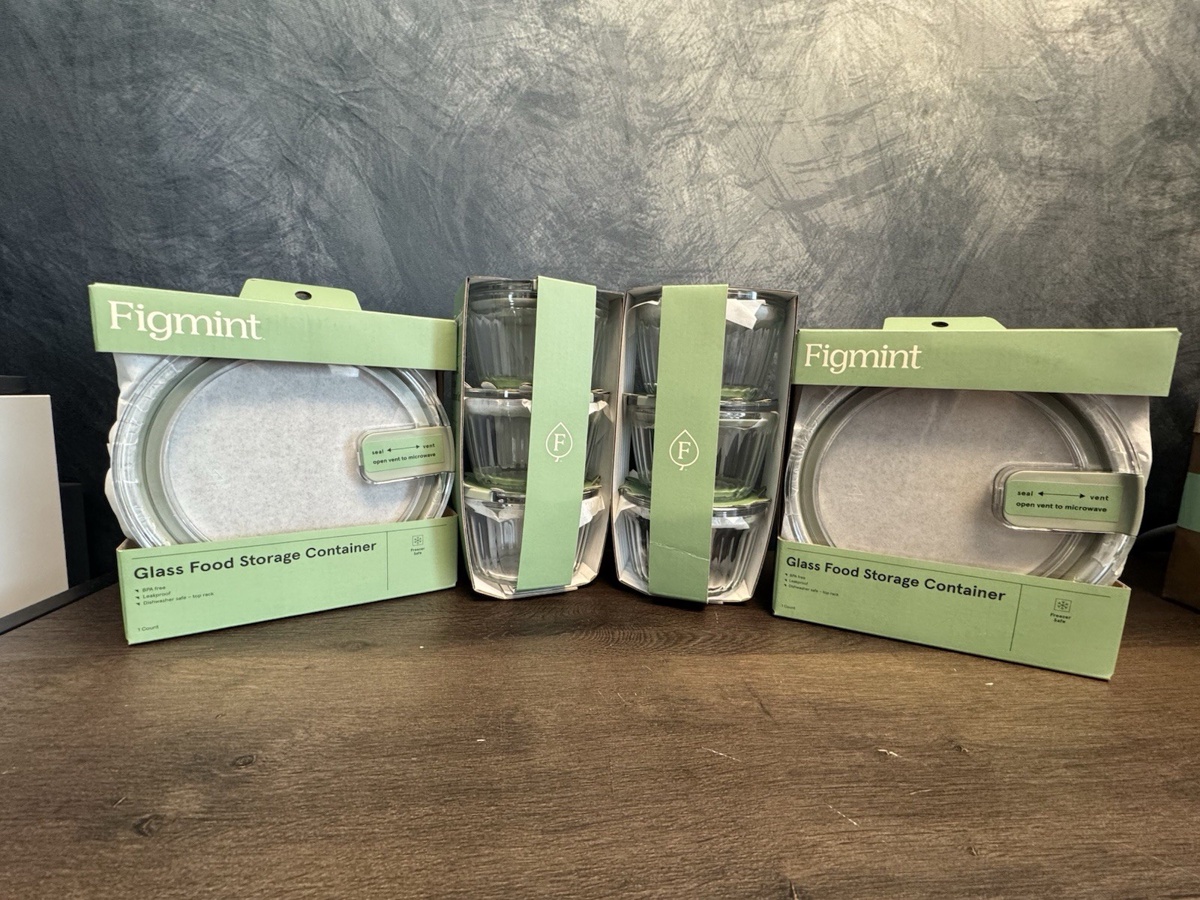 Figmint Food Storage Jars Containers Clear 16 Pc Set/ 8Containers, 2 Sizes NEW$29.99View on eBay
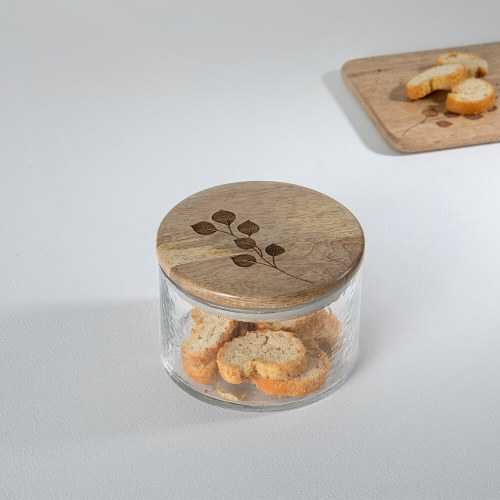 Leafy Twig Glass Jar Container With Wooden Lid-700 Ml$22.99View on Mallflare
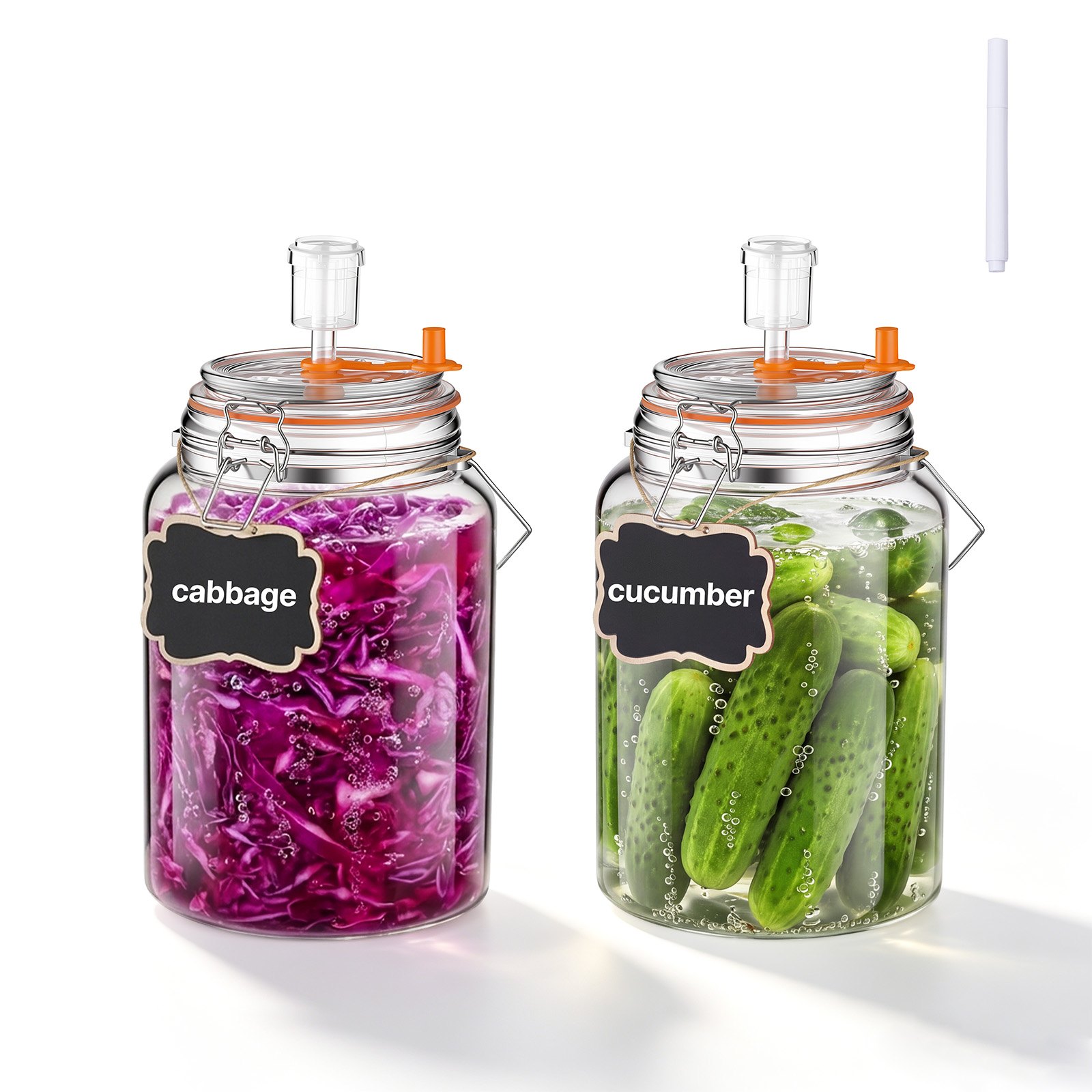 1 Gallon Glass Fermentation Jar, Wide Mouth Container Kit, 2-Pack, for Making Sauerkraut, Kimchi, Pickles and Vegetables, Jars for Beginners with Airlocks, Latch Lids, and Silicone Rings$45.99View on Mallflare
Highlights
- Borosilicate glass (low expansion ~3.3×10⁻⁶/°C) survives oven-to-fridge thermal shock; soda-lime glass (~9×10⁻⁶/°C) can crack under the same swing and is not oven-safe.
- Airtightness is set by the gasket, not the lid material—silicone O-ring or flat gasket with clamp/screw closure seals; wooden and cork lids without a gasket are moisture- and odor-permeable.
- Wooden lids are typically acacia, bamboo, or pine; they require hand washing and oiling, while glass bodies are dishwasher-safe and non-staining for oils and tomato sauces.
- Wall thickness of 3–5 mm on borosilicate jars resists chipping at the rim; thin soda-lime jars under 3 mm are more prone to rim cracks during daily handling.
Best use cases
- Best fit: borosilicate jar with silicone-gasketed clamp lid for meal prep, leftovers, and oven-to-fridge reheating—skip wooden-lid jars for any wet or heated food.
- Best fit: soda-lime or borosilicate jar with wooden/cork lid for dry pantry staples (pasta, beans, coffee beans) where airtightness matters less than aesthetics—do not use for liquids or freezer storage.
- Best fit: wide-mouth 700–1000 ml jars with screw-band lids for fermenting and bulk pantry decanting—skip narrow-mouth jars under 500 ml for hands-in access or portion meals.
- Wrong fit: any glass jar for freezer storage filled above 80% capacity—water expansion cracks even borosilicate; leave headspace or use flexible containers.
Buying tips
- Match glass type to use: borosilicate for oven/freezer/microwave (thermal shock rated); soda-lime only for room-temperature dry storage and refrigerator use without thermal cycling.
- Demand a gasket spec: silicone gaskets seal airtight and are heat-resistant to ~230°C; cork and bare wood lids leak air and absorb odors—pick gasketed lids for coffee, flour, and ferments.
- Size by access and capacity: 700 ml is a single meal or 1 lb of coffee; 1–1.5 L wide-mouth for bulk dry goods; narrow-mouth under 500 ml only for liquids and pouring.
- Check lid and body compatibility standards: standard wide-mouth 86 mm or regular 70 mm screw threads accept replacement lids and vacuum seals; proprietary wooden lids have no replacement ecosystem.
Specs
| Glass Type | Borosilicate vs soda-lime |
|---|---|
| Lid Seal | Silicone gasket vs wood/cork |
| Thermal Rating | Oven-safe vs fridge-only |
| Mouth Size | Wide 86 mm vs regular 70 mm |
Related searches
What to check before buying
- Measure your shelf height and cabinet depth: wide-mouth 1 L jars run roughly 12–16 cm tall—confirm clearance before buying a set that stacks poorly.
- Confirm oven and microwave ratings on the glass body itself (borosilicate), not just the lid—wooden and cork lids must be removed before any heating.
- Verify the lid seal type: silicone gasket present for airtight claims; wooden lids need periodic food-safe oil and should not go in the dishwasher.
- Check freezer headspace rule: fill jars to 80% maximum for frozen liquids; glass jars are not impact-resistant and need a flat, stable shelf.
FAQ
Data sources: eBay / Amazon listings and product attribute feeds. Updated Nov 27, 2026.
Some links on this page are affiliate links. If you buy after clicking one, we may earn a commission at no extra cost to you. This does not change which products appear here or their order. Affiliate disclosure.