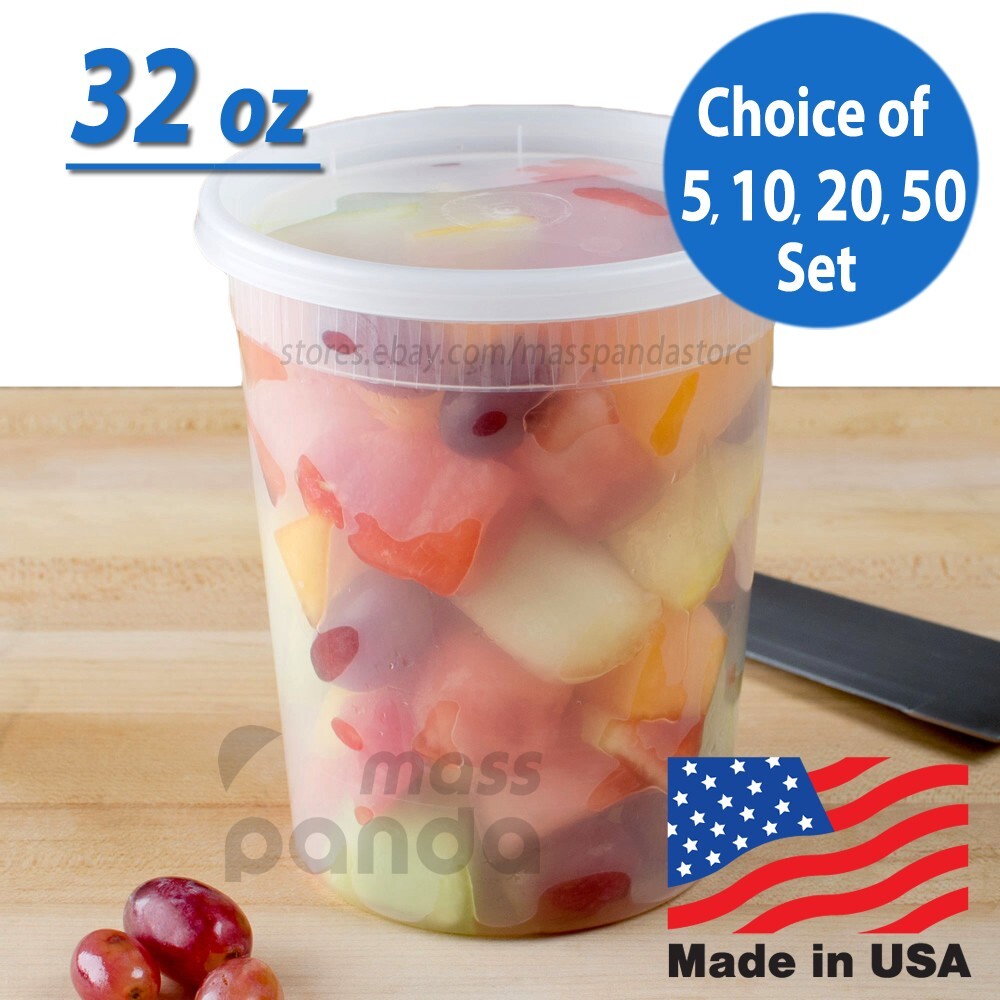

Photos from current listings. Actual item, color, and included accessories may vary.
Large Plastic Container With Lids Buying Guide
Large plastic containers with lids are bulk-storage vessels (typically 1–5 gallons) for dry goods, liquids, or frozen prep, where the lid seal and body resin grade determine whether contents stay fresh and leak-free. The core trade-off is polyethylene type: rigid HDPE resists warping and chemicals but can crack under impact, while flexible LDPE/PP tolerates drops but may absorb odors or stain. Choose food-grade virgin resin with a gasket-sealed or threaded lid for long-term storage; skip thin-walled deli-style rounds if you need stacking strength or airtightness.
Key takeaways
- Resin grade drives durability: HDPE (recycle code 2) is rigid, chemical-resistant, and warp-proof up to 180°F; PP (code 5) handles up to 250°F but is more brittle in cold; LDPE (code 4) flexes without cracking but stains and absorbs odors.
- Lid sealing architecture separates tiers: gasketed screw-on lids (silicone or EPDM ring) hold airtight and leak-proof seals; snap-on lids only resist dust and spills; friction-fit deli lids are not liquid-tight.
- Wall thickness and ribbing determine stacking capacity: containers under 0.06 in (1.5 mm) wall deflect under top-load; corner or circumferential ribs add rigidity without thick resin—look for molded ribs or tapered nesting design.
At a glance
- Category
- Food Storage & Containers
- Last updated
- Nov 28, 2026
Current offers
Highlights
- Resin grade drives durability: HDPE (recycle code 2) is rigid, chemical-resistant, and warp-proof up to 180°F; PP (code 5) handles up to 250°F but is more brittle in cold; LDPE (code 4) flexes without cracking but stains and absorbs odors.
- Lid sealing architecture separates tiers: gasketed screw-on lids (silicone or EPDM ring) hold airtight and leak-proof seals; snap-on lids only resist dust and spills; friction-fit deli lids are not liquid-tight.
- Wall thickness and ribbing determine stacking capacity: containers under 0.06 in (1.5 mm) wall deflect under top-load; corner or circumferential ribs add rigidity without thick resin—look for molded ribs or tapered nesting design.
- Food-grade compliance matters: NSF-listed or FDA 21 CFR-compliant virgin resin is safe for direct food contact; recycled or regrind content can leach or harbor odors unless explicitly food-safe certified.
Best use cases
- Best fit: bulk dry goods (flour, rice, pet food) — pick a 3–5 gallon HDPE container with a gasketed screw lid and molded ribs for stackability; skip thin deli rounds that crack under 10 lb loads.
- Best fit: liquid or marinade storage — choose a threaded-lid PP or HDPE container with a silicone gasket rated leak-proof; snap lids and friction-fit deli containers will seep in transit or on a fridge shelf.
- Wrong fit: freezer storage below 0°F — standard PP and LDPE turn brittle and crack; use HDPE or specify cold-rated PP (impact-modified) with a flexible gasket that stays pliable.
- Wrong fit: hot-fill or microwave reheating — only PP (code 5) tolerates boiling liquids and microwave heat; HDPE warps above 180°F and LDPE deforms, so skip them for soup or sauce prep.
Buying tips
- Sizing math: 1 gallon = 231 cu in; a 5-gallon round container holds about 40 lb of flour or 35 lb of rice—ensure the lid's stack load rating suits your shelf, not just the volume.
- Choose resin by use: HDPE for wet or chemical-adjacent storage, PP for hot or microwave prep, LDPE only for dry goods where flex and impact resistance matter more than rigidity.
- Seal tier: demand a gasketed screw lid for leak-proof claims; snap lids need a full-perimeter engaging lip and are only splash-resistant—never rely on them for upright liquid transport.
- Compatibility: match container diameter to your shelving and car cup holders; round deli-style 32 oz sizes nest efficiently, but rectangular HDPE with straight walls uses shelf space better for bulk.
Specs
| Resin Grade | HDPE (2) / PP (5) / LDPE (4) |
|---|---|
| Lid Seal Type | Gasketed screw / snap / friction-fit |
| Capacity Range | 1–5 gal (4–20 qt) bulk sizes |
| Food Safety | FDA 21 CFR / NSF listed virgin resin |
Related searches
What to check before buying
- Measure your shelf height, door clearance, and stack height before buying; add 2 in for lid and gasket, and confirm the filled container's weight sits within your shelf rating.
- Confirm the resin code and food-grade certification on the base or lid: look for HDPE (2), PP (5), or LDPE (4) plus NSF or FDA food-contact statement—avoid unmarked or recycled-content containers for direct food.
- Check lid spare-part availability and gasket material (silicone for high heat, EPDM for cold/chemical); a replacement lid that seals is cheaper than replacing the whole container.
- Verify climate and UV exposure: for garage or outdoor storage, use UV-stabilized HDPE or opaque resin; clear PP and LDPE yellow and crack under sunlight.
FAQ
Data sources: eBay / Amazon listings and product attribute feeds. Updated Nov 28, 2026.
Some links on this page are affiliate links. If you buy after clicking one, we may earn a commission at no extra cost to you. This does not change which products appear here or their order. Affiliate disclosure.