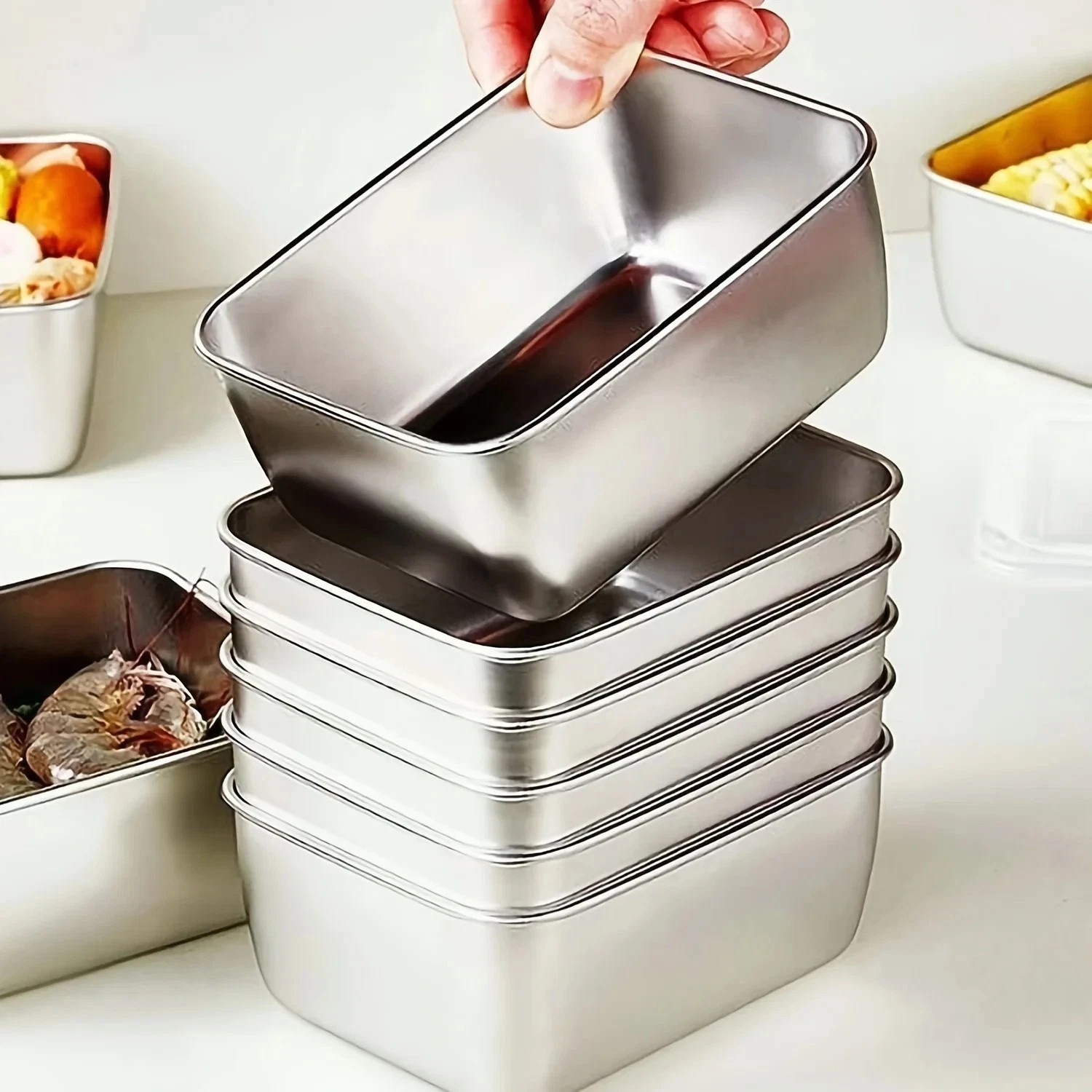

Photos from current listings. Actual item, color, and included accessories may vary.
Stainless Steel Container With Lids Buying Guide
Stainless steel containers with lids are reusable food-storage vessels where the metal body delivers dent resistance, odor neutrality, and thermal transfer, while the lid gasket and latch determine leakproofness and freshness. The core trade-off is between thin, uncoated 0.4–0.6 mm stamped bodies with friction-fit lids and heavier 0.8–1.0 mm 304-grade bodies with silicone-gasketed locking lids. Buy 304 (18/8) stainless with a removable silicone gasket and a positive latch or clamp; skip unmarked "stainless" steel with press-on lids for anything beyond dry pantry goods.
Median $15.99
Key takeaways
- Steel grade separates food-safe durability: 304 (18/8) resists acidic foods and staining, while 201 or unmarked "stainless" is more prone to corrosion and pitting over time.
- Body gauge drives dent resistance and stackability: 0.8–1.0 mm walls hold shape under stacking and dishwashing, whereas 0.4–0.6 mm stamped bodies dent at the rim and warp under heat.
- Lid sealing architecture is the real leakproof gate: silicone-gasketed lids with stainless latches or four-side clamps hold liquids, while friction-fit or single-clip lids are dry-goods only.
At a glance
- Category
- Food Storage & Containers
- Last updated
- Nov 28, 2026
Current offers
Highlights
- Steel grade separates food-safe durability: 304 (18/8) resists acidic foods and staining, while 201 or unmarked "stainless" is more prone to corrosion and pitting over time.
- Body gauge drives dent resistance and stackability: 0.8–1.0 mm walls hold shape under stacking and dishwashing, whereas 0.4–0.6 mm stamped bodies dent at the rim and warp under heat.
- Lid sealing architecture is the real leakproof gate: silicone-gasketed lids with stainless latches or four-side clamps hold liquids, while friction-fit or single-clip lids are dry-goods only.
- Capacity and shape follow use: shallow rectangular containers fit lunch bags and fridge shelves, while tall round bins (often 5–7 lb flour capacity) suit pantry staples and need a leveler or scoop for portioning.
Best use cases
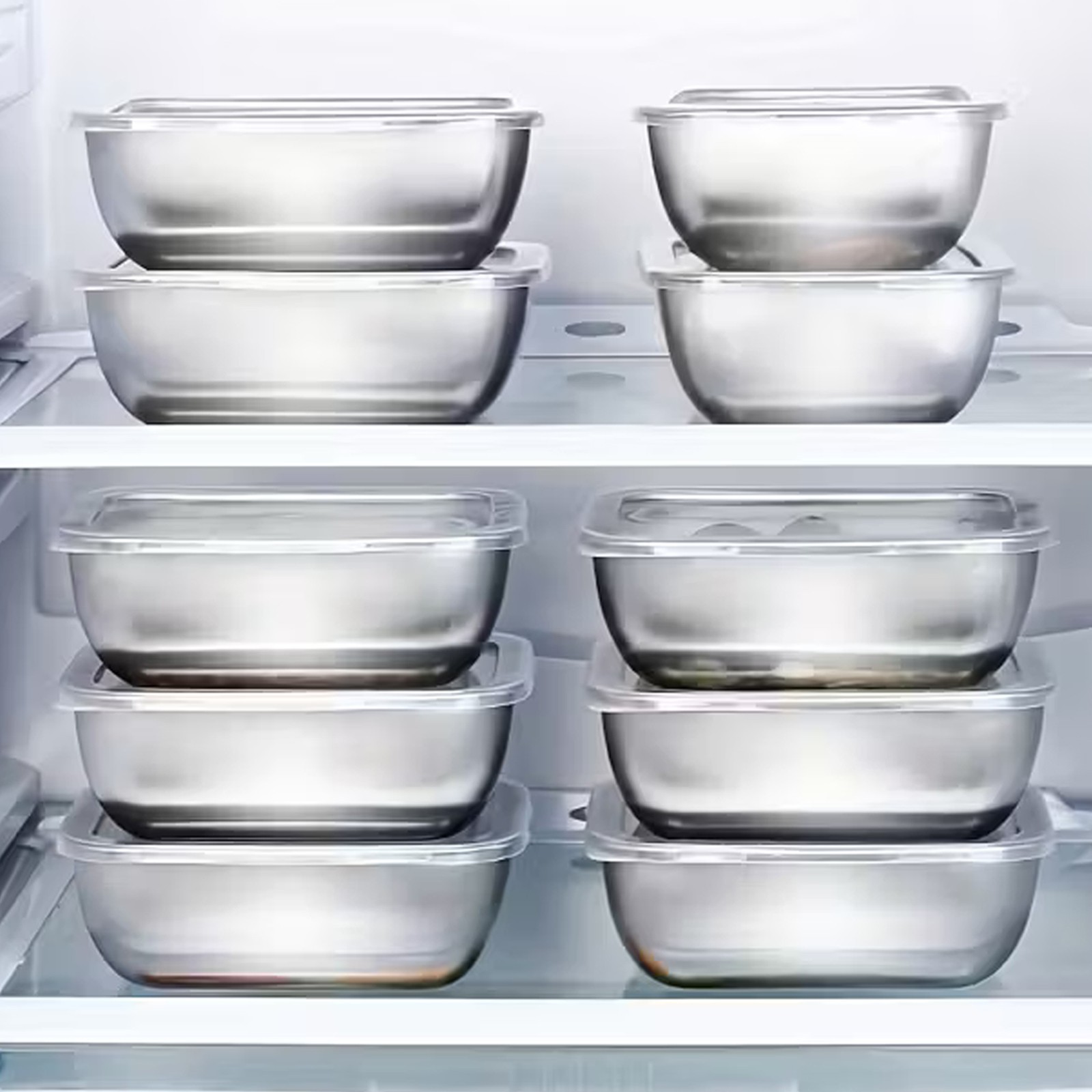
- Best fit for meal-prep and lunch transport: pick a multi-piece set (6–10 containers) with silicone-gasketed, latch-locked lids and stackable rectangular bodies that fit standard fridge shelves and insulated bags.
- Best fit for dry pantry staples like flour, sugar, and rice: choose a tall round or square bin sized to the bag weight (a 5 lb flour bag needs roughly a 4–5 qt / 4–5 L vessel) with a magnetic leveler or scoop and a hinged latch lid.
- Wrong fit for oven, microwave, or freezer-to-oven use: standard 304 containers with silicone gaskets are not oven-safe and gaskets degrade above roughly 200–230°C; skip them for baking and choose borosilicate glass or dedicated oven-safe steel.
- Wrong fit for long-term acidic wet storage (tomato sauce, citrus marinades): thin 201-grade or unlined steel can pit and impart metallic taste; use 304 with a fully gasketed lid, or glass, for high-acid wet foods.
Buying tips
- Demand 304 (18/8) stainless on the spec sheet; 201 or unlabeled steel is acceptable only for dry goods and short-contact storage where corrosion risk is low.
- Match lid type to contents: silicone gasket plus latch/clamp for liquids and lunch bags; friction-fit or vented lid for flour, grains, and coffee where airtightness matters less than scoop access.
- Size to your storage volume: a 5 lb flour bag fills roughly a 4–5 qt container, and lunch sets should have 0.5–1.5 qt pieces that fit your bag and fridge shelf depth.
- Check dishwasher and freezer claims: gasketed lids survive top-rack washing, but thin 0.4–0.6 mm bodies can warp and lids can lose seal if exposed to high heat or repeated freezing cycles.
Specs
| Steel Grade | 304 (18/8) vs 201 / unmarked |
|---|---|
| Body Thickness | 0.8–1.0 mm durable vs 0.4–0.6 mm thin |
| Lid Seal Type | Silicone gasket + latch vs friction-fit |
| Set Size / Capacity | 6–10 pc lunch set vs 4–5 qt pantry bin |
Related searches
What to check before buying
- Measure your fridge shelf height, cabinet depth, and lunch bag interior before choosing tall round bins versus shallow rectangular sets.
- Confirm the lid gasket is removable and replaceable silicone, not glued foam or a bare metal friction fit, if you plan to store liquids.
- Verify steel grade (304/18/8) and body thickness or gauge on the product page; unmarked steel means dry-goods duty only.
- Check whether the container is oven-safe, microwave-safe, or freezer-safe; most gasketed steel lids are none of these, so plan companion glass or oven-safe vessels.
FAQ
Data sources: eBay / Amazon listings and product attribute feeds. Updated Nov 28, 2026.
Some links on this page are affiliate links. If you buy after clicking one, we may earn a commission at no extra cost to you. This does not change which products appear here or their order. Affiliate disclosure.