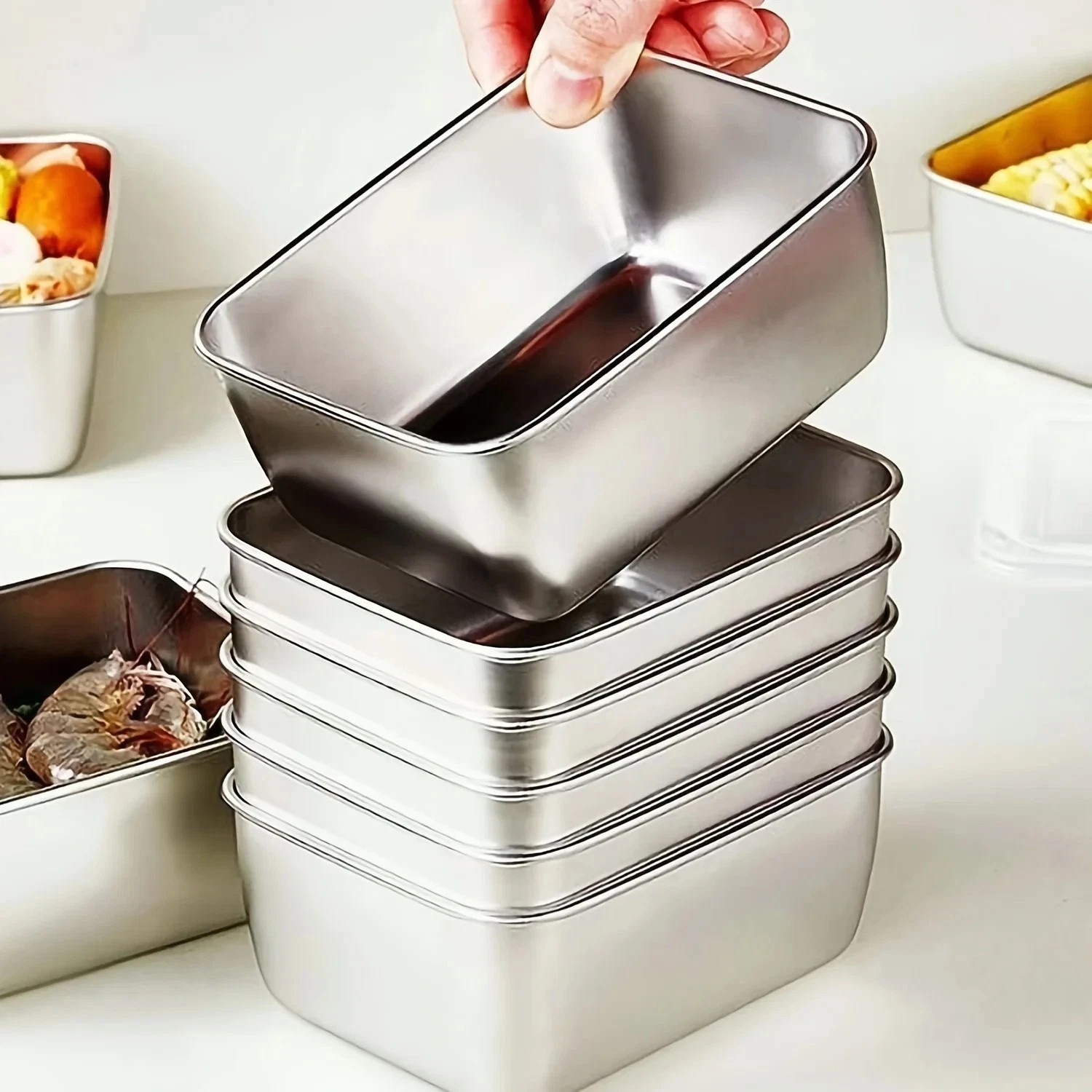

Photos from current listings. Actual item, color, and included accessories may vary.
Stainless Steel Food Container Buying Guide
Stainless steel food containers are reusable, non-reactive vessels for storing, packing, and reheating food, defined by the grade of steel and the lid-seal mechanism. The primary trade-off is between 304 (18/8) food-grade steel with a silicone-gasketed locking lid for leakproof performance versus thinner 201-grade steel with a friction-fit lid that dents and leaks. The decision rule: buy 304-grade steel with a removable silicone gasket and locking clips for daily transport and raw/acidic foods; skip unmarked or 201-grade sets with snap-on lids for anything beyond dry pantry storage.
Median $15.99
Key takeaways
- Steel grade determines corrosion resistance: 304 (18/8) resists acidic foods and dishwasher cycles, while 201-grade is prone to rust and pitting over time.
- Lid architecture separates leakproof from leak-resistant: silicone-gasketed lids with four locking clips hold liquids; snap-on or friction lids are for dry goods only.
- Wall thickness of 0.5–0.8 mm holds shape through drops and stacking; sub-0.4 mm steel dents permanently and distorts lid fit.
At a glance
- Category
- Food Storage & Containers
- Last updated
- Nov 28, 2026
Current offers
Highlights
- Steel grade determines corrosion resistance: 304 (18/8) resists acidic foods and dishwasher cycles, while 201-grade is prone to rust and pitting over time.
- Lid architecture separates leakproof from leak-resistant: silicone-gasketed lids with four locking clips hold liquids; snap-on or friction lids are for dry goods only.
- Wall thickness of 0.5–0.8 mm holds shape through drops and stacking; sub-0.4 mm steel dents permanently and distorts lid fit.
- Container sets are typically sold in 6-piece or 10-piece counts where 'piece' includes lids, so a 10-piece set is often 5 containers — count actual vessels.
Best use cases
- Best fit: daily lunch transport of soups, stews, and dressings — choose 304-grade containers with locking clips and a removable silicone gasket.
- Best fit: pantry storage of dry grains, flour, and coffee — choose stackable 201 or 304 containers with snap-on lids; skip gasketed lids you don't need.
- Wrong fit: microwave-only reheating — stainless steel is not microwave-safe; choose borosilicate glass or a stainless container you empty onto a plate first.
- Wrong fit: freezer-to-oven workflows — only containers rated for thermal shock and with lids removed are oven-safe; standard sets are fridge/freezer and countertop only.
Buying tips
- Confirm 304 (18/8) stainless steel stamped on the base or lid; unmarked 'stainless steel' is usually 201-grade and will rust with acidic foods.
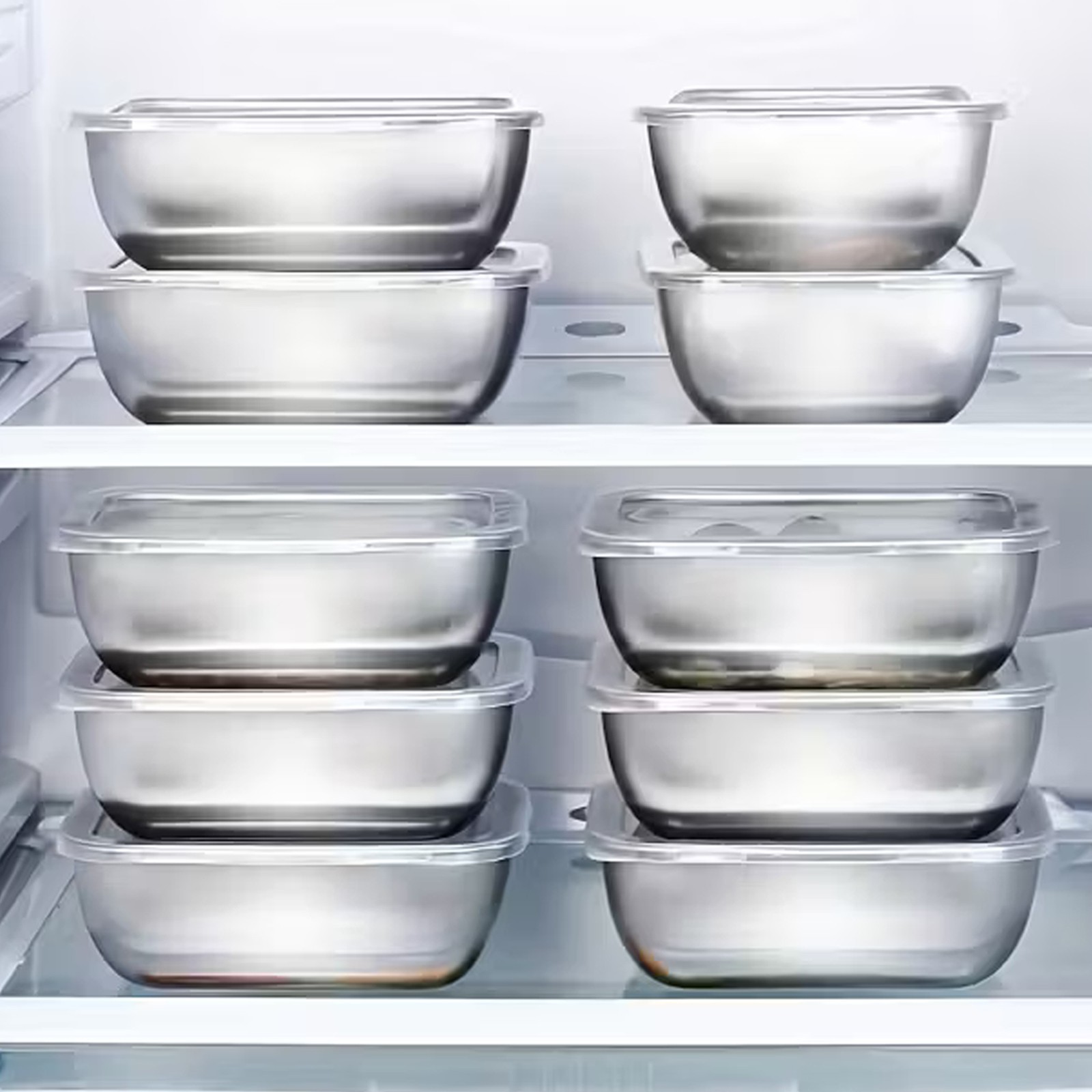
- Choose lids with a removable silicone gasket and four locking clips for leakproof transport; snap-on lids are only leak-resistant for dry goods.
- Measure your bag or fridge shelf: standard nesting sets run roughly 4–8 inches wide, and stacking stability depends on matching rim diameters.
- Check dishwasher and oven ratings: 304 bodies are dishwasher-safe, but lids with silicone gaskets and plastic clips should be hand-washed to preserve the seal.
Specs
| Steel Grade | 304 (18/8) food-grade vs 201 |
|---|---|
| Lid Seal Type | Silicone gasket + clips vs snap-on |
| Wall Thickness | 0.5–0.8 mm durable vs under 0.4 mm |
| Thermal Use | Fridge/freezer safe; not microwave-safe |
Related searches
What to check before buying
- Measure your lunch bag, fridge shelf, and cabinet depth — confirm the largest container's width and stacked height fit with the lid on.
- Confirm your microwave or oven plan: stainless steel is not microwave-safe, and oven use requires lid removal and a rated temperature limit.
- Check lid seal replacement: gaskets wear out, so buy a set whose gasket style is replaceable rather than glued in.
- Verify steel grade and wall thickness before buying: 304-grade at 0.5 mm or thicker resists dents and corrosion better than 201-grade thin-wall sets.
FAQ
Data sources: eBay / Amazon listings and product attribute feeds. Updated Nov 28, 2026.
Some links on this page are affiliate links. If you buy after clicking one, we may earn a commission at no extra cost to you. This does not change which products appear here or their order. Affiliate disclosure.